
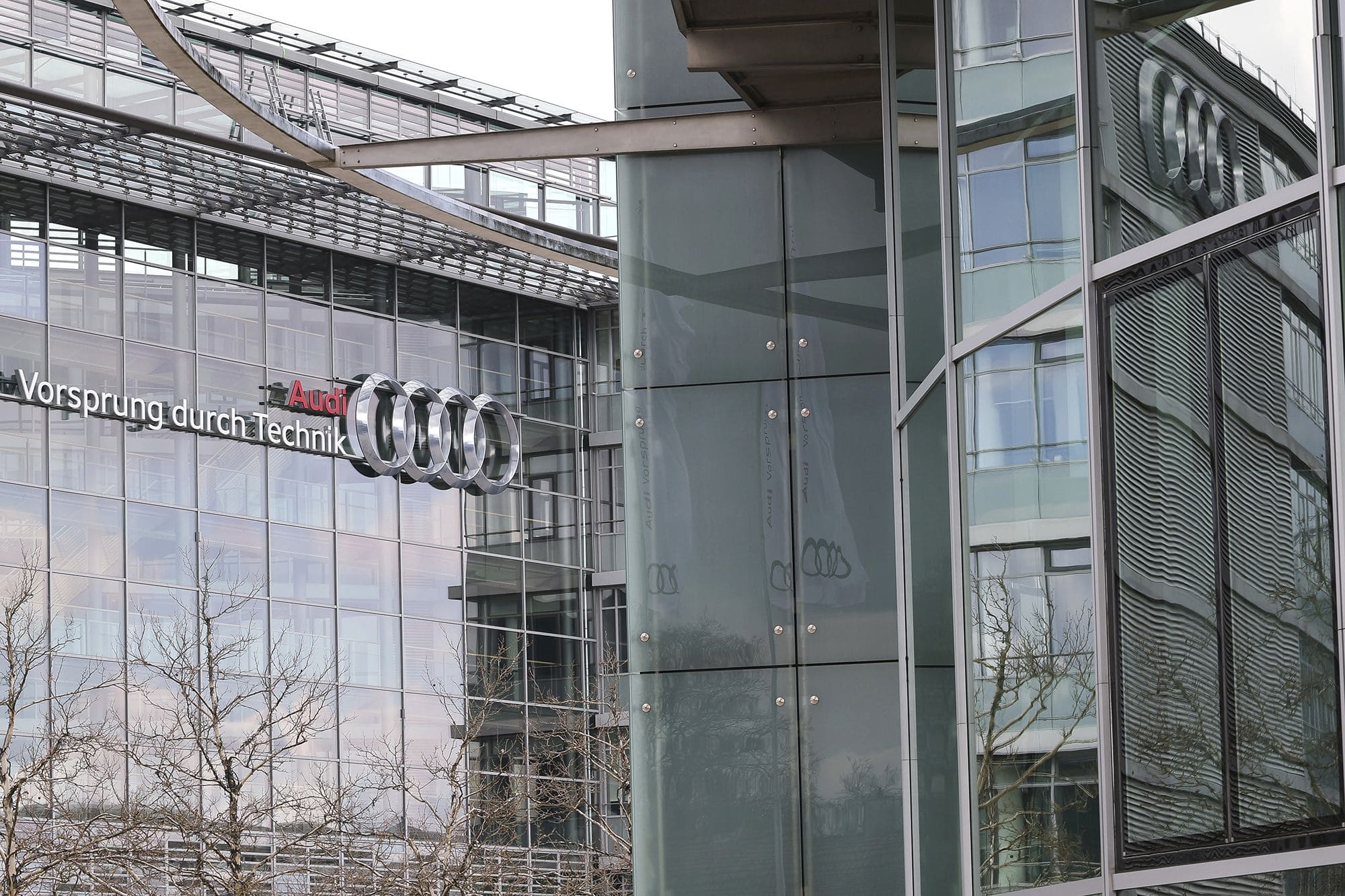
Audi has slashed its 2026 forecasts after an 87% collapse in quarterly net profit, while Volkswagen reported a €5.9 billion operating loss. Chinese overcapacity and an increasingly aggressive price war are adding to the pressure on Europe’s automotive industry, although Renault is showing greater resilience.
Europe’s automotive industry is facing mounting pressure on several fronts. Audi, one of Volkswagen Group’s flagship brands, has reported an 87% drop in third-quarter net profit and lowered its financial outlook for 2026. The announcement follows a €5.9 billion operating loss at its parent company, highlighting the scale of the challenges facing German carmakers.
Chinese competition, US tariffs and the costly transition to electric vehicles are all weighing on the sector. Carmakers are investing billions in new technologies, but higher electric vehicle sales have yet to translate consistently into stronger profit margins.
There is also a paradox at the heart of the crisis: China, whose manufacturers are rapidly gaining ground in Europe, is struggling with its own overcapacity, falling domestic demand and an increasingly damaging price war.
Audi cuts forecasts after sharp profit decline
Figures released on Friday, 30 October, show that Audi had a difficult third quarter. Deliveries fell 19.6% to 319,225 vehicles, while revenue declined 18.5% to €12.89 billion.
Net profit suffered an even steeper fall, dropping 87% year on year to €95 million.
For the first nine months of 2026, Audi delivered just over one million vehicles, down 11.3%. Revenue fell 13.1% to €42.06 billion, while operating profit declined 26% to €1.15 billion.
The deterioration in market conditions, particularly in China, has prompted the company to revise its full-year expectations. Audi now forecasts revenue of €55 billion to €59 billion, down from its previous range of €58 billion to €63 billion. Its expected operating margin has also been reduced, from 5-7% to 3-5%.
Chief financial officer Jürgen Rittersberger expects a stronger fourth quarter, but the company is already focusing on cost reductions and improving productivity.
Audi is also facing political and trade-related complications. Chief executive Gernot Döllner drew attention after appearing at a Trump campaign rally to announce plans for a $4 billion factory in Georgia. The move prompted questions about the group’s political neutrality and led to an extraordinary meeting of its supervisory board. Meanwhile, negotiations with Washington over potential tariff relief remain an important issue.
Volkswagen’s €5.9 billion operating loss
A day earlier, on Thursday, 29 October, Volkswagen reported an operating loss of €5.9 billion for the third quarter, far exceeding analysts’ expectations of a €2.6 billion loss. Revenue fell 6.3% to €75.3 billion.
The result was heavily affected by impairment charges linked to Porsche, but the group’s underlying financial position remains weak.
Even excluding exceptional items, Volkswagen’s operating margin for the first nine months stood at just 3.8%. Chief financial officer Arno Antlitz illustrated the problem by pointing out that the group retains less than €4 in operating profit for every €100 in revenue.
That leaves limited room to finance the investments needed to remain competitive.
China, once a major engine of Volkswagen’s growth, has become a particular source of concern. Sales in the country fell 30% during the first nine months of the year. The group is undergoing a major restructuring, with potential job cuts that could exceed 100,000.
The transition to electric vehicles presents another challenge. Battery-powered car sales are growing in Europe, but their profit margins remain below those of conventional models. Higher electric vehicle volumes, in other words, do not automatically translate into higher earnings.
China’s overcapacity problem
The difficulties facing European manufacturers cannot be understood without looking at the pressures building inside China’s automotive industry.
Companies such as BYD and Geely have expanded rapidly, establishing a growing presence in international markets. But behind that expansion lies a domestic industry struggling to absorb the production capacity built up over recent years.
According to an analysis by the Wall Street Journal, cited in the Corriere della Sera, car purchases in China fell by around 22% in the first nine months of 2026. Annual sales could reach just 18.5 million vehicles, their lowest level since 2014.
At the same time, China’s theoretical production capacity for passenger cars has climbed to almost 63 million vehicles, compared with fewer than 35 million in 2015.
The gap between production capacity and domestic demand has intensified competition. According to AlixPartners, car prices in China have fallen by almost a fifth since early 2023, while the industry’s profit margin has dropped to 3.6%, down from 9% in 2014.
One reason excess capacity has proved difficult to eliminate is the role of local governments. Manufacturing plants provide employment and generate tax revenue, giving regional authorities an incentive to keep factories operating even when they are unprofitable. Public subsidies and financing have also helped expand production facilities, making it harder for the industry to scale back.
China’s price war reaches Europe
As domestic demand weakens, Chinese manufacturers have increasingly turned to overseas markets. This is where China’s industrial difficulties intersect with Europe’s own automotive crisis.
Chinese companies are seeking new customers abroad, while German manufacturers, burdened by higher production costs, are finding it increasingly difficult to compete on price.
The changing trade relationship between Germany and China illustrates the shift. In May 2022, Germany exported €2.79 billion worth of cars to China, while imports from China amounted to just €340 million. By July 2026, German car exports to China had fallen to €850 million, while imports from China had risen to €880 million.
In just over four years, the balance of automotive trade between the two countries had effectively reversed.
The challenge extends beyond pricing. Chinese manufacturers have invested heavily in batteries, software and faster product development, putting pressure on European suppliers as well as vehicle producers.
Roberto Vavassori, president of Italy’s automotive industry association Anfia, has called for tariffs of up to 80% on Chinese cars. In an interview with the Corriere della Sera, he argued that trade protection could give European manufacturers time to rebuild their competitiveness.
Such proposals, however, reopen a difficult debate over how to protect Europe’s industrial base without pushing up prices for consumers or limiting competition.
Renault offers a different picture
Not all European manufacturers are experiencing the same degree of pressure. Renault, for example, reported third-quarter revenue of €11.6 billion, up 1.4% at constant exchange rates and above analysts’ expectations, despite a decline in vehicle deliveries.
New electric models, particularly the Renault 5, and tighter cost control have helped support the French group’s performance.
Renault is targeting an operating margin of around 5.5% for the full year.
The company is not immune to competition from China or the wider difficulties facing the industry. Its results nevertheless illustrate that the transition to electric mobility is producing different outcomes across Europe’s automotive sector.
For Volkswagen and Audi, the combination of weaker demand, Chinese competition, trade uncertainty and expensive technological investment has become an increasingly difficult equation. Renault’s performance suggests that strategic choices, product positioning and cost discipline can still make a significant difference.




Be First to Comment