
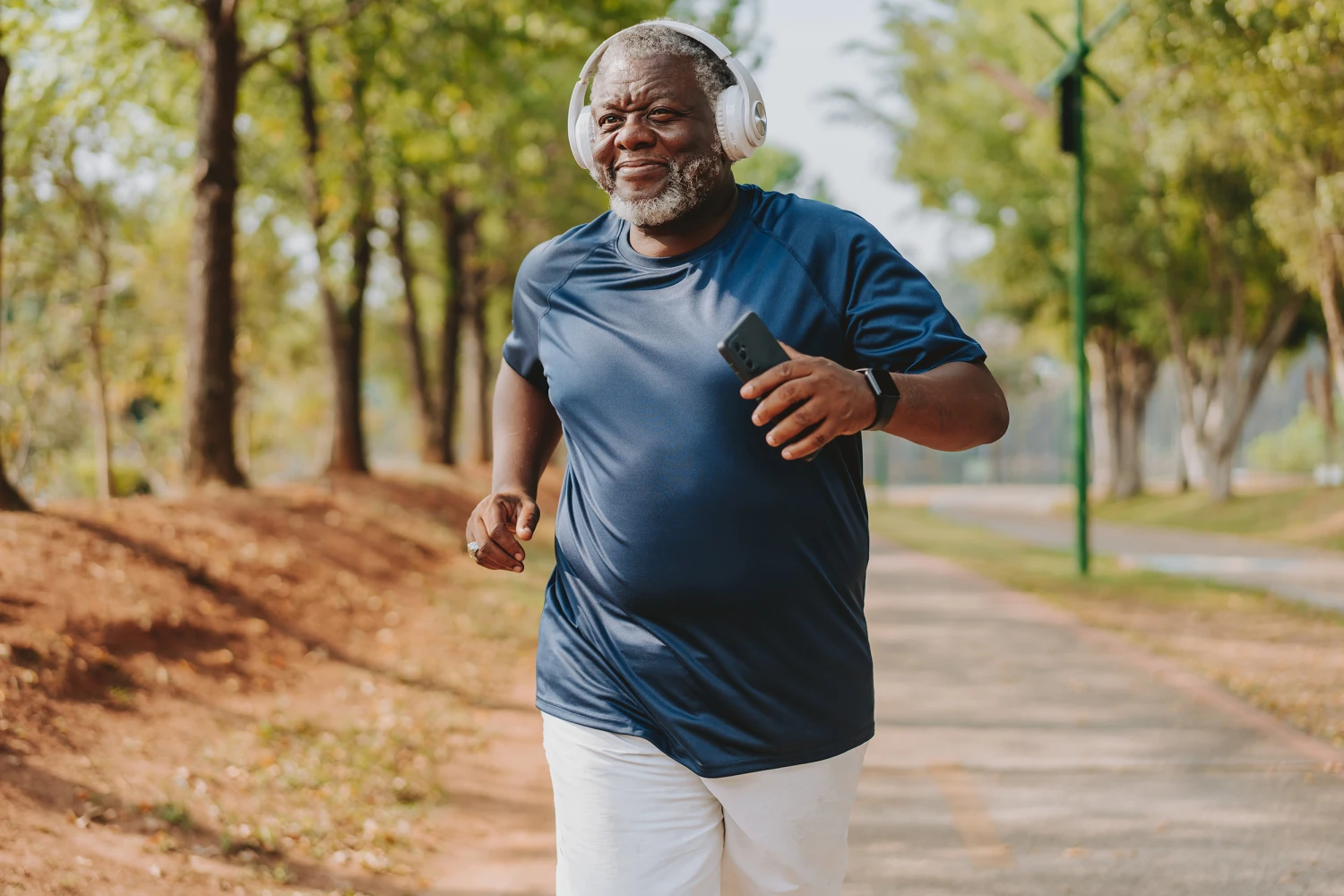
Sit-ups, jogging or high-intensity workouts: losing belly fat requires more than simply exercising harder. Sports medicine experts explain which training methods work, why targeted fat loss is a myth and how to measure progress beyond the bathroom scales.
Getting rid of belly fat is a common fitness goal. Whether it is referred to as a spare tyre, a beer belly or a stubborn waistline, many people assume that repeatedly working their abdominal muscles will eventually make the fat around them disappear.
The logic seems straightforward: lie on the floor, bend your knees and perform enough sit-ups until the muscles begin to burn. Repeat the exercise regularly and a flatter stomach should follow.
But this widely promoted approach is based on a misconception. According to Christine Joisten, a professor of sports medicine at the German Sport University Cologne, abdominal exercises strengthen the muscles but do not specifically eliminate the fat covering them.
That does not mean exercise is ineffective against belly fat. On the contrary, physical activity can help reduce fat stored deep inside the abdominal cavity, which is particularly important for long-term health. The key is to distinguish between strengthening abdominal muscles and reducing the body’s fat reserves.
Not all belly fat is the same
There are two main types of fat around the abdomen. Subcutaneous fat lies directly beneath the skin and is the type people can usually pinch between their fingers. Visceral fat, meanwhile, is stored deeper inside the abdominal cavity, surrounding internal organs. Fat can also accumulate around other organs, including the heart.
The amount of visceral fat cannot reliably be determined by looking in the mirror. Yet excessive accumulation can have serious health consequences. Visceral fat releases signalling substances that influence metabolism and can contribute to inflammatory processes. High levels are associated with an increased risk of type 2 diabetes and cardiovascular disease.
For this reason, body weight alone does not provide a complete picture of someone’s health. The distribution of fat also matters. An international expert consensus recommends measuring waist circumference alongside body mass index (BMI) to assess potential health risks more effectively.
There is encouraging news, however: visceral fat can be reduced through physical activity, even when overall body weight changes very little.
Joisten points out that one of the most important benefits of exercise is its ability to improve health and change body composition without necessarily producing a significant difference on the scales.
A study involving 52 men with obesity illustrates this point. After three months, participants who exercised while deliberately maintaining their body weight had still lost visceral fat. The scales did not reflect this improvement because they measure total weight rather than distinguishing between fat, muscle and other tissues.
In other words, someone can lose fat while weighing almost exactly the same as before.
Commercial body-fat scales also have limitations. These devices estimate body composition by passing a weak electrical current through the body and measuring resistance. Their accuracy varies depending on the equipment and measurement conditions. More importantly, they cannot reliably distinguish between subcutaneous and visceral fat.
Different types of exercise can make a difference
Which training method works best against abdominal fat? Running, weightlifting or high-intensity interval training (HIIT)?
Research suggests that there is no single answer. A meta-analysis of 84 randomised controlled trials found that all major forms of exercise could reduce visceral fat in people with overweight or obesity.
The research included moderate-intensity aerobic exercise, strength training, a combination of both and HIIT, which alternates periods of intense activity with recovery. High-intensity aerobic exercise and HIIT performed particularly well in the statistical rankings.
Regular aerobic exercise is therefore an effective way to reduce visceral fat, while strength training offers additional benefits. It helps build and preserve muscle mass, which is important for maintaining a healthy body composition.
However, the findings do not mean everyone needs to push themselves to exhaustion. The studies examined different training programmes, making direct comparisons difficult.
Joisten emphasises the importance of consistency. Rather than choosing the most demanding workout, people should find an activity they enjoy and can maintain over time.
More movement, greater benefits
The relationship between exercise duration and fat reduction is also well established.
A 2024 analysis of 116 randomised controlled trials involving 6,880 participants found that increasing weekly aerobic exercise up to 300 minutes was associated with reductions in body weight, waist circumference and several measures of body fat, including visceral fat.
Meaningful improvements in waist circumference and body-fat measurements became apparent at around 150 minutes of weekly exercise.
The extent of fat loss nevertheless varies considerably between individuals. In one 12-week study involving people with obesity, participants who exercised without following a prescribed diet reduced their visceral fat by an average of 18 per cent and lost approximately 3.5 kilograms of body weight.
The results demonstrate that significant changes can occur within a few months, although outcomes depend on training volume, starting body composition and individual responses to exercise.
The World Health Organization recommends that adults undertake between 150 and 300 minutes of moderate-intensity aerobic activity each week, or 75 to 150 minutes of vigorous-intensity activity. A combination of the two is also suitable.
These recommendations should be complemented by muscle-strengthening exercises involving all major muscle groups on at least two days per week.
Moderate activity includes brisk walking or cycling at a pace that increases breathing while still allowing someone to hold a conversation. Exercise can be spread across the week and divided into shorter sessions throughout the day.
For people who are not accustomed to regular physical activity, starting gradually is more sustainable than immediately attempting to meet the full recommendations.
Joisten suggests incorporating short walks into everyday routines. Walking for five additional minutes in the morning, at lunchtime and in the evening is a manageable starting point. These periods can gradually increase to ten minutes each, adding up to half an hour of extra movement every day.
The principle is simple: small changes are easier to maintain than ambitious training programmes that require a complete restructuring of daily life.
Three common belly-fat myths
Social media platforms such as Instagram and TikTok are full of promises about rapid weight loss. Alongside discussions of weight-loss medication, including drugs such as Ozempic, users encounter a range of supposed shortcuts to eliminating abdominal fat.
Joisten highlights three particularly common misconceptions.
Sit-ups and crunches specifically burn belly fat.
Abdominal exercises strengthen the muscles in the area, but they do not force the body to burn fat from that particular location. Fat loss cannot be targeted in this way.
A small randomised study involving 24 adults supports this conclusion. Participants performed abdominal exercises five days a week for six weeks. Although their ability to complete repetitions improved, researchers found no measurable reduction in abdominal fat or waist circumference.
Core training remains valuable for strengthening the midsection, but it cannot replace a broader exercise programme aimed at reducing body fat.
Exercising before breakfast burns more belly fat.
This claim confuses two different processes: the type of energy the body uses during a workout and the amount of body fat it loses over time.
Exercising on an empty stomach can increase the proportion of energy derived from fat during the session. However, this does not necessarily translate into greater fat loss over several weeks.
A four-week study involving 20 young women who followed a calorie-restricted diet found no significant differences in body composition between those who exercised before eating and those who trained after a meal.
Although the study was relatively small and did not specifically examine visceral fat, it offers little support for the idea that fasted exercise produces superior long-term results.
Staying in the fat-burning zone is essential.
Low-intensity exercise, sometimes referred to as Zone 2 training, does encourage the body to use a greater proportion of fat as fuel.
However, this does not mean that exercising at a lower intensity automatically produces greater long-term reductions in belly fat.
More demanding workouts can also contribute to fat loss, even though the body relies more heavily on carbohydrates for energy during intense activity.
There is therefore no need to deliberately slow down a run or cycle session simply to remain within a supposedly ideal fat-burning heart-rate zone.
What you eat matters too
Exercise is only one part of the equation. Diet also plays a significant role in determining how much body fat someone loses.
People who compensate for the additional energy expenditure of exercise by eating more may unintentionally cancel out some of its benefits.
Rather than following a restrictive diet specifically designed to target belly fat, Joisten recommends a balanced approach to nutrition.
A useful starting point is to identify unnecessary snacks and calorie-rich drinks that could be reduced or removed from everyday routines. Adequate protein intake is important, while carbohydrates should primarily come from whole grains, legumes and vegetables.
Limiting alcohol and added sugar can also support healthier eating habits.
Other factors influencing abdominal fat distribution are less easily controlled. Age, for example, can change how the body stores fat. Hormonal fluctuations also play a role, particularly for women experiencing changes around menopause.
Genetics are another important consideration. As Joisten explains, some people are naturally more inclined to store fat around their abdomen, regardless of their physical activity levels.
This helps explain why even people who exercise regularly and eat well may not achieve the flat stomach they hoped for.
Fitness is about more than appearance
Ultimately, losing abdominal fat does not always mean losing the visible bulge around the waist.
The amount of visceral fat can decrease even when subcutaneous fat remains, meaning that improvements in health may not necessarily produce an obvious change in appearance.
Progress should therefore be measured in more ways than the number displayed on the scales or the fit of a pair of trousers.
Being able to climb stairs without becoming breathless, carry shopping bags more comfortably or walk longer distances are all signs that physical fitness is improving.
Joisten highlights the connection between exercise and everyday quality of life, noting that ordinary activities become easier as people develop greater physical capacity.
As fitness improves, individuals can gradually extend their usual walking routes or increase their pace. Those with existing medical conditions should consult a healthcare professional before beginning more intensive training, while any unexplained symptoms should be medically assessed.
The most effective exercise programme is ultimately the one that becomes part of everyday life. Consistency, rather than extreme effort or quick fixes, is what delivers lasting benefits.
And even if the stubborn spare tyre does not disappear completely, the improvements taking place beneath the surface may be far more important than what the mirror reveals.






Be First to Comment