
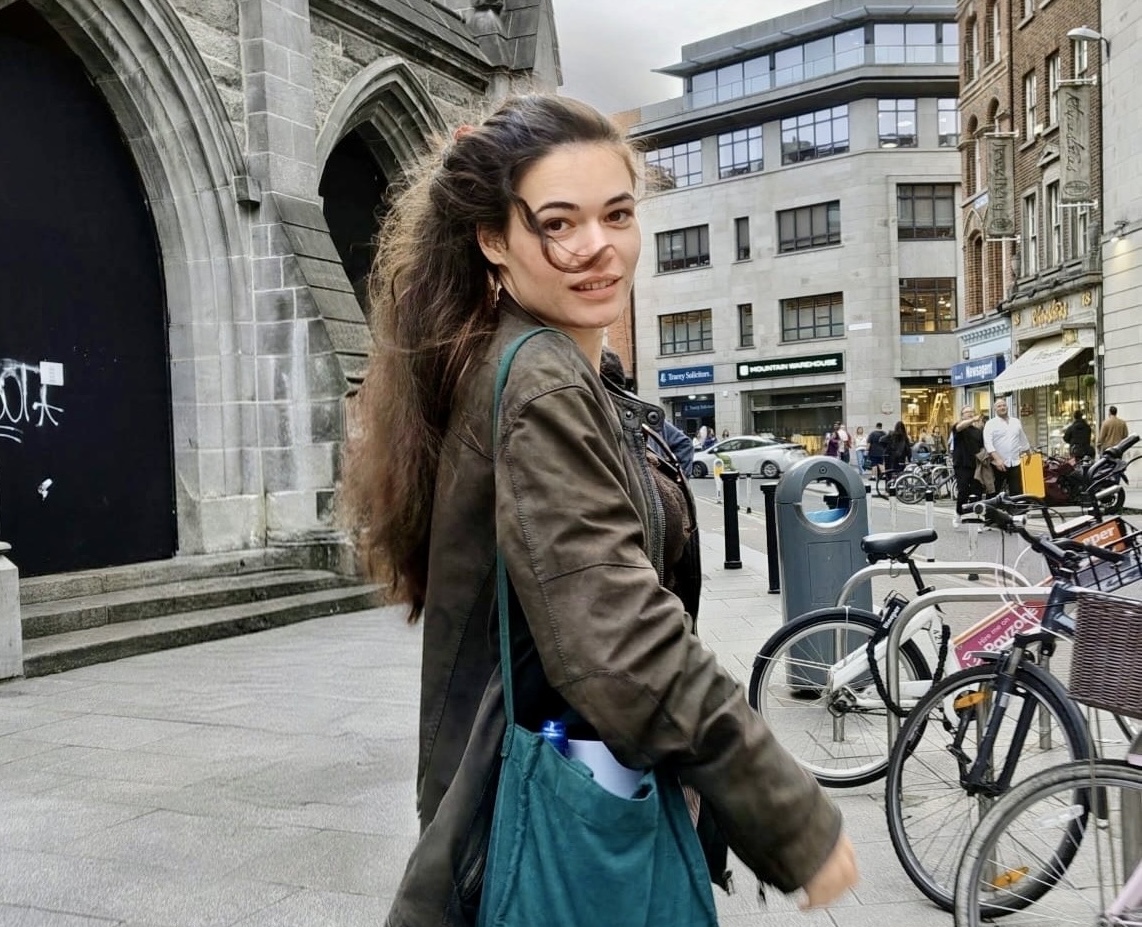
Brianna Zimmerman is a writer and international literary scout whose career spans the publishing worlds of London, Dublin and New York. Working at the intersection of literature and the global book trade, she identifies promising manuscripts, assesses their potential in international markets and helps connect authors with publishers around the world.
We spoke to Brianna about her life, career, background and dreams.
Who is Brianna Zimmerman, could you tell our followers a bit about yourself?
Brianna Zimmerman lives in Dublin and likes 4pm Guinness Zero, maybe an alchoholic one if its Thursday, long walks in Dun Laghoaire, ocean swimming in September and the fog that rolls in off the Irish hills over the muted earth tones of the West.
She doesn’t like to see anyone most nights, except maybe Lola or Rachel. They discuss structure, interiority of character, coherence of character arc, where a comma ought to go or not, a place of stuckness or unsureness, experiments in perspective, how abstract one can get before losing the reader, a new novel/album/artwork they loved or hated and why.
She writes, she reads, she goes to the gym and makes sure she eats enough protein. She doesn’t have a lot of money, but what would she spend it on anyway? She’s not in love, except with her work, which she struggles with alone every day at one of those huge old wooden desks with enough room for her laptop, her books, her notebooks, and a painting or two for inspiration. She is alone with her thoughts, and she likes it that way.
When she finally leaves the house in the afternoon she chats with her grocer, her barista, and her neighbors. Nothing serious, everything shallow. About the weather, the country, the state of Things (Bad). She goes up to Sligo sometimes. Out to Cork others. Just for a change of pace. The air is fresh, crisp. The sea is a bright green.
Brianna Zimmerman lives in South London as a writer and international literary scout. She loves all night raves, cheap wine from Asda and poker nights, garden parties and watching Girls with her flatmates. There’s mold in the walls and the floors are coming up, and she’s not sure she’ll succeed there and her visa is running out but she’s getting Canadian citizenship (she hopes) and she is happy.
Her office is in Soho, where she works with three to ten other women. She can go to the park, the café, the pub, she can see the biggest exhibitions in the world. She enjoys the benefit of being paid in Pounds and the fact that green space always seems to be just around the corner.
The intonations of her words are changing, they lilt up at the end and her American friends are the only ones who catch it. She spends her days at lunches and drinks with various editors who are ecstatic when they buy something good, though it seems more and more that good books don’t sell and there are mostly mediocre books. No one makes enough money but there’s public health care, that’s new.
She notices her style is getting grungier. She isn’t sure it suits her but hey, why not? It’s the opposite of trying, and she is tired of trying. Everything vintage, thrifted, hand-me-down, altered. Each piece expresses something crucial. She couldn’t tell you what. Her friends host salons in their living room where they show off their work, critique each other, and maybe they’ll go to Berlin for a holiday soon. Or maybe she and her friends will buy a house together and live there forever, but maybe they won’t, and for now they are partying and creating and bickering about whose turn it is to buy olive oil, hoping that life will be enough.
Brianna Zimmerman lives in Amsterdam and she is in love. She’s dreaming of kids, a family, dancing slow in a living room of a little house they’ve bought in Utrecht, her mom coming to visit and staying for six months to be close to her grandkids. She’s dreaming of long walks along the canal, of a little dark haired boy who looks like his father, a little dark haired girl. Who will they be? The thing about kids, her partner says, is they are so funny.
She’s dreaming in the language he speaks that they’ll speak, She does Duolingo (the intense version – 20 minutes a day! The Widget on the home screen of her phone!). She takes off work every other Friday and still gets paid a full salary. She thinks of the woman who will come and be a midwife if she gives birth at home. She barely uses medicine, not even advil. She thinks of how close she always feels to the sea, she’s always loved the water, the canals are soothing, calm, and it’s like living in a different century, the urban design so specific (bike gauges in steps for going up and down, the biggest bike garage in europe, trash cans buried underground, house boats floating on the water, canals clean enough to swim in, most man-made, water level controlled by the city and state).
She thinks of home-cooked meals and his mothers’ soft arms and a cocker spaniel whose name they will argue over until he gives in and lying down beside him at night, waking up to him in the morning. How he makes her laugh.
Brianna Zimmerman lives in New York and she has got to go, there’s so much to do and so little time. There’s an exhibition at the Met, a friends’ play is exhibiting, there are two literary launches where she should at least show face, and then she has a group dinner with some writers, editors and professors to hear the most recent goss (two divorces and an affair, a bad book but no one will tell the author, a big sale but awful sales figures).
She comes home exhausted, thinking I should drink less, but how can she say no to a dirty gin martini, briney, head rush, loose-limbed. She takes three Ibuprofen and a Zofran, sets her alarm for six a.m. to get her work-out in before the next day begins, orders groceries to arrive by noon, looks forward to Sunday, where she’ll barely leave the house, rest, watch television, get ready for another non-stop week, for the world to continue turning around the city which is obviously the center of everything, everyone watching, her friends the stars, or the force like gravity holding everything together.
She’ll look out at Manhattan from the roof of her Brooklyn building, the yellow windows of the skyscrapers twinkle like stars on deep blue nights. Her family lives over the ridge in New Jersey. Everything has its place, and she has hers.
What do you write — fiction, essays, criticism, something else? Has that focus shifted over time?
I finished a novel last year at Trinity, and am currently working on another one. I’d love to write criticism publicly but it’s weird, there’s a lot of conflict of interest if I’m working as a scout and also writing public criticism.
So for now, mostly writing scout reports and my own stories. I love writing researched essays, generally about politics and history and art, and have many ideas/drafts/pitches I have yet to pitch anywhere because I’ve been working on fiction. I’ve also historically done some journalism, city politics reporting, but that’s a long time away. Never been one for poetry. One time I tried and my teacher was like this is a short story with line breaks. Never again.
“ That’s the thing about Dublin. It’s the sort of place where you’ll have a drink with every writer of every caliber who comes through. “
How have Dublin, London, and New York defined or influenced your literary life?
Dublin — I’ve just left Dublin. Quite literally writing from the plane. Both my taxi drivers cursed for no apparent reason en route to and from the airport, and gave no explanation. “FUCKin’ Christ,” that kind of thing. And then both were perfectly lovely helping me with my bags, wishing me a good afternoon. There’s a familiarity in the people, they are open and generous and welcoming. Why not chat, is always the vibe. En route, one taxi driver pointed to a taxi further up ahead and two lanes over and said, “My niece’s husband is a driver as well, that’s him up here. Let me see, ah yep, that’s his number, mostly sure. They’re supposed to go to Portugal for vacation next week. He’s a funny guy, I’ll pull up next to him and try to get him to say somethin’.” We got up next to him, both rolled down the window, “Hey, aren’t you supposed to be gone by now?” “Aren’t you supposed to be dead by now?” he replied.
One of my best friends in Dublin hosted me for my one night layover. She told me about the Stinging Fly workshop she’s in for the year, fully funded, with nine other writers, all Irish. She told me how over the weekend a well-known visiting American writer kept the entire bookshop staff out all night with stories no one asked for.
That’s the thing about Dublin. It’s the sort of place where you’ll have a drink with every writer of every caliber who comes through.
We went to Djamel White’s launch for ALL THEM DOGS, his Booker Longlisted debut, where his entire extended family was cheering for him. We had a beer with all of them after and smoked cigarettes outside with his editor, a former client of mine, and agent, who I first met at a dinner at Dingle literary festival. He was kind; it was a fun night. The writers you read in school are just around, and no one makes a fuss about it. Everyone’s friendly. Everyone knows everyone’s mother, aunt, grandmother, and childhood nickname. Everyone knows a bit of gossip about everyone. Secrets are easy to uncover.
Dublin, too, is the only city I’ve been without an emphasis on the publishing industry, while it has a huge emphasis on its writers. I know several young writers in Dublin who have received 6-10k from the government to write their debut novels. There are groups where writers and artists gather and drink and discuss their work, or can get free feedback. There is a sense of seriousness about writing a novel in Dublin, an earnestness and lack of embaressment (despite the occasional what am I doing with my life, which it would be insane not to have). It seems not only possible, but important, and celebrated to write. Not for the fame, but for the work. Obviously these are generalizations, but that’s how I feel.
There are few publishing houses with offices in Dublin, and those offices are tiny. Someone told me the PRH office is basically a room with a printer. Can’t verify, but wouldn’t be surprised. The ballooning of short story publications, the most direct route for writers to publication, means that writers are read and published by other writers and editors who appreciate Literature. With tiny budgets and a passion for Real Art, they can publish what they like. And writers and editors tend to like things different from a commercial audience. (Again, generalizing here). Agents from London then scour these publications and perhaps find their next big client. It means that writers are writing for literary publications, not for a “market”.
There’s a culture of excellence: In Ireland, writer’s write. They also work, they go for a drink, or a hike, or a walk with the dog. Swim in the freezing sea, a tradition. But I haven’t found the same self-conscious ever-present presentation of self that cosmopolitan centers like New York and London have.
Writers in Dublin are interested in excavating the embaressing, the social, the familial, the soul, the colonial, the sexual, the dissapointing. That which can be percieved through the senses. Writers seem interested in writing for other writers, or those for whom writing is a serious source of national pride, not a source of elitism or pretension (though, of course, you do find individuals going, oh you haven’t read xyz? with that horrible tone wherever you go. My advice: steer clear, they have nothing to offer that you don’t already know or couldn’t find out if you wanted to).
I came to Dublin for an MFA at Trinity: My experience there wasn’t “about” being able to sit back and watch American politics, talking to random Irish people in pubs about Mamdani, or the awe some showed when explaining odd bits of American culture (“How much is American higher education? And so what happens if you have to have surgery and can’t pay for it? And so you’re telling me the entire country thinks Halloween is an American thing.”). But I did notice some things that perhaps affected my writing there. I never once was in a public space and worried someone was carrying a gun.
There is no subway in Ireland. Frequently horses and carriages still go right through the city’s main streets. Sometimes young boys bareback on horses with just a stick, a halter and lead rope ride on the cobbled streets. I walked nearly everywhere (My daily steps, according to my Health app, went up to an average of 12,000 a day.). The sea is right there, all the time. Someone is always willing to have a chat in a pub. These were things I noticed, which made me wonder whether they made various writers more or less able to write there in Ireland.
London — Of the three cities I’ll talk about, London is the place where my life is most “emerging”. My best friend from childhood moved there and fell in with a group of artists, who I’ve become close to over years of frequent visits, and then from this past summer living a ten minute walk away.
Her flatmates are a composer (a million plays at a time, with a show upcoming at the National Gallery), a musician (frontman of the band Ebbb), and a playwright (his debut, The Urmetzoan, currently showing at Hampstead Theatre in West London, and in a local theater in Western Massachusets). She herself is a biodesigner designing photosynthetic batteries using algae at Cambridge University.
They live in South East, the grungier, historically less wealthy side of London.Their flat is damp with an overrun garden in the back with a table of wood rotted by rain. For my best friend’s twenty-ninth birthday this year, we covered the yard in fairy lights and had a piñata. I’ve made two birthday cakes in that flat, both with box cake because there are no measuring cups.
“In New York it feels like some kind of extraordinary life quickly becomes ordinary because everyone lives one.”
London is also where my current office is. Located in Soho, a bright airy space. When I’m in town I pop in and out for coffees, lunches, office visits at the big publishing houses and agencies which are invariably a walk away.
I’m not sure there’s much of a literary “scene” in London like there is in Dublin or New York. My artist friends in London are artists with their whole hearts, but it doesn’t define their social lives so much as their internal ones. They hold all of the doubt and sensitivities and fears and money problems that come with banking on expression and talent, but also the brilliance and career launches that in some ways make it worth it.
They all met at uni, and the “scene” here feels more like an Oxbridge/ “London elite” scene than a “literary scene”. One editor I spoke with said this is because there is a crisis of government funding in the arts at the moment, as opposed to a few decades ago when artists were living on the dole and so coming from much more varied backgrounds. There’s more mingling between mediums and less concentrated rooms in which writers can love/hate each other. And there’s Soho Reading Series, but see this Reddit review for my general thoughts.
New York —I’ve been missing the city. Yearning for it, really. When I left, I was exhausted and burnt out and anxious. I was tired of the parties, seeing all the same wide eyed people ready to chat, talk about their book deals or celebrity dates, get the inside scoop on BJ Novak’s love life or Mamdani’s newest lefty policy. I lived most paychecks month to month for ten years. I scheduled time with my friends weeks in advance, and went to a drinks, a dinner, and a party most nights.
When I go back now, bars are too loud, there’s too many places to go, there’s too many people to see, it feels too much like a popularity contest on a race towards nothing because I’ve never been one to run towards money. I drink too much in the city, I can’t say no to a dirty gin martini (Tanqueray if they have it). It’s still all the same people at all the same parties and then occasionally a huge celebrity or a C-list one (why was Danielle Haim at that Paris Review party?).
But it’s still not like any other place I’ve lived. Not to be all “Hello to all That”. But I miss the dirty, hot underground air through grates in the winter keeps me warm and makes me feel like I’m going to get cancer, Washington Square Park smelling like BO, the overstimulating subway screech, the constant rush of newness and variety and energy.
New York is where I graduated college, it’s where my family lives, it’s where I lived until I was twenty-eight. I grew up there. I miss how everyone is ambitious and fast-talking, motivated and interested and doing something. Well-connected or trying to be. I used to think people overstated New York, but I’ll be at a party with the ethicists of AI, the book critics of the New Yorker, and America’s biggest internet it-girl. We’ll all be on the same coat check line. Where else?
Today, I might walk into a literary magazine party downtown and run into everyone I’ve ever kissed, and bum a cig off one of them. We’ve all known each other long enough now, we are no longer the wide-eyed excited ones looking up, getting too fucked up and embaressing ourselves, going to a diner for 2 a.m. pancakes.
Now we are a bit older, there’s a younger generation, we are a bit more accomplished, my editor friends are publishing celebrities and meeting them at birthday parties, we have assistants and liveable salaries (mostly), my writer friends are writing their next books, they’ve stayed or left, some bought townhouses off their advances. The Williamsburg diner got weird, so we get Chinese food instead. We’ll canvas for Mamdani, attend Democratic Socialist functions, protest for Palestine.
New York’s literary scene is very concerned with itself. If I had to rudely generalize, I don’t think people writing in and about New York are the most exciting writers. It might be because there are so many of us. It might also be that New York stories are very familiar (to me & those in publishing). I think fiction writers writing in and about New York can also be self-important, egotistical, concerned more with where one’s been published than what they’ve produced. Concerned with which parties and people they know, I think too-close proximity to fame can produce an off-kilter value system where glamour and all its hedonistic pleasures are what artists aspire to.
This sounds so cynical; there are also brilliant, thoughtful, carefully considered writers working in the city. But I’ve found myself more and more respecting those who seek life elsewhere to write about — perhaps that’s just because I have!
In New York it feels like some kind of extraordinary life quickly becomes ordinary because everyone lives one. It took leaving to realize how extraordinary my life had been, and how the façade of glamour frequently doesn’t reveal the lived experience of never-ending, constant pressure for more dopamine, more fame, more beauty, more success.
My friends in New York are brilliant, ambitious, funny and wry and cynical and fun, excited and energetic, passionate and busy and worldly and beautiful and not at all down-to-earth. They are charming and magnetic and fantastic at a party, AND anxious and insecure and broke (unless they come from family money, which many do). Most are three seconds from burn-out at all times.
I can’t wait to be back. We’ll see how long I last.
“I like politically inflected work that is emotional without being sentimental, equally interested in the outer and inner world of it’s characters. How they refract and reflect each other.”
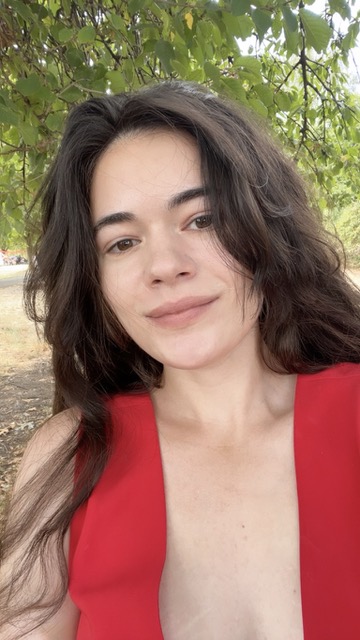
Your language background includes Arabic and French at professional proficiency — has multilingualism shaped which international markets or authors you gravitate toward?
The short answer is yes, but you can absolutely be a great scout without reading other languages. For me, though, Arabic and French have shaped what I seek professionally, how I read, and even what I write. I used to scout only the US market, which didn’t come with much opportunity to advance Arabic literature, so I took it upon myself to seek it out.
There aren’t many Arabic readers in professional English-language scouting, so I feel I get asked about Arabic language things more than most. For example I read the newest Adania Shibli in Arabic (forthcoming from Knopf, 2027) — it’s going to be excellent. Absolutely gorgeous. I also have more contact with much of North African publishing than I think your typical US/UK publisher does — I’ve attended the Rabat book fair and keep my finger on the pulse of what’s being published throughout the Levant region (or in Levantine dialect — Syria, Palestine, Jordan, Lebanon).
There are several editors I’m regularly in touch with who, because of personal interest, ancestry, or sheer determination, are interested in Arabic and North-African, French language literature; I probably have closer relationships with those editors than most scouts, and also find our English-language taste is more similar as well. I like politically inflected work that is emotional without being sentimental, equally interested in the outer and inner world of it’s characters. How they refract and reflect each other.
Early in my scouting days when I was talking about my interest in Arabic, one scout told me “The Arabic-language publishing world is like a black box for the English language one.” It’s the language barrier, supposedly, and a cultural barrier that seems to me more easily surpassable than anyone gives it credit for. Some of the most gorgeous poetry in the world comes from Arabic – it’s a uniquely literary language, deeply inflected and patterned, with layers of meaning built into each verb or noun. I can’t help but think that we should be publishing more of it, celebrating more of it in English, and not just stories of tragedy and conflict. Its challenge makes it interesting, its depth makes it relevant. And I think it’s just important to be interested in the culture of a place when the news spreads a narrative of conflict, war, and tragedy—English-language audiences lose out on a lot when we only learn of a place through what our newspapers see fit to print.
I learned Arabic and French in university and through intensive summer programs in Jordan and Morocco, and yes, I read both professionally. French runs in my family (my grandfather was Québécois), and years of Hebrew school meant Arabic’s sounds and patterns felt familiar from the start. Partly out of political conviction that I still hold, and partly because I wanted a language outside the Romance family after Latin and Spanish in high school, I decided on Arabic. Also because in university, an 8 a.m. Italian class forced me to realize I am not a morning person. I switched into an 11:30 Arabic one. It changed my life.
All in all, my interest in Arabic and French was an interest in their literatures and cultures, particularly those of North Africa and the Eastern Mediterranean. I’m not sure language was ever separate from that, for me.
“Be prepared for two things, always: 1) be kind. To everyone. Especially to people who can’t do anything for you in return. 2) Have integrity. Make sure your thoughts, words, and actions line up… This is maybe life advice, but I earnestly think being a good businessperson in the arts has a lot more to do with being a reliable person in life than anything else.”
What advice would you give someone trying to break into scouting or literary agenting today?
Don’t try to break into scouting or agenting today. If me saying that made you go, fuck you, I was meant for this and only this, this is my passion and what I want and who are you to tell me what to do with my life, you don’t even know, then you are 100% correct and I am so excited to see what you bring to this world.
If your heart went eh, yeah could skip it, then I’d say yeah, do. If you’re just a bit shy and intimidated, but deep down part of you went ugh I really think I might want that, then my advice is talk to people. Cold email anyone who has a job or a life that might interest you. Find their emails online. DM them on twitter or instagram. It’s not weird. People are generally willing to talk about what they do and how they got to where they are. Give it a try. Don’t take it personally if they don’t respond, people are busy.
Follow up once, after like six weeks, and if they don’t reply try someone else. Three times is overkill.
And be prepared for two things, always: 1) be kind. To everyone. Especially to people who can’t do anything for you in return. 2) Have integrity. Make sure your thoughts, words, and actions line up. This means if you do something wrong apologize and ask for forgiveness. If someone is rude or cruel, automatically assume it has more to do with them than you. People have way more going on with them than anyone can tell from one limited view of their lives.
If someone who loves you gives you criticism, take a long walk and think about it. They’re probably right. Remind yourself they love you. This is maybe life advice, but I earnestly think being a good businessperson in the arts has a lot more to do with being a reliable person in life than anything else.
I feel really fortunate that I got hired directly as a literary scout and was never anyone’s assistant. I think I would make a horrible assistant and I am very grateful for this sort of skipped step in my career. That said, I am an excellent literary scout. All I’m saying is, the skills that make you an excellent assistant do not necessarily make you a great player in the game of the industry. Know the difference.
On the books front: read contemporary literature. No don’t read the classics. I mean, do, and then forget about them if you want to be in the business. Classics are few and far between. Yes it’s sad and we will all complain about it endlessly. But there are still books that make you think weeks and months later, books that open you to beauty, or politics, a new way of life, or books that get you stuck in and you wake up as if from a dream hours later having gone on an adventure. Those are the ones we publish today.
Read Zadie Smith, read Kazuo Ishiguro, read Douglas Stuart, read Marlon James. Read Anne Applebaum, read the first two chapters of Thomas Piketty. Don’t say you’ve read the whole thing. Being honest will score you more points then being a know-it-all, every time.
Read a book off the Booker longlist every year. Read something off the bestseller list every once in a while when you need a mental reset. Read non-fiction and fiction, plays and poetry.
Some famous writer said it should be like a balanced diet, and I agree. Poetry for profundity, non-fiction for knowledge, literary fiction for deep feeling or thinking, trashy or commercial fiction for entertainment. All of it for beauty of some sort. All of it to pass the time, in the end.
Oh, and discover the difference between the market and your personal taste. Also where they overlap. That’s your sweet spot(s) and what you should get hired to do.
For people unfamiliar with the role, how would you explain what an international literary scout actually does, and how it differs from being an agent or editor?
A literary scout is the book spy of the literary world. We are little known, though we know everyone. Okay this is sounding like a riddle.
My job is to go to parties, be friendly with people, read books before they are published and offer a professional opinion/market valuation on them for foreign markets and film studios. A boss recently called me Carmen Sandiego, maybe that helps. I usually read a book right when an agent goes on submission with it – meaning before its sold to a publishing house – and if its good, or rather, marketable, alert my clients anywhere from Brazil to Italy to Korea to Lebanon. Hopefully they read quickly, put together an offer for rights to translate into their own language, and bid on it before its sold to someone else in their territory or for tons of money in the US/UK.
Sometimes I help negotiate deals.
This might sound glamorous and in reality it’s a combination of dressing up and going to parties/lunches/drinks in various countries, and lying in bed with some tea and my laptop open..
Your editorial background — The Yale Review, Literary Hub, freelance editing —clearly overlaps with craft. How has editing other writers’ work changed your own instincts on the page?
Oh Jesus, I don’t know about this one. Editing other’s work just gives me the vocabulary to better understand the flaws in my own, I think.
When you’re working with a writer, or a piece of writing, you’re really working with another person’s brain, rifling through and seeing, is it organized, what does it notice, what should it notice more of? Where is it trying too hard, where is it being performative, where is it effective in its performance? How does this person view the world, how effective are they at distancing their “self” from their work? It’s sort of like how your therapist needs their own therapist. Profesional writers can take a text as far as it can go, but in the end need outside perspective! Would be a total mind f*ck otherwise.
In fact, a good editor friend of mine who works at a prestigious US house always says that the more she reads the more in awe she is of people who write. I sort of feel like they are two completely different modes of thinking. Editing is analyzing the micro: word choice, structure, rhythm, arc. Writing is percieving, understanding, and expressing change in the world through narrative. Then scouting is its own different thing, judging the macro: the market, the vibe, the cultural and political shifts, the people who Matter.
Perhaps the only good thing about the overlap is that as a writer, I tend to word vomit an entire draft, maybe after a long time of creating a notebook around something, and then edit edit edit. I’m shocked every time I see how bad a draft of mine is. I think wow shouldn’t I be better at this? But its that analytical brain, along with my feeling, thinking body, that makes that raw word-vomit material work. I’m a molder, not a “every word is perfect and then I move on” kind of writer.




Be First to Comment