
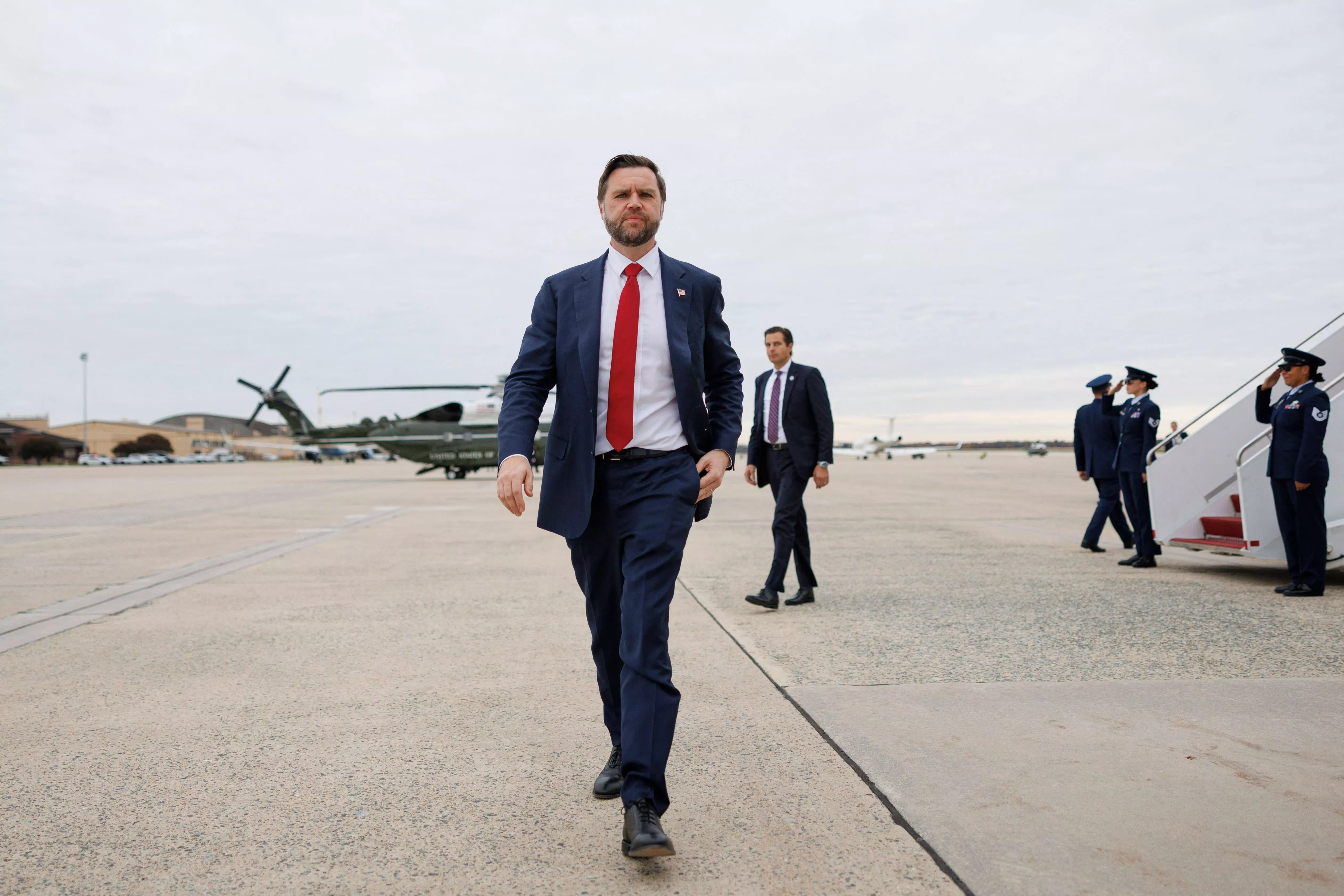
The vice president has blamed the Republicans’ midterm losses on the Iran war, signalling a shift in his political strategy as he seeks to preserve Donald Trump’s backing while preparing for a possible 2028 presidential campaign.
US Vice President JD Vance has begun repositioning himself for the 2028 presidential race after the Republican Party’s heavy losses in the midterm elections, distancing himself from one of the Trump administration’s most damaging policies while avoiding a direct break with the president.
Vance has identified the war in Iran as the main reason Republicans lost ground, arguing that voters who supported the Trump-Vance ticket in 2024 turned to Democrats because they wanted the conflict to end and the administration to focus on the rising cost of living.
“The reason we lost is the war,” Vance wrote on social media, acknowledging that many former Republican voters had backed Democratic candidates. He also listed four priorities that could bring them back: ending the war, tackling inflation, returning to an “America First” agenda and changing the US relationship with Israel.
The intervention marks a notable departure from Vance’s previous strategy of presenting himself as Trump’s natural political heir. Until now, the vice president had repeatedly suggested that Trump would ultimately determine the Republican nominee for 2028, effectively placing the president’s endorsement above a contested primary campaign.
The election results, however, have exposed a growing appetite among Republican voters for a candidate who can distance himself from the administration’s failures without abandoning the MAGA movement.
Iran becomes the political fault line
Vance’s argument is politically useful because it partly reflects voter concerns. The war has contradicted Trump’s repeated promises to avoid foreign military entanglements and contributed to higher fuel prices and broader economic pressures.
Trump has also sought to attribute the economic impact to the conflict, insisting that the US economy remains strong but that rising gasoline prices have prevented voters from feeling its benefits. Asked about Vance’s criticism, the president said he thought the vice president had made a good point, while maintaining that military action against Iran had been necessary to prevent it from acquiring nuclear weapons.
Donald Trump Jr., who has also opposed the conflict, quickly endorsed Vance’s remarks on social media, giving the vice president an important signal of support from within the president’s family.
The strategy also puts pressure on Vance’s potential Republican rival, Secretary of State Marco Rubio. If the Iran war is presented as the central cause of the election defeat, responsibility may fall on the administration’s foreign-policy hawks, including those who advocated a tougher approach towards Tehran. Rubio’s position as the administration’s leading diplomat could make it harder for him to distance himself from that policy.
But Vance’s explanation leaves much of the Republican defeat unaddressed. The party also lost support among younger and Latino voters amid aggressive immigration enforcement, while concerns over tariffs, corruption, healthcare cuts and the administration’s economic priorities contributed to the shift.
Vance has rejected calls for broad immigration reform, describing proposals for amnesty as a mistake. He has, however, suggested changing enforcement priorities, including targeting businesses that employ undocumented workers rather than relying exclusively on the administration’s current approach.
A Trump presidency without the war?
The vice president’s message appears designed to preserve the Republican coalition by presenting the Iran conflict as a deviation from Trump’s original political programme rather than evidence of a broader failure of the administration.
By focusing on the war and the role of Israel, Vance can appeal to voters who favour a more restrained foreign policy while avoiding criticism of other central elements of Trump’s agenda, including immigration enforcement and tax policy. His approach also echoes a growing current on the American right that argues Washington should prioritise domestic economic concerns over overseas military commitments.
Yet the strategy carries risks. Vance supported much of the administration’s agenda and defended the Iran policy for months, despite having previously opposed the conflict. His attempt to distance himself from the war without acknowledging his own role could leave him vulnerable to accusations of political opportunism.
For Trump, meanwhile, the midterm defeat has raised questions about the limits of his influence over the Republican Party. He has denied personal responsibility for the results, arguing that he was not on the ballot, and insisted he would have won had he been a candidate.
Vance faces a more complicated calculation. He needs Trump’s endorsement to secure his position within the MAGA movement, but the election results suggest that simply inheriting the president’s political identity may not be enough to win in 2028.
His emerging pitch is therefore a version of Trumpism with a narrower foreign-policy agenda: keep the domestic political programme, restore the focus on affordability and end the war in Iran. Whether Republican voters will accept that distinction — and whether Trump will allow his potential successor to define it — could shape the party’s next presidential contest.




Be First to Comment