
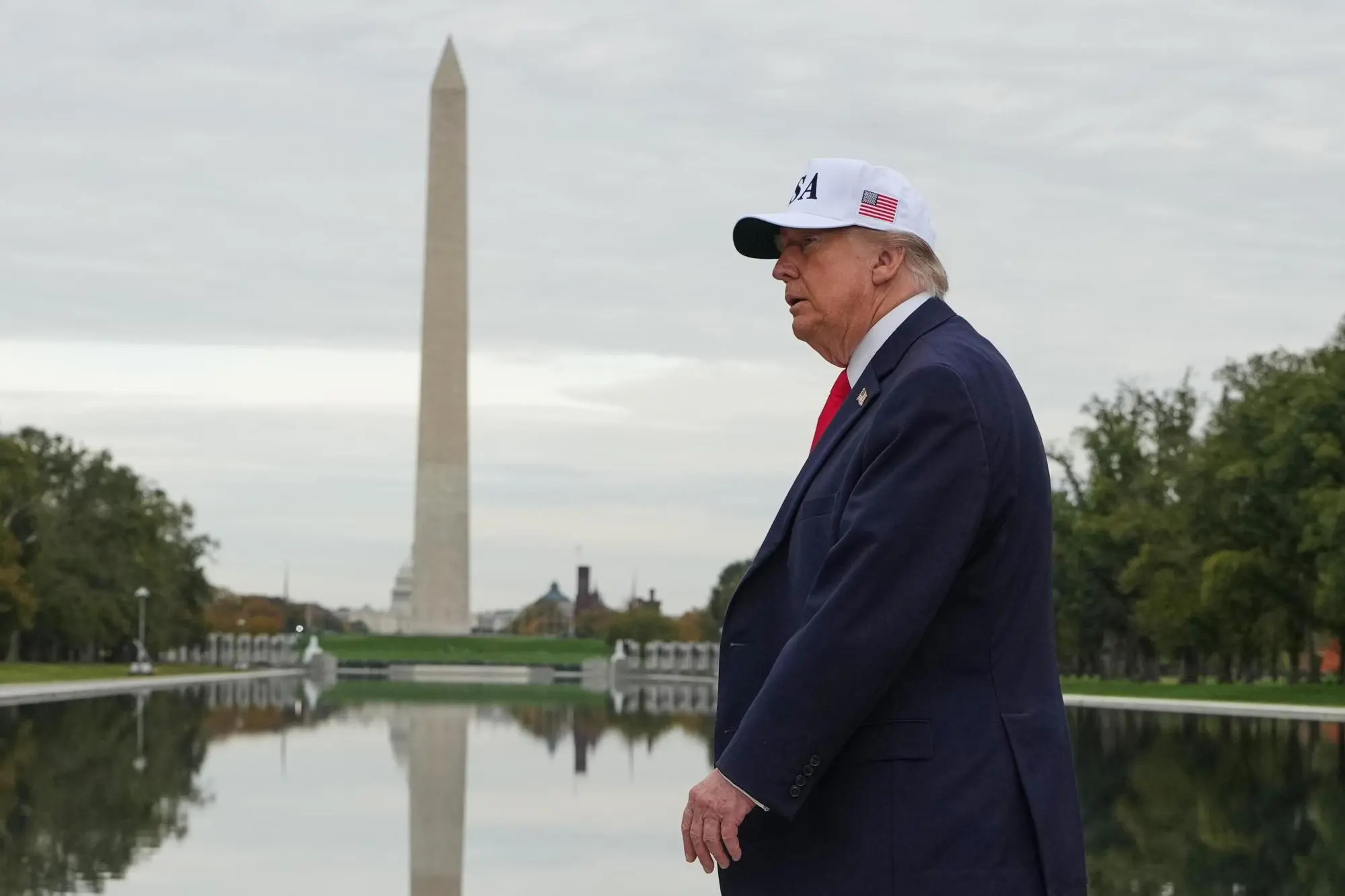
The Democrats’ sweeping midterm victory has dealt a major blow to Donald Trump’s political influence, exposing public anger over corruption, economic mismanagement and divisive policies while threatening the business and political interests of the billionaire network that flourished under his presidency.
The end of Donald Trump’s political dominance may have begun with the Democrats’ sweeping victory in the midterm elections, but its consequences are likely to extend far beyond the White House. The results have not only weakened the president’s grip on Congress but also raised questions about the future of the wealthy political and business network that grew alongside his administration.
Although Trump has more than two years remaining in office, the loss of both chambers of Congress marks a decisive rejection of his leadership. The scale of the Democratic gains, including victories in traditionally Republican states such as Texas, Kansas and South Carolina, suggests that the result was more than a routine midterm setback.
Voters appeared to deliver a broader verdict on the Trump administration’s record, with corruption, political incompetence, foreign policy failures and increasingly aggressive immigration measures among the issues shaping the outcome.
The election also exposed the risks of Trump’s strategy of prioritising personal loyalty over political experience. Several Republican candidates backed by the president suffered heavy defeats, including Ken Paxton in Texas and Vivek Ramaswamy in Ohio. In the latter race, Ramaswamy faced criticism over an attack advertisement that used the estranged mother of his Democratic opponent, Amy Acton, to question her credibility.
In Kansas, Democrat Adam Hamilton’s victory highlighted the importance of candidates capable of appealing beyond traditional party boundaries. Republican Senator Roger Marshall, meanwhile, struggled to defend his record after avoiding public engagements with voters and facing criticism over his handling of questions concerning government spending and medical debt.
The results also marked a significant political breakthrough for Democrats in states where Republican dominance had appeared firmly established. In South Carolina, the defeat of the Republican candidate backed by Trump ended a decades-long period without a Democratic senator. In Mississippi, Democrat Scott Colom came close to unseating Republican Senator Cindy Hyde-Smith, while Georgia’s Jon Ossoff secured re-election.
Trump’s billionaire network faces scrutiny
The political defeat is also expected to put the administration’s business relationships and financial interests under greater scrutiny.
Trump’s family has reportedly accumulated billions of dollars through investments in cryptocurrencies, property and media ventures during his presidency. Meanwhile, the combined wealth of members of his administration and its wider circle of influential figures has been estimated at hundreds of billions of dollars.
The controversies surrounding the administration include a luxury Boeing 747 gifted by Qatar’s royal family, business interests linked to plans for Gaza’s redevelopment and proposals to charge users for early access to Trump’s posts on Truth Social.
Democrats are already discussing measures to tighten ethics rules for public officials. Former Obama administration official Rahm Emanuel has urged the party to prioritise legislation restricting stock trading by government officials, requiring blind trusts for wealthy officeholders and limiting foreign financial contributions to their post-government activities.
The incoming Congress is also expected to examine Elon Musk’s role in the administration. The billionaire’s involvement in the Department of Government Efficiency (DOGE), which oversaw sweeping cuts across federal agencies, attracted criticism over the disruption of public services.
Democratic Senator Chris Coons has indicated that he intends to investigate Musk’s activities, including reports of contacts with Russian President Vladimir Putin concerning Starlink, the satellite network used by Ukrainian forces during the war. Musk, who previously enjoyed considerable influence in Washington, could face a more difficult political environment as Democrats take control of Congress.
A weakened president, but not a powerless one
The election does not immediately remove Trump from power. He retains the presidency and could continue pursuing his agenda, although a Democratic-controlled Congress will make legislation and political manoeuvring considerably harder.
The results also suggest that voters who supported Trump in 2024 did not necessarily endorse every aspect of his political programme. Economic concerns, opposition to foreign military involvement and resistance to what many viewed as unnecessary political cruelty appear to have contributed to the shift.
For the Democrats, the victory offers an opportunity to restore institutional checks on the presidency and investigate decisions made during Trump’s second term. For Republicans, it raises difficult questions about a political strategy increasingly built around the president’s personal authority.
Trump may still seek to shape the final years of his presidency through major construction projects and symbolic initiatives, including his proposed White House ballroom and a planned triumphal arch. But the midterms have demonstrated that his political influence is no longer unquestioned.
The consequences could be particularly significant for the billionaires and technology executives who benefited from their proximity to the administration. With congressional scrutiny returning, the end of Trump’s political dominance may also mark the beginning of a much more difficult period for the network that prospered under his presidency.






Be First to Comment