
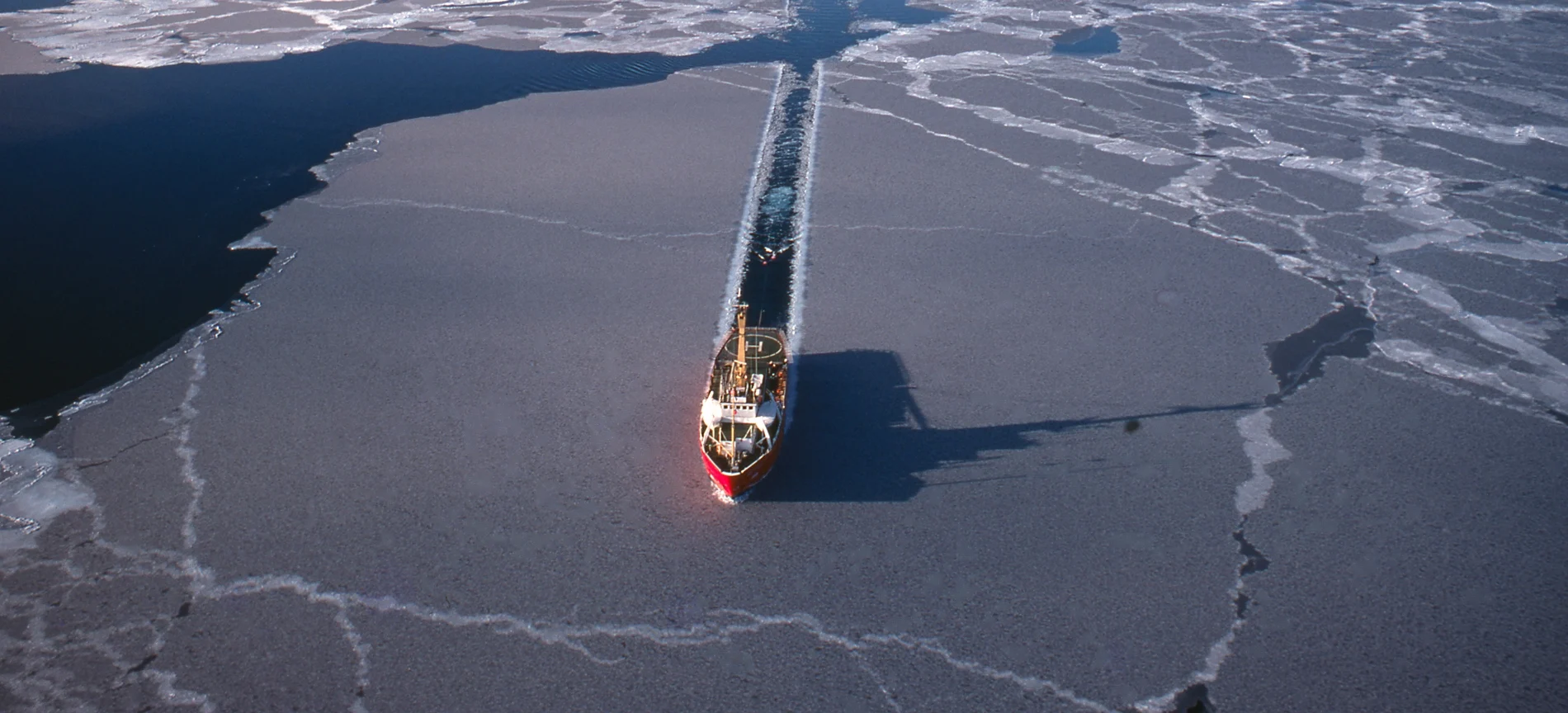
Arctic shipping traffic has reached record levels in 2026 as rising temperatures and shrinking sea ice open new opportunities for Russian trade. Transits by large cargo vessels along the Northern Sea Route have climbed to 365 so far this year, up from 261 for the whole of 2025, according to figures shared with The Observer.
Russian President Vladimir Putin is seeking to capitalise on the trend, urging regional economies to make greater use of the route, which stretches more than 5,000 kilometres along Russia’s northern coastline.
Speaking at the Asia-Pacific Economic Cooperation (APEC) summit in Shenzhen, Putin described the Northern Sea Route as the “main artery” of a wider logistics network connecting road, rail and maritime transport across the Russian Arctic.
“We invite all economies of the region to make greater use of the opportunities offered by these new logistics routes,” he said.
Data from Lloyd’s List Intelligence show that Arctic transits by large cargo vessels have nearly doubled since 2022. The route, traditionally used mainly for Russian liquefied natural gas (LNG) exports, is increasingly carrying other commodities, including grain.
Sanctions redirect Russian exports towards Asia
Geopolitical tensions and Western sanctions are accelerating the shift towards Arctic shipping. Russia’s war with Ukraine has disrupted Black Sea trade, encouraging the diversion of grain exports to northern routes.
Meanwhile, impending EU sanctions on Russian LNG, due to take effect in January 2027, are expected to push Moscow towards Asian markets.
Between January and October 2026, Europe accounted for 81% of deliveries from Russia’s Yamal LNG project in Siberia, according to shipping data analysed by German environmental group Urgewald.
However, the balance is expected to change as Asian demand becomes increasingly important. The Northern Sea Route cuts the journey from Russia to China to around 40 days, compared with more than 80 days via the Cape of Good Hope.
Russia’s eastbound LNG deliveries through the Arctic route have exceeded 4.5 million tonnes so far in 2026, up from approximately 3 million tonnes in each of the previous two years, according to data from Vortexa.
Climate change extends the shipping season
The Arctic is warming faster than any other region on the planet, reducing sea ice and potentially extending the period during which commercial vessels can navigate the Northern Sea Route.
Arctic sea ice reached a record low for March 2026, according to the EU’s Copernicus Earth observation programme. The route is traditionally accessible to commercial shipping mainly between May and November because of seasonal ice and harsh weather conditions.
The melting process is also accelerated by a climate feedback mechanism: as ice disappears, darker seawater absorbs more solar energy, further increasing temperatures.
Despite the growing opportunities, experts warn that the route remains difficult and unpredictable. Sea ice, fog, storms and coastal erosion continue to pose risks, while vessels may require icebreaker escorts and face higher insurance costs.
Shipping experts also caution that rising temperatures will not create a consistently ice-free corridor. For now, the expansion of Arctic trade is expected to strengthen economic ties between Russia and China rather than establish a viable alternative to established global shipping routes.






Be First to Comment