
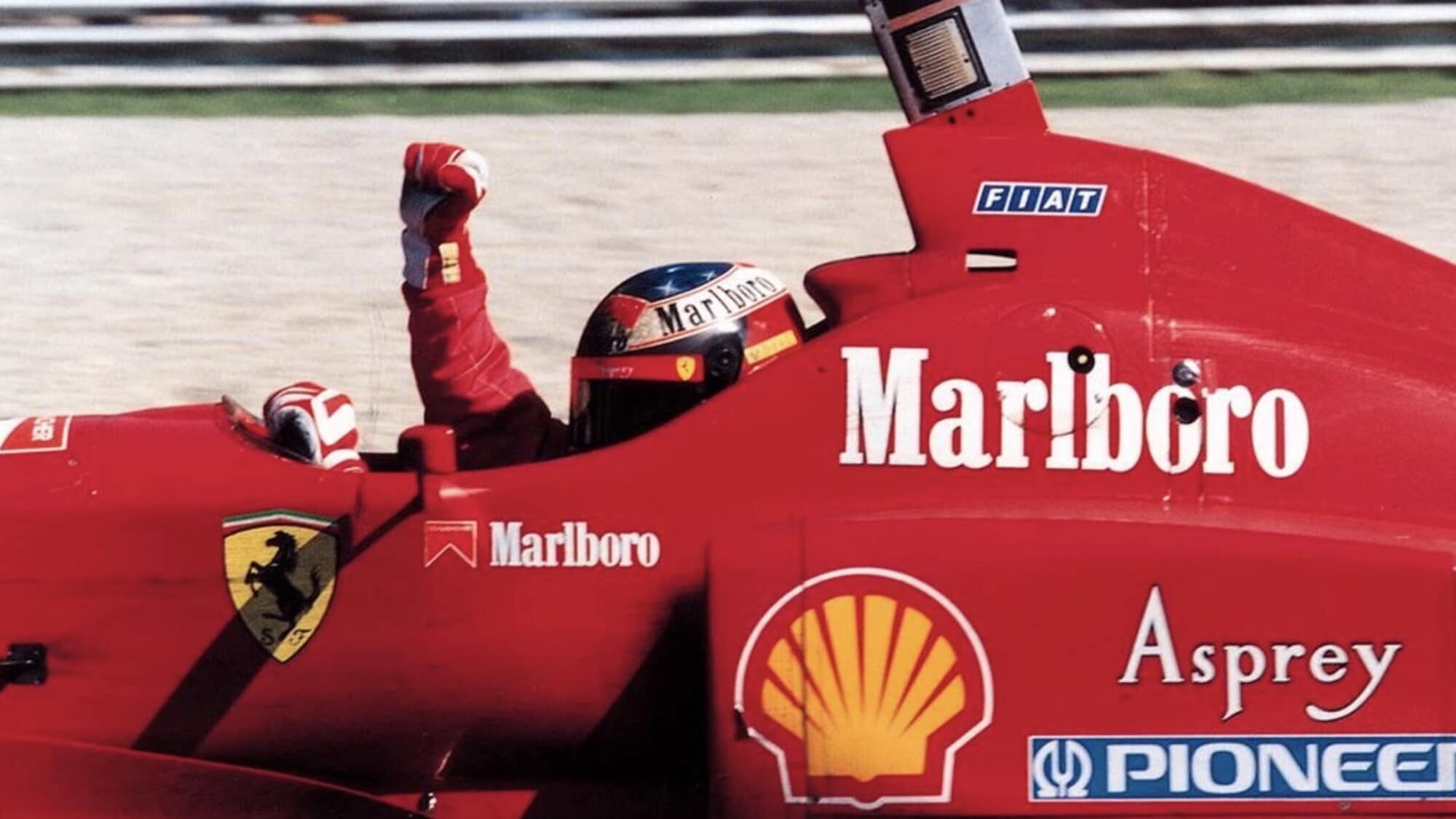
The tribute will extend beyond the car, with Ferrari’s mechanics also wearing half-red, half-black uniforms reminiscent of those used by the team 30 years ago
Ferrari will arrive at Monza with a special livery inspired by 1996, the year Michael Schumacher began his Ferrari career in Maranello. The design is minimalist rather than revolutionary, but that is precisely what makes it instantly recognizable and iconic in the history of the Scuderia.
For the occasion, the cockpit of the SF-26 will also return to red, bringing back another classic element. The tribute will not be limited to the car, either. Ferrari’s mechanics will wear half-red, half-black overalls, similar to those worn by the team three decades ago.
This is more than an aesthetic exercise. The 1996 season marked the beginning of one of the most important chapters in Ferrari’s modern history.
It was Schumacher’s first season as a two-time world champion and, notably, also marked Shell’s return to Ferrari after several years away. The partnership would go on to become one of the defining symbols of the winning cycle that followed.
The Ferrari of 1996, however, was still a long way from becoming the dominant machine it would eventually be.
As is the case today, the engine was not one of Ferrari’s strengths. The first Ferrari V10 was never going to be immediately competitive, although it became considerably more effective during the second half of the season.
The F310, designed remotely by John Barnard, represented a major but only partially successful technical revolution for Maranello. Ferrari had abandoned its traditional V12 in favor of the first V10 in its Formula 1 history.
The new ten-cylinder engine initially struggled, particularly against Renault’s benchmark unit powering Williams. The deficit was not simply about horsepower. Weight, fuel consumption, drivability and integration with the chassis all affected the car’s overall performance.
But the V10 provided a foundation to build on. Ferrari made significant aerodynamic corrections during the season and, together with continued development of the F310, managed to close at least part of the gap.
The car itself was also born with several compromises. The original version, with its distinctive low nose, was hardly one of Maranello’s most successful designs. The F310 underwent major changes throughout the year because of excessive drag and balance problems.
Gustav Brunner and William Toet worked on introducing the raised nose from the Canadian Grand Prix, nicknamed the “pelican”, without having to redesign the entire chassis. Only the front crash structure had to be modified — something that would be virtually unthinkable today under the budget cap.
Williams’ FW18 remained the superior overall package. Ferrari, however, had something — or rather someone — its rivals did not: Michael Schumacher.
Schumacher took pole at Imola before a major mistake in Monaco, but he went on to win three races in 1996, including at Monza. At the time, he was widely regarded as having those famous extra three tenths of a second in his driving.
Schumacher was arguably the most complete and fastest driver in Formula 1 at that stage of his career. There was a widespread belief that he could find roughly three tenths per lap over any other driver in identical machinery.
Whether the exact figure was real or not, engineers consistently recalled that Schumacher had an extraordinary ability to drive around the problems of a car. More importantly, he could adapt his driving while simultaneously telling engineers where changes were needed.
Monza offered a perfect illustration of what Schumacher brought to Ferrari.
Before the Grand Prix, he completed hundreds of kilometers of testing at the Italian circuit. Ferrari worked intensively on the F310’s efficiency and reliability, searching for a setup that would minimize aerodynamic drag without making the car impossible to control under heavy braking and through the chicanes.
Schumacher eventually ran an exceptionally flat rear wing. Despite the car’s chassis and aerodynamic limitations, he and the team developed a mechanical setup designed to maximize performance while managing tire degradation.
It was an extreme compromise, made possible in part by Schumacher’s ability to handle a lighter-downforce car that was more difficult to control in areas where stability and precision were essential.
The testing allowed Ferrari to refine the configuration lap after lap. The F310 did not suddenly become a better car. Instead, Ferrari built a package specifically suited to Monza around its limitations, combining the developments made during the season with straight-line speed, a degree of luck and, above all, Schumacher.
The first indication of what was coming had arrived even earlier.
When Schumacher arrived at Fiorano for his first serious day of work with Ferrari, he wanted to immerse himself immediately in his new environment. He went almost straight onto the track. For that first day, he even chose not to bring his wife Corinna, simply because he wanted to remain completely focused on the team, the engineers and everything he needed to discover about Maranello.
He had not joined Ferrari merely as the world champion the team had lured away from Benetton. He wanted to understand why Ferrari was not winning.
He wanted to learn how the team worked, how the car responded to changes, where its weaknesses lay and, above all, what needed to change.
In a Formula 1 era without simulators, teams could test almost without restriction, and Schumacher turned testing into one of his main development tools. Fiorano, Mugello and Monza became familiar territory, alongside the official group tests.
Session after session, from dawn until dusk, he worked with the engineers to develop the car. Ferrari had found someone it could rely on and believe in — a driver who rarely complained, never looked for excuses and did not publicly point fingers when things went wrong.
1996 was not Ferrari at its best. It was where everything began
The simple but evocative livery, the return of the red cockpit, gold wheels, the red-and-black uniforms of the mechanics, Shell’s return, the first Ferrari V10, the F310 and, above all, Michael Schumacher — all are reminders of a season that marked the beginning of a technical and sporting reconstruction that would eventually transform Ferrari’s history.
Thirty years later, bringing those elements back to Ferrari at Monza is a way of remembering the moment when a new era truly began.



Be First to Comment