
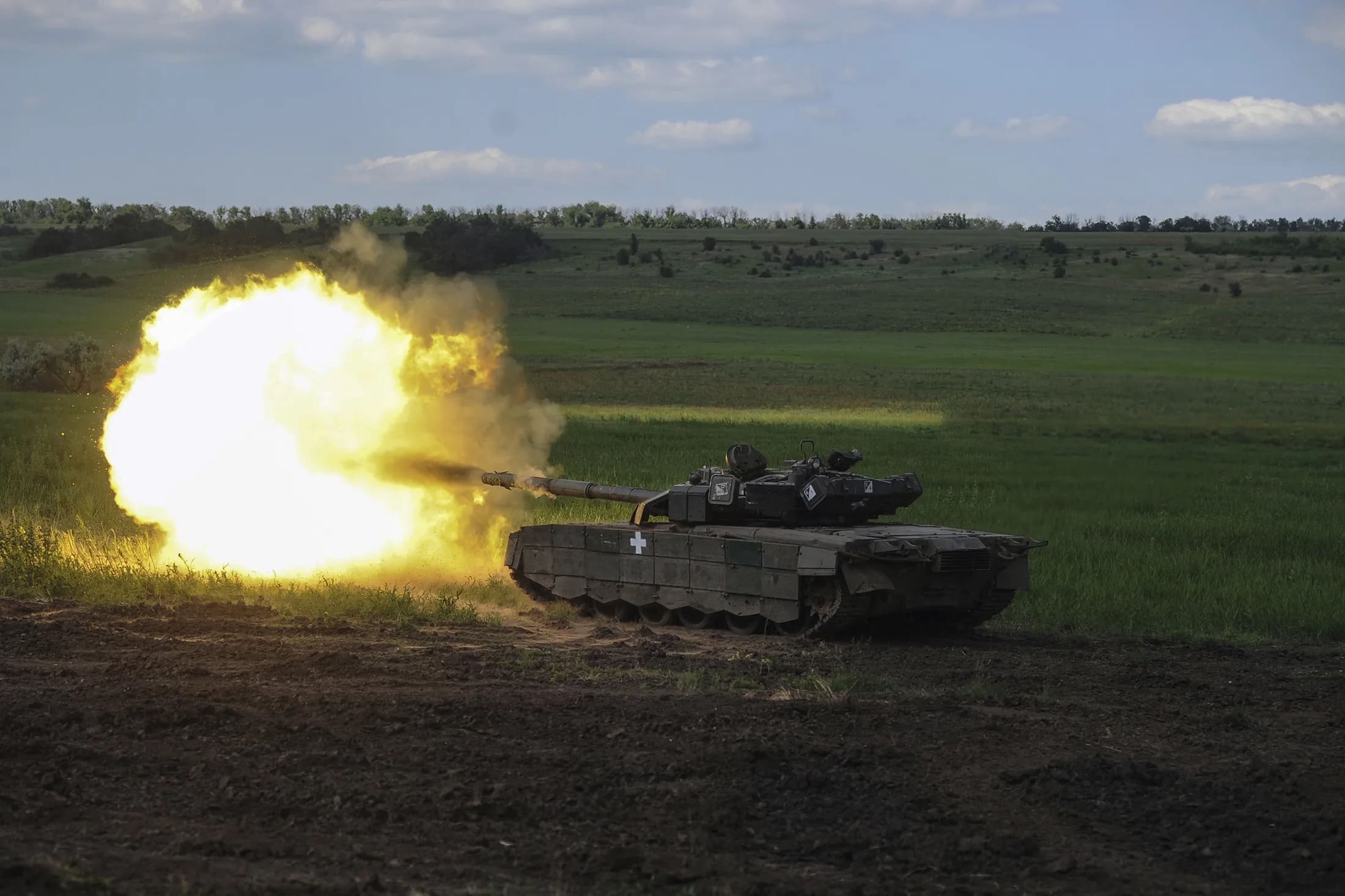
Ukrainian forces have brought tanks back into frontline operations for the first time in more than two years, using new protective armour and support from drones and ground robots. The shift suggests that armoured vehicles could be regaining a role in modern warfare as militaries adapt to the growing threat posed by unmanned systems.
Footage released in October showed two tanks, reportedly British Challenger 2 models, advancing towards Russian positions near the village of Oleksandrivka. Covered in metal structures designed to protect them from drone attacks, the vehicles were accompanied by aerial drones and ground robots. After firing on trenches and buildings, Ukrainian infantry moved in to secure the positions, while the tanks withdrew.
At the start of Russia’s full-scale invasion in 2022, tanks played a central role in the fighting. But Russia’s extensive defensive lines, built ahead of Ukraine’s counteroffensive in June 2023, made armoured advances increasingly difficult. By 2024, the widespread use of reconnaissance and attack drones had made tanks and other ground vehicles vulnerable to relatively cheap strikes, forcing both sides to scale back their deployment.
New tactics to counter drone warfare
Drones have transformed the battlefield by allowing operators to attack vehicles from a safe distance, often without needing a direct line of sight. They can also target the less-protected upper and rear sections of tanks. Their relatively low production costs make it possible to deploy them in large numbers, potentially overwhelming a vehicle’s defences.
Ukraine’s operation near Oleksandrivka relied on a different approach. In the months before the assault, Ukrainian forces targeted Russian supply routes to disrupt deliveries of batteries and ammunition to drone crews. They also intercepted Russian communications to identify positions before striking them with artillery.
The strategy helped Ukrainian tanks approach the combat zone with a lower risk of detection. It also highlighted the importance of combined-arms operations, in which tanks work alongside infantry, artillery, air-defence systems and unmanned vehicles rather than operating independently.
Next-generation tanks to coordinate drone swarms
Despite the growing risks, tanks retain advantages in speed, firepower and protection. Military investment in armoured vehicles continues, with Poland expected to have more than 1,100 tanks by the end of the decade.
The next generation of vehicles, including the UK’s Challenger 3 and the US’s M1E3 Abrams, is also being designed to take on a broader role as command platforms for drone swarms. Western militaries are increasingly working with Ukrainian forces to draw lessons from the battlefield and adapt their own capabilities.
The return of tanks to the front line does not mean a return to pre-drone warfare. Instead, it points to a new phase in which armoured vehicles, drones and electronic warfare systems must operate together.






Be First to Comment