
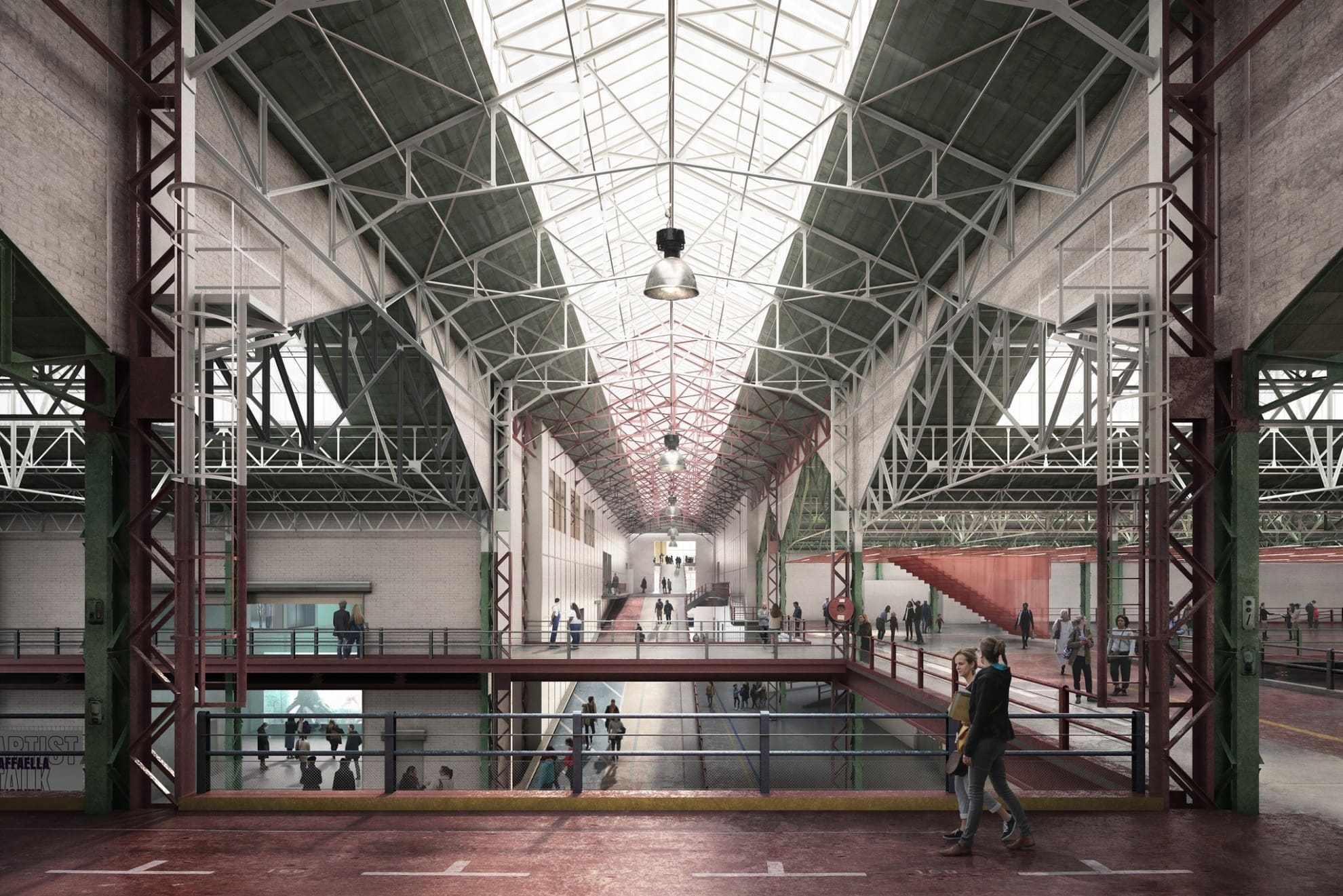
Housed in an iconic 1933 automotive showroom, Kanal aims to become an open cultural meeting place rather than a traditional art museum. Its ambitious scale, however, raises questions about whether it can attract enough visitors.
Brussels’ new Kanal museum, set to open on November 28, transforms a former Citroën showroom and workshop into a 40,000-square-metre cultural complex. Designed by a consortium of architecture firms from the UK, Switzerland and Belgium, the project preserves much of the building’s industrial character while creating spaces for art, social activities and public gatherings.
The building was commissioned by carmaker André Citroën in 1933 on the Charleroi-Brussels canal. Its distinctive glass, steel and concrete façade has long made it an architectural landmark. Plans to turn it into a contemporary art museum initially faced scepticism, but the redevelopment has sought to make the historic structure central to the visitor experience.
Rather than functioning solely as an exhibition space, Kanal aims to offer an accessible environment where art can be experienced alongside everyday activities. Around half of its spaces will be freely accessible, including a bakery and library, as well as areas for children and informal gatherings.
Preserving the industrial character
The architects retained key features of the former garage, including its vast central hall and original architectural details. The building’s steel roof and façade elements were restored, treated to remove asbestos and fitted with insulation and double glazing. Later additions that had divided the original showroom were removed, restoring the building’s full height and scale.
Three new concrete structures house climate-controlled exhibition galleries, an architecture centre and offices. The exhibition spaces feature minimalist concrete walls, while the rest of the complex operates with a less energy-intensive temperature system.
The project deliberately avoids the kind of landmark architecture often used to promote major cultural institutions. Instead, the design team built on the building’s existing identity and industrial heritage.
Can Kanal attract 500,000 visitors?
The museum aims to attract 500,000 visitors annually, including residents of nearby Molenbeek, one of Brussels’ most multicultural districts. However, the scale of the complex raises questions about whether it can sustain that level of public interest.
Its extensive indoor spaces include seating areas, workspaces, picnic spots and flexible exhibition rooms. A rooftop bar designed to resemble a cruise ship is among the few elements that stand apart from the building’s otherwise restrained architectural approach.
Examples such as Rotterdam’s Fenix museum and Ghent’s Wintercircus suggest that cultural venues combining exhibitions with public spaces can become popular destinations. Kanal, however, is considerably larger.
The architectural conditions for turning the former garage into a lively urban destination are in place. Whether the public will embrace the ambitious project remains to be seen.






Be First to Comment