
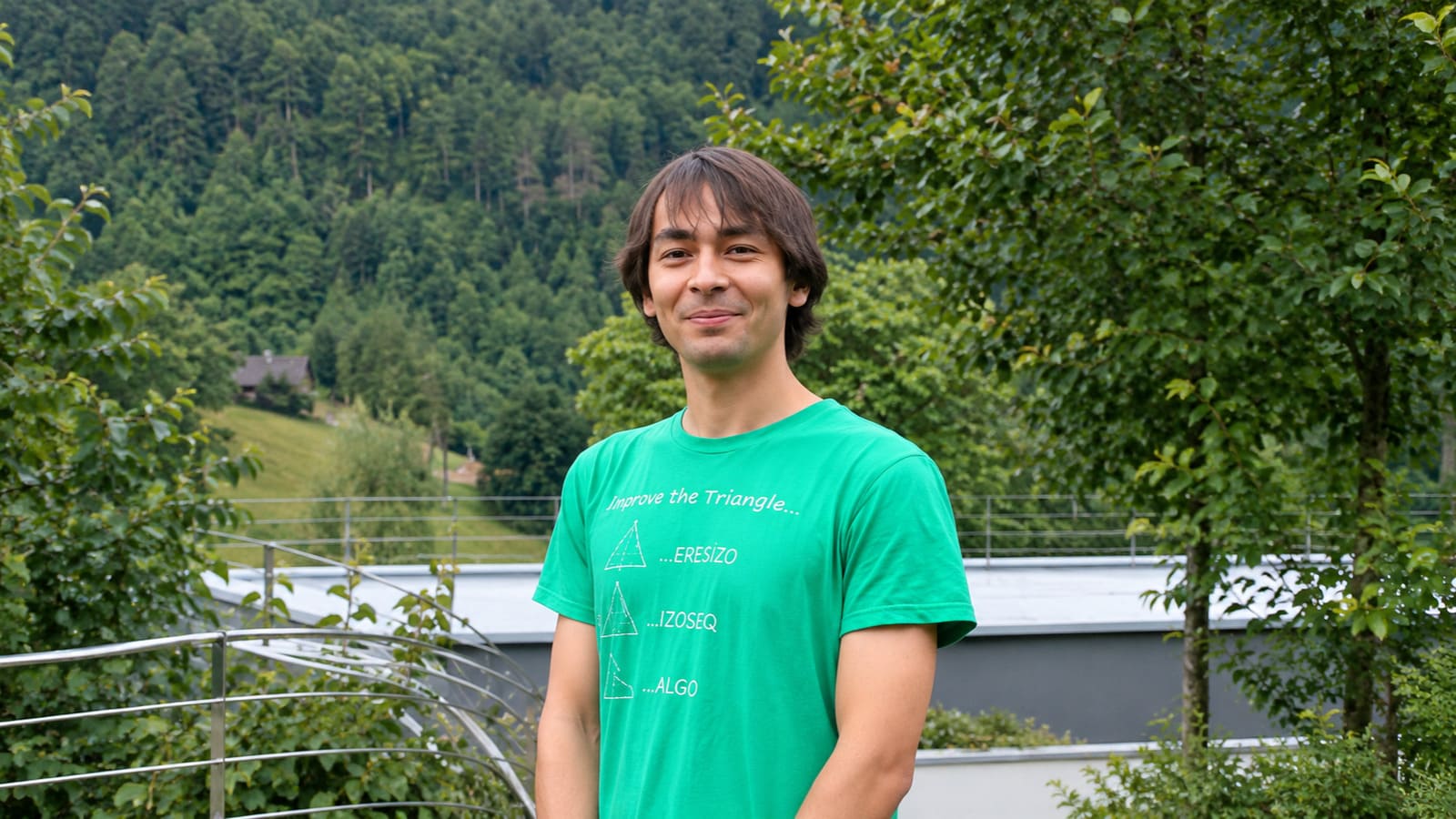
Turkish mathematician Levent Alpöge, who works at artificial intelligence company Anthropic, says he has proved the Riemann hypothesis, one of mathematics’ most enduring unsolved problems, with the help of the company’s AI model Claude.
First proposed in 1859, the hypothesis has remained unproven for more than 160 years. Alpöge announced his findings in a four-page note published on his personal website on Friday. Rather than submitting a conventional academic paper, he shared computer code that he says can be used to verify the proof.
Alpöge also praised Claude’s contribution, saying the AI model had outperformed him during the final stages of the work.
If independently verified, the claimed breakthrough would rank among the most significant achievements involving artificial intelligence in mathematics.
The 167-year-old mathematical puzzle
Proposed by German mathematician Bernhard Riemann in 1859, the Riemann hypothesis concerns the mathematical distribution of prime numbers.
It states that all non-trivial zeros of the Riemann zeta function – a mathematical function central to number theory – lie on a specific vertical line in the complex plane, where the real part of each zero is equal to 1/2.
Prime numbers are integers divisible only by themselves and one, such as 2, 3, 5 and 7. Proving the hypothesis would provide a deeper understanding of how these numbers are distributed, addressing one of the most fundamental questions in mathematics.
Mathematicians examine Alpöge’s proof
The proof shared by Alpöge was developed using Lean, a programming language designed to formally verify mathematical statements and check the logical validity of proofs.
Oxford University mathematician James Maynard said he believed the work was probably correct, estimating his confidence at 98 to 99 per cent. However, he stressed the importance of ensuring that the Lean system had verified precisely the result that needed to be established.
Cornell University professor Steven Strogatz also highlighted Alpöge’s role in guiding Claude towards the correct mathematical ideas. He compared the collaboration to “a highly skilled jockey riding a very fast horse”, emphasising the importance of human expertise alongside AI capabilities.
Meanwhile, mathematician Alessandro Masullo published a separate draft of a proof he had been developing for years on the same day. Stanford University professor Brian Conrad described Masullo’s work as convincing but said further revisions were needed to complete the manuscript. A final version is expected to be published next year.
A $1 million prize for solving the Riemann hypothesis
The Riemann hypothesis is one of seven Millennium Prize Problems identified by the Clay Mathematics Institute in 2000. Each problem carries a $1 million reward for a verified solution.
The question has also attracted growing attention from artificial intelligence companies. In October, OpenAI published research presenting more than 350 findings related to the so-called half-Riemann hypothesis, a less demanding version of the original problem. A complete solution, however, was considered to require considerably greater mathematical advances.
Alex Kontorovich, a mathematician at Rutgers University, said Alpöge’s claim had surprised him, despite the rapid progress artificial intelligence has made in mathematical research.
The claim will now depend on further scrutiny by the mathematical community before it can be recognised as a solution to one of mathematics’ most famous problems.





Be First to Comment