
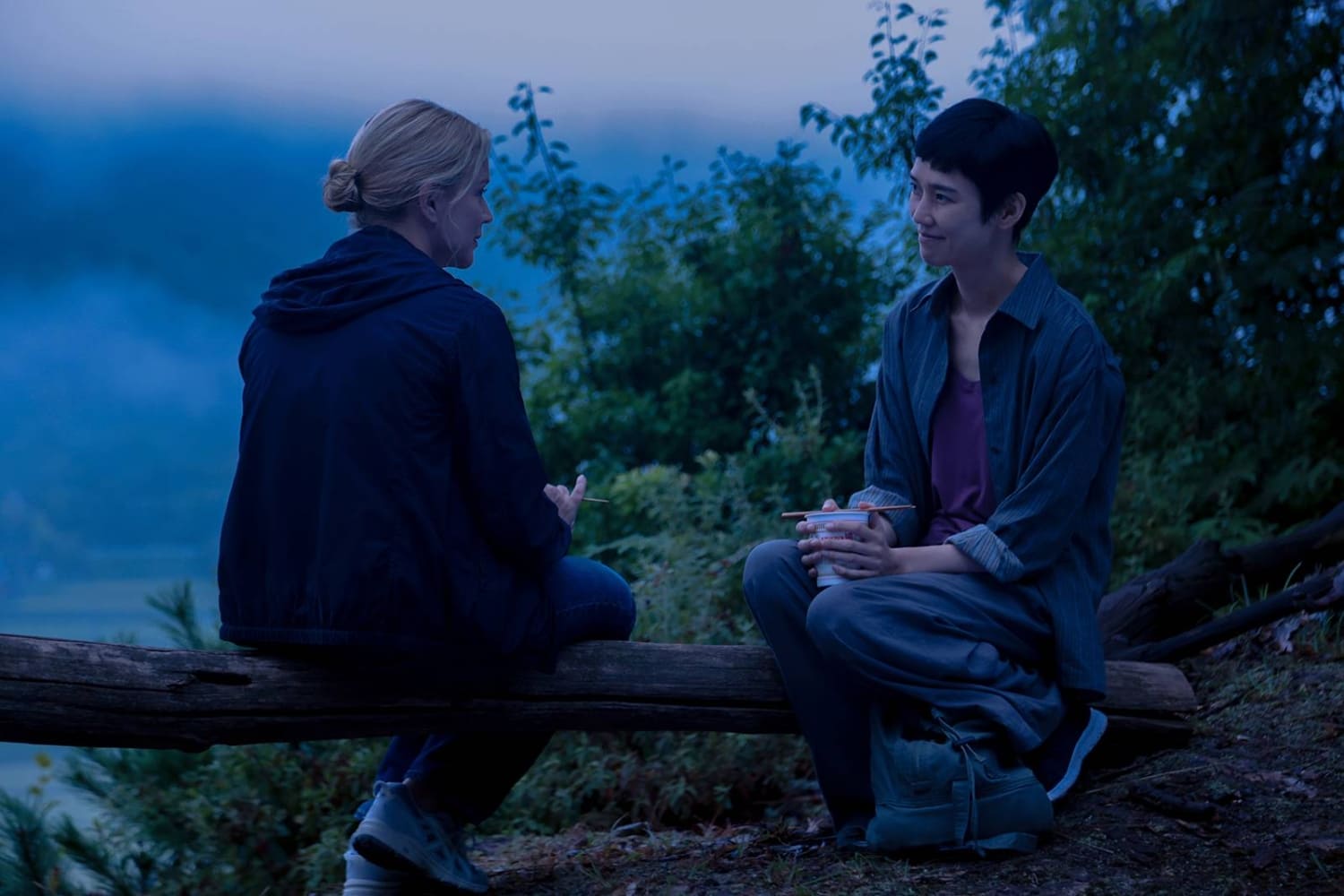
Ryusuke Hamaguchi’s latest film, All of a Sudden, brings together questions of human connection, caregiving and capitalism through the evolving friendship between two women. The three-hour drama has drawn strong reviews following its Cannes premiere, where its lead actresses, Virginie Efira and Tao Okamoto, shared the Best Actress award.
Set largely in a Parisian nursing home, the film follows Marie-Lou (Efira), the facility’s director, as she struggles to introduce a more humane approach to dementia care. Known as Humanitude, the method emphasizes eye contact, touch, communication and helping patients remain physically active. But its implementation faces resistance from staff and financial pressure from the institution.
Her life takes an unexpected turn when she meets Mari (Okamoto), a Japanese theatre director living with terminal cancer. After an evening performance, the two women decide to spend the night together, talking about their lives, work, illness and the wider forces shaping society. Their growing friendship becomes the emotional centre of the film.
One of the film’s most striking sequences is an 11-minute whiteboard lecture in which Mari explains the relationship between capitalism and the destruction of nature, leisure time and social welfare. She also examines the links between capitalism and democracy, connecting these broader systems to the pressures Marie-Lou faces at the nursing home.
Hamaguchi has described the sequence as a crucial turning point rather than an academic detour. Speaking on IndieWire’s Filmmaker Toolkit podcast, he said its unconventional format creates suspense by making audiences wonder where the discussion will lead. He also credited the performances of Efira and Okamoto, particularly the attention Efira brings to listening and responding.
The director’s approach reflects a broader interest in how ordinary conversations can carry profound ideas. In All of a Sudden, discussions about economic systems and the future of humanity are grounded in intimate gestures, physical contact and the everyday challenges of caring for others.
The film also explores the tension between measurable time and the moments that give life meaning. Its extended runtime encourages audiences to experience the passing of time alongside its characters, while the unexpected encounter between Mari and Marie-Lou becomes a turning point for both.
Based partly on a 2019 book of correspondence between philosopher Makiko Miyano, who was living with terminal cancer, and medical anthropologist Maho Isono, the screenplay was written by Hamaguchi and Léa Le Dimna.
At 197 minutes, All of a Sudden continues Hamaguchi’s tradition of long, dialogue-driven storytelling, following the international success of Drive My Car, which received Oscar nominations for Best Picture and Best Director. The new film is now arriving in select theatres, with distributor Neon positioning it as a potential awards-season contender.










Be First to Comment