
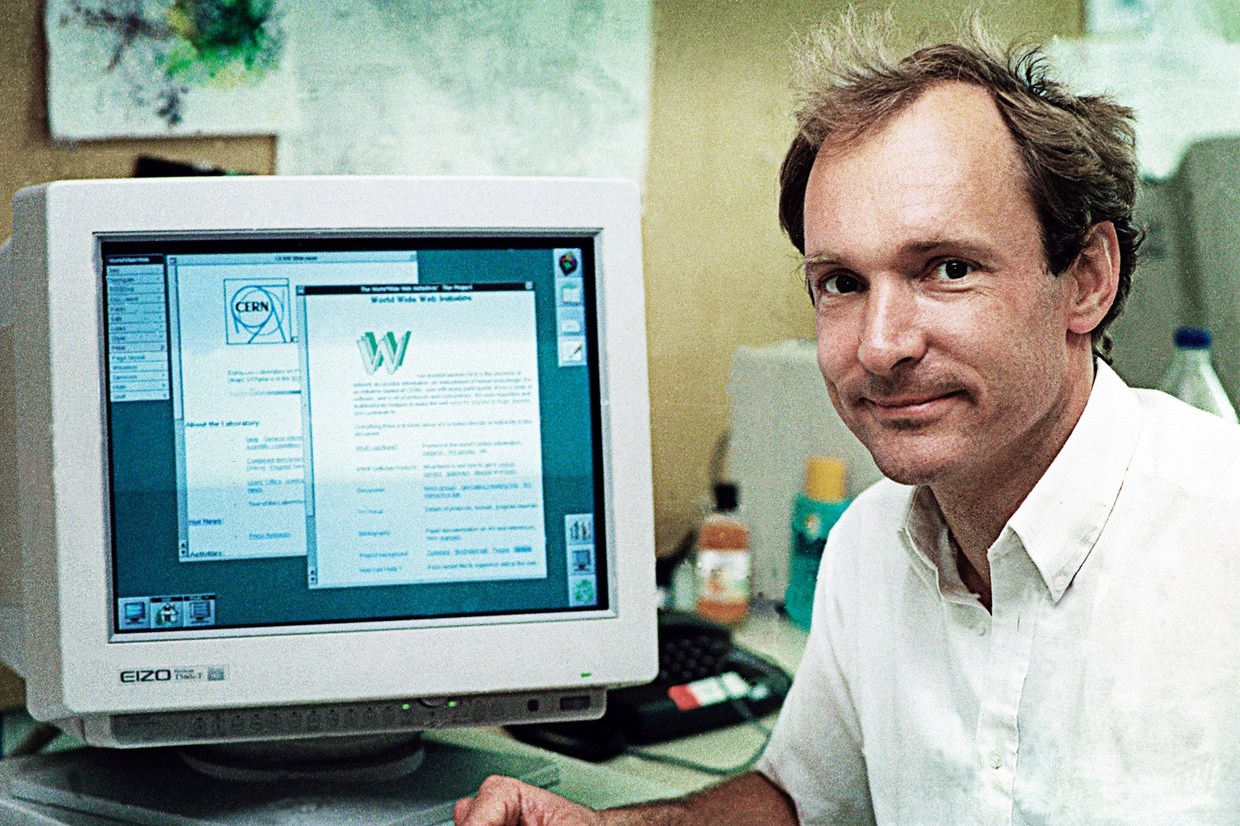
Born from the visionary project of British computer scientist Tim Berners-Lee, the World Wide Web remains one of the fundamental building blocks of the digital world 35 years after the launch of the first website, even as the internet enters the age of artificial intelligence.
One of the world’s most recognizable acronyms, the World Wide Web (WWW), is turning 35. The first website, widely regarded as a landmark in the beginning of the digital age, was published by CERN in Geneva, Switzerland, at info.cern.ch on August 6, 1991. The move laid the foundations for the digital world that today hosts billions of websites.
The idea for the Web was born in 1989
The foundations of the World Wide Web were laid in 1989, when British computer scientist Tim Berners-Lee proposed creating a global network that would connect researchers’ computers and make it easier to share information. The same year, the first formal document outlining the concept of the WWW was produced.
It took another two years for the vision to become reality. In 1991, info.cern.ch, the first website in history, went live. The site contained basic information on how users could create their own websites, along with a guide explaining how to use the Web. In a sense, it served as an instruction manual for the emerging internet—and it remains freely accessible 35 years later.
Browsers bring the internet to the masses
Although the first website had gone online, it initially attracted very few visitors. In fact, the first visit took place around 20 days after the site was launched. One of the main reasons was that web browsers accessible to the general public did not yet exist.
In 1990, Berners-Lee developed the source code for the first web server on a NeXT Cube computer and named the system the World Wide Web. However, the expensive NeXT Cube machines, produced by Steve Jobs’ company, were available only in limited numbers and could not reach a broad audience.
Access to the Web became significantly easier in 1993 with the release of the Mosaic browser, developed at the University of Illinois. CERN’s decision to make the Web’s source code freely available allowed developers to create their own browsers, servers and linking systems. The World Wide Web subsequently began to expand rapidly.
Still the backbone of the digital world in the AI era
Internet habits have changed dramatically over the years. There was a time when people searched for information in encyclopedias and dictionaries, followed by the rise of internet search engines and Google. Today, users are also turning to AI-powered chatbots to find information.
Despite these changes, the basic structure underpinning the digital ecosystem has remained largely unchanged. The World Wide Web continues to serve as the backbone of the internet in the age of artificial intelligence.
There were around 25,000 websites in 1995, a figure that reached 1 billion in 2014. Today, an estimated 1.9 billion websites exist worldwide. Although only a fraction of them are active, the World Wide Web continues to maintain both its presence and its importance 35 years later in a technology landscape that is constantly evolving.




Be First to Comment