
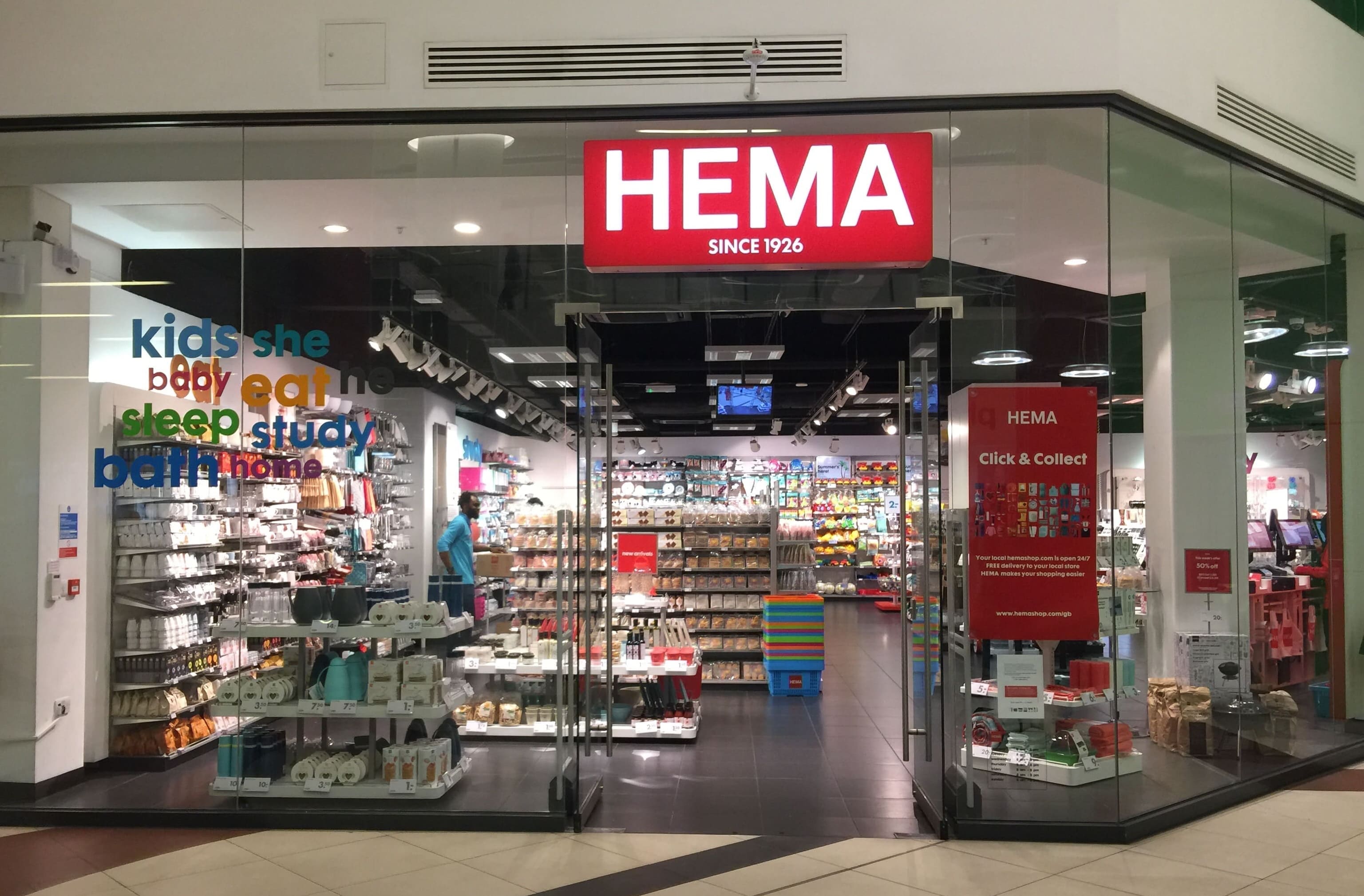
Founded in Amsterdam in 1926 to make everyday goods affordable, the Dutch chain has survived wars, changing consumer habits and years of financial uncertainty while holding on to many of its best-known products.
Dutch retailer Hema is celebrating its 100th anniversary, a milestone for a chain that has remained a familiar part of everyday life despite a century of economic and social change.
The company opened its first store on Amsterdam’s Kalverstraat on 4 November 1926. Its founders, Arthur Isaac and Leo Meyer, who also owned the upmarket department store De Bijenkorf, wanted to create a retailer offering affordable goods to ordinary consumers. Inspired by the American Woolworth chain, Hema initially sold a wide range of products at a fixed price of 25 cents.
A century later, much of its original product range remains on the shelves, including underwear, bedding, stationery, confectionery and household goods. Some prices have changed considerably: a set of buttons that once cost a quarter now sells for €7.95.
Two products have become particularly associated with the brand. Hema introduced its famous tompouce pastry in 1932 and now sells around 14 million a year. Its hot smoked sausage became a bestseller in 1936 after a store manager accidentally ordered 10,000 instead of 1,000. Rather than waste the delivery, he heated the sausages and sold them to customers. At its peak, the chain sold 30,000 a day.
The company expanded rapidly during its early years, reaching revenues of 4.7 million guilders in 1929. Initially dismissed by wealthier consumers, it gained popularity during the economic crisis of the 1930s, when demand for low-cost goods increased.
The Second World War dealt a devastating blow to the business. Around 270 Hema employees were killed in concentration camps, while some senior managers fled to the United States.
In the post-war decades, affordable prices helped the retailer rebuild and expand. By 1978, it had 160 stores and had become one of the Netherlands’ most popular chains. However, competition from retailers including Zeeman, Blokker and Albert Heijn began to erode its market share in the following years.
An extended period of financial difficulties followed a 1998 merger involving its parent company, Koninklijke Bijenkorf Beheer, and Vendex. Hema experimented with new business lines and repeated changes to its retail strategy, while mounting financial pressure brought it close to bankruptcy in 2014.
The chain changed hands several times before the family behind supermarket group Jumbo became involved in 2020, allowing Hema to refocus on its core retail business.
Under chief executive Saskia Egas Reparaz, the company has updated its store layouts while largely preserving its traditional product range. It has also sought to win back customers by emphasising quality and responding to everyday shopping needs.
With around 700 stores, including 540 in the Netherlands, Hema returned to profitability from 2022. Its operating profit exceeded €100 million last year, compared with a loss of €200 million in 2021.
Rather than reinventing itself, the retailer has increasingly relied on the familiarity of its products, from smoked sausages and pastries to buttons and socks. After a century, that consistency remains central to its appeal.






Be First to Comment