
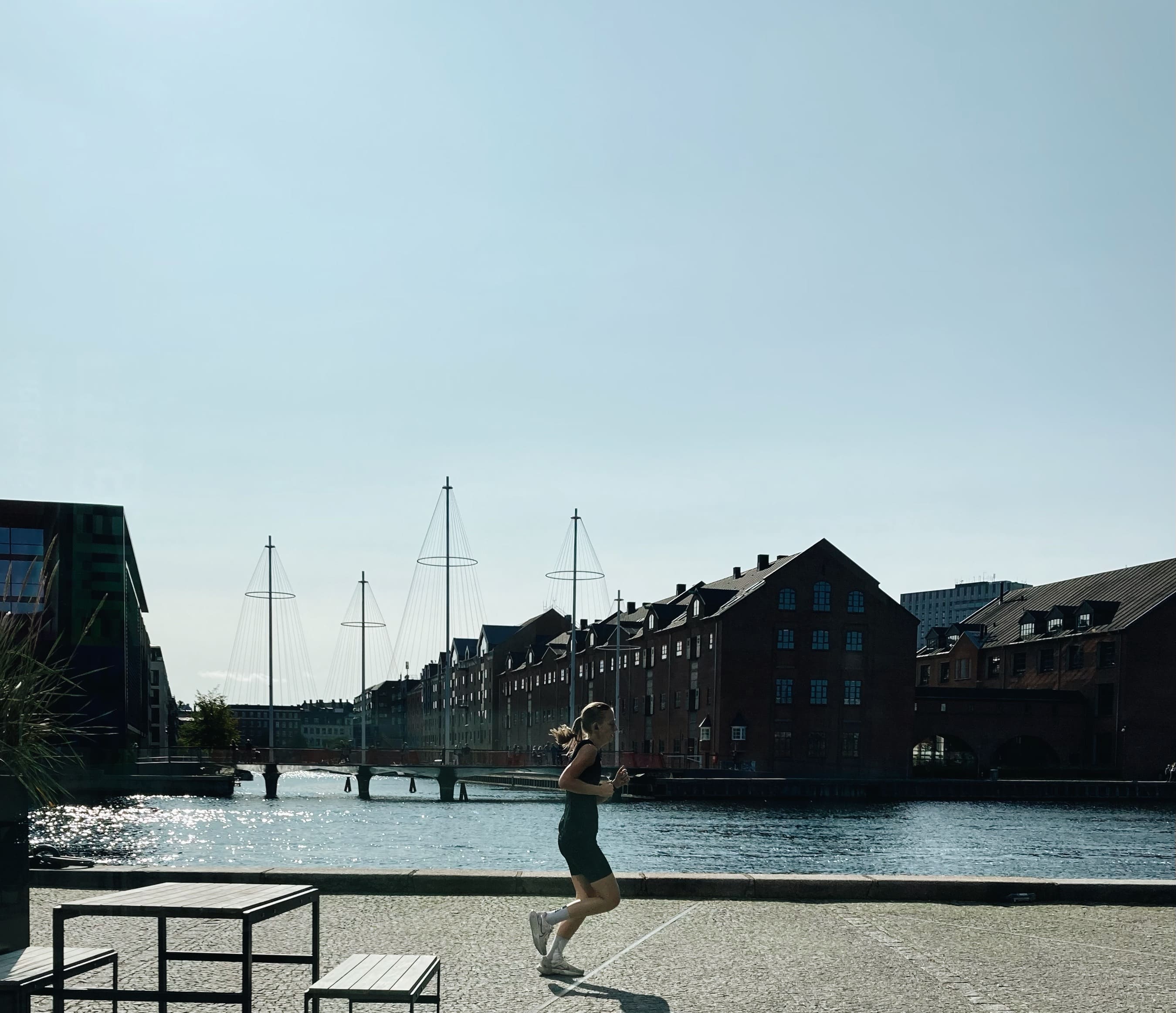
Copenhagen has emerged as Europe’s leading city for clean air policies, while Athens and Bucharest rank at the bottom of a new assessment of 40 major European cities. Despite significant improvements over the past decade, more than 90% of the cities examined are still failing to meet at least one of the European Union’s upcoming air quality limits for 2030, highlighting the scale of the challenge facing urban authorities.
The report, Free to Breathe? Ranking clean air progress and policy in 40 European cities, published by Clean Cities, compares urban air pollution levels, progress over the past decade and the policies introduced to reduce emissions from road transport. Its findings point to a clear geographical divide: the strongest performers are concentrated in northern Europe, while cities in southern, central and eastern Europe account for all 11 locations receiving the lowest grades.
Copenhagen secured first place with 54.8 points out of 60, receiving the highest grade of A. Greater Stockholm followed with 50.8 points, ahead of Greater Helsinki with 48.9. These were the only three cities to achieve an A grade and, more significantly, the only ones in the study already meeting all four of the EU’s revised 2030 limits for nitrogen dioxide (NO2) and fine particulate matter (PM2.5), covering both annual and daily concentrations.
At the other end of the ranking, Bucharest placed 39th with 17.9 points, while Athens came last with 13.8. Both received an F grade. The results suggest that although geographical conditions influence pollution levels, the policies adopted by city authorities remain a decisive factor in determining how quickly air quality improves.
Most cities face a difficult road to 2030
The scale of the problem becomes clearer when the findings are compared with the EU’s revised Ambient Air Quality Directive (AAQD), which introduces stricter pollution limits from 2030.
Of the 40 cities assessed, 37 currently fail to meet at least one of the four new limits, while 18 fail all four. This means that 45% of the cities examined would need to address every category of the new standards, despite having just over three years remaining before they come into force.
Only Copenhagen, Greater Stockholm and Greater Helsinki currently meet all four requirements. However, even these cities have not achieved the air quality levels recommended by the World Health Organization (WHO). Greater Stockholm is the only city in the ranking to meet the WHO’s annual guideline for PM2.5, while none of the 40 cities complies with the WHO’s annual nitrogen dioxide guideline.
The difference between the EU’s upcoming standards and the WHO recommendations is also significant. The revised directive sets annual limits of 10 micrograms per cubic metre for PM2.5 and 20 micrograms for NO2. The WHO recommends considerably lower levels of 5 and 10 micrograms respectively.
According to the European Environment Agency, nine in 10 Europeans are exposed to air pollution above the WHO’s recommended levels. The report also highlights the wider health consequences, noting that more than 330,000 premature deaths in the European Economic Area were attributable to long-term exposure to fine particulate matter, ozone and nitrogen dioxide in 2023.
Air pollution is not limited to respiratory conditions. Pollutants can enter the bloodstream and contribute to cardiovascular disease, strokes and cancer. Children are particularly vulnerable because their lungs are still developing and they breathe at a faster rate than adults.
The economic consequences are equally significant. The report estimates that air pollution reduces the EU’s economic output by roughly 4% annually, equivalent to around €600 billion. The economic losses are even higher in eastern Europe and Italy, where they exceed 6% of GDP.
Northern Europe leads, but progress is possible elsewhere
The ranking identifies a substantial difference between cities in northern Europe and those further south and east. All three A-rated cities are in the Nordic region, while every city receiving an E or F grade is located in southern, central or eastern Europe.
Geography plays a role in these differences. Coastal cities generally benefit from sea breezes that disperse pollutants, while cities surrounded by mountains or situated in valleys can experience temperature inversions that trap polluted air close to the ground.
However, the report argues that geography should not be regarded as an obstacle to improvement. Stuttgart, for example, is located in a basin where polluted air can accumulate, yet it has achieved some of the largest reductions in nitrogen dioxide through stricter restrictions on polluting vehicles.
Over the past decade, nitrogen dioxide concentrations across the 40 cities fell by an average of 35.1%, while PM2.5 levels declined by 27.6%. The findings demonstrate that significant improvements are possible even in cities facing difficult environmental conditions.
Copenhagen recorded the strongest overall progress, reducing nitrogen dioxide by 49.4% and PM2.5 by 40.6% between the 2016-18 and 2023-25 periods. Munich and Stuttgart followed, with nitrogen dioxide reductions of 45.6% and 47.9% respectively.
Stuttgart’s experience illustrates the impact of sustained restrictions on high-emission vehicles. The city introduced its low-emission zone in 2008 and progressively tightened the rules, including a ban on Euro 5 diesel vehicles entering the zone in 2019. Its nitrogen dioxide levels subsequently fell by almost half over the past decade.
Greater London also recorded substantial progress. Nitrogen dioxide concentrations declined by 46.3%, while PM2.5 levels fell by 27.1%. The report highlights London’s Ultra Low Emission Zone (ULEZ) as one of the measures contributing to the improvement.
However, progress has been considerably slower in some other cities. Athens recorded the smallest reduction in nitrogen dioxide, at just 9.3% over the decade. Zagreb followed with an 11.9% decline, while Dublin and Sofia also recorded reductions below 20%.
The picture for fine particulate matter was different. Kraków reduced PM2.5 concentrations by 51.2%, while Sofia achieved a 54.2% reduction. In Kraków, the improvement was largely associated with the decarbonisation of domestic heating, culminating in a 2019 ban on burning solid fuels. The report estimates that this intervention helped avert at least 6,000 premature deaths.
The distinction is important because PM2.5 pollution comes from several sources, including residential heating, industry and agriculture, as well as road transport. Nitrogen dioxide, by contrast, is more directly associated with vehicle emissions.
Transport policies make a measurable difference
One of the report’s central findings is that cities with stronger transport policies have generally achieved larger reductions in nitrogen dioxide.
Low-emission zones, protected cycling infrastructure, electric public transport and school streets are identified as four important measures for reducing pollution. Among these, low- and zero-emission zones are considered particularly effective because they restrict access for the most polluting vehicles.
Of the 13 cities that reduced annual nitrogen dioxide concentrations by more than 40%, 10 have introduced low-emission zones. The report identifies this as evidence that ambitious transport policies can deliver measurable improvements, although it acknowledges that the findings do not establish a direct causal relationship in every case.
The policy differences between cities are considerable. Greater Copenhagen and Greater Amsterdam received nine out of 10 points for their transport measures, while Athens received just one. Amsterdam was the only city in the sample with a zero-emission zone specifically targeting freight deliveries.
Electric buses are another important part of the transition. Copenhagen became the first EU capital to operate a fully electric bus fleet in spring 2026. Oslo has also almost completed the transition, while electric vehicles account for 72% of buses in Greater Amsterdam and 56% in Greater Helsinki.
Across all 40 cities, however, electric or trolley buses represent an average of just 27% of public transport fleets.
The report also highlights the importance of cycling infrastructure. Only six cities have protected cycle lanes covering more than 60% of their main roads: Greater Amsterdam, Antwerp, Copenhagen, Greater Helsinki, Munich and Greater Stockholm. In Athens, Bucharest, Prague, Rome and Sofia, the figure is below 10%.
School streets, which restrict motorised traffic around schools, are another relatively straightforward measure. Paris leads this category, with such arrangements in place outside more than a third of its primary schools. Greater London, Vienna, Turin and Antwerp follow, each covering more than a fifth of their primary schools.
The report argues that these measures can deliver benefits beyond air quality, including safer streets, better public spaces and greater opportunities for walking and cycling.
Clean air requires action at every level
Clean Cities argues that city authorities, national governments and EU institutions must work together if the 2030 targets are to be achieved.
For cities, the report recommends introducing and enforcing well-designed low- and zero-emission zones, expanding protected cycling infrastructure and accelerating the transition towards fully electric bus fleets. It also calls for permanent school streets at all suitable schools by 2030.
National governments, meanwhile, are urged to transpose the revised EU air quality directive into domestic legislation by December 2026 and provide cities with the legal powers and financial resources needed to implement local measures.
The report also calls for greater investment in public transport and active mobility, particularly to ensure that lower-income households and small businesses are not disproportionately affected by the transition.
At EU level, the recommendations include stronger enforcement of the 2030 limits, improved air quality monitoring and closer alignment between European standards and WHO guidelines. The authors also argue that air quality should become a key performance target in Sustainable Urban Mobility Plans.
With the new limits approaching, the report’s findings suggest that the biggest obstacle is no longer a lack of available solutions, but the uneven implementation of measures that have already demonstrated their effectiveness.
Copenhagen, Stockholm and Helsinki show that cleaner urban air is achievable. The experience of Stuttgart and London also demonstrates that cities with less favourable conditions can make substantial progress when they introduce sustained restrictions on polluting transport.
For cities still lagging behind, particularly Athens and Bucharest, the remaining time before 2030 is becoming increasingly important. The challenge is not simply to improve their position in a European ranking, but to reduce the health and economic costs of pollution for the people who live there.






Be First to Comment