
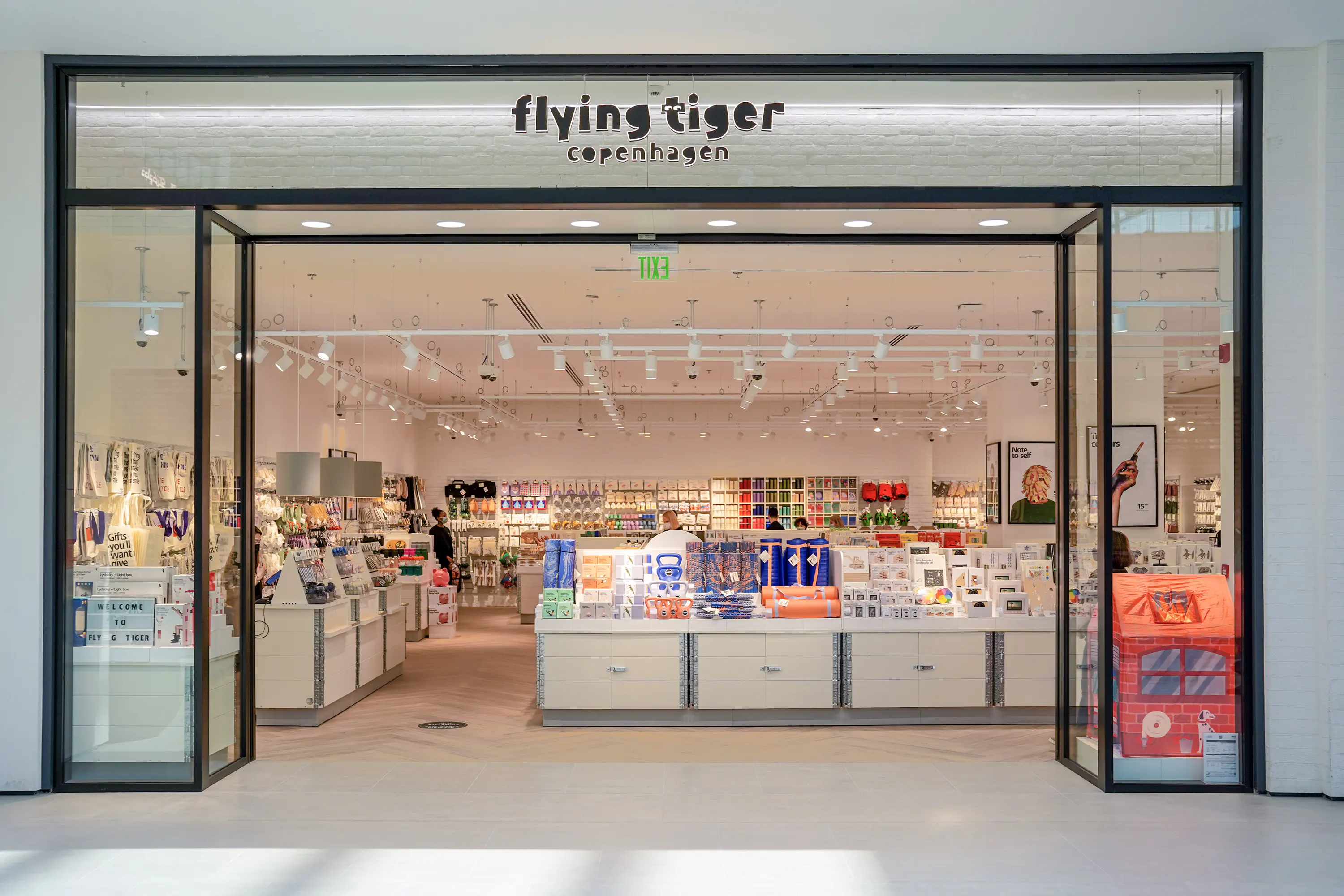
From a family-run market stall to an international retail chain with 1,122 stores in 44 countries, Flying Tiger Copenhagen has built its success on affordable products, clever store layouts and distinctive Scandinavian design.
Walking into a Flying Tiger Copenhagen store without buying anything is almost impossible. Whether it is a colourful breakfast mug, an egg timer, or seasonal decorations for Halloween and Christmas, customers often find themselves leaving with something they had not planned to buy.
The Danish retailer, founded by Lennart and Suz Lajboschitz in the mid-1990s, has grown into a global business. With 1,122 stores across 44 countries, the company ended 2025 with revenue of 5.3 billion Danish kroner, equivalent to approximately €710 million, marking a 2.1 per cent increase on the previous year.
From a flea market stall to an international chain
The company’s origins are modest. It began with a stall at a flea market, where the Lajboschitz couple, then in their early twenties, repaired and resold old umbrellas.
A few years later, the stall evolved into a shop called Zebra, offering a wide range of discounted products. In 1995, the business expanded further with the opening of its first store under the name Tiger.
The name itself has an unusual origin. At the time, many products were priced at 10 Danish kroner. In Danish, the pronunciation of ten kroner, ti’er, sounds similar to the English word “tiger”. The wordplay eventually became the brand’s identity.
Store layouts and low prices encourage impulse buying
Several factors explain how a small family business developed into a multimillion-euro retailer. One of the most important is the layout of its stores, which follows a shopping model similar to that used by Ikea and some large motorway service areas.
Customers are guided along a largely predetermined route, passing a succession of products designed to catch their attention. The arrangement encourages shoppers to discover items they had not intended to purchase.
Low prices reinforce this behaviour. With many products costing just a few euros, customers are more likely to make spontaneous decisions. An item priced at €4 may seem like an insignificant addition to the basket, but several such purchases can quickly add up. By the time customers reach the checkout, they may have accumulated six or seven products and spent at least €30.
A constantly changing product range
Another key element of Flying Tiger’s business model is the breadth of its product selection. Its stores offer everything from kitchen utensils and stationery to toys and sweets, with approximately 40,000 products in its overall range.
Permanent items are available throughout the year, while seasonal collections are introduced to coincide with occasions such as Halloween, Christmas and Valentine’s Day. The retailer also adjusts its selection around specific periods, including the back-to-school season and summer holidays.
Store locations are equally important. Many outlets are situated in areas with high pedestrian traffic, particularly city centres and commercial zones around railway stations. This allows the company to attract a broad customer base and benefit from the steady flow of potential shoppers.
Scandinavian design and the appeal of hygge
Design is another defining feature of the brand. Even its most affordable products tend to have a simple but carefully considered appearance, drawing on the Scandinavian aesthetic and the concept of hygge — a Danish approach to comfort, warmth and everyday well-being.
Flying Tiger also offers products that customers can personalise, adding another dimension to the shopping experience. Among its popular items are DIY mugs and kits that allow customers to create their own Christmas tree decorations.
By combining accessible prices, an ever-changing assortment, carefully designed shopping spaces and understated Scandinavian aesthetics, Flying Tiger Copenhagen has turned everyday shopping into an experience that encourages customers to buy more than they originally intended.






Be First to Comment