
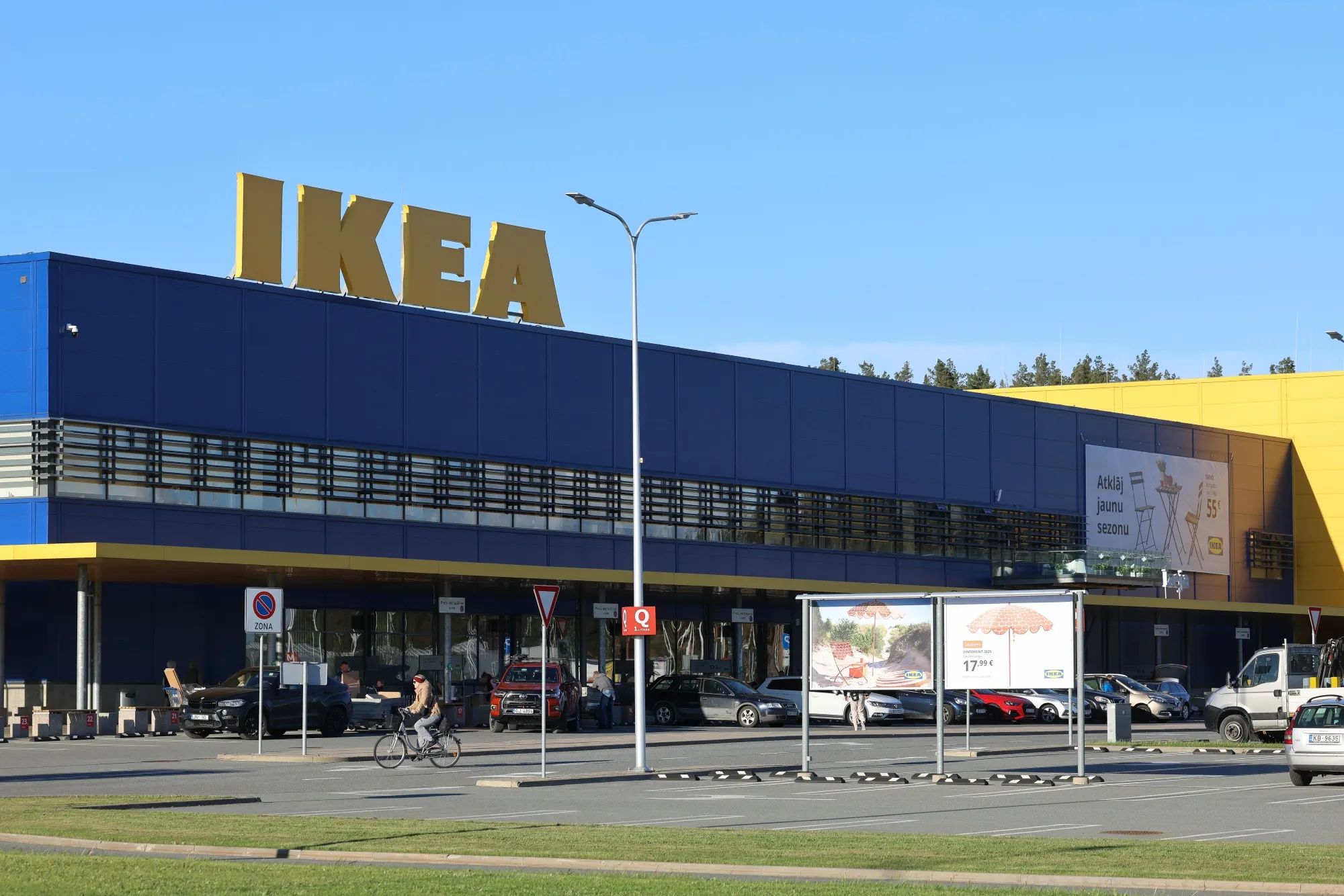
Ikea’s global retail sales declined by 2 per cent to €43.8bn in the year to the end of August, as weaker demand in China and the Middle East outweighed growth in Europe and Latin America. The furniture group expects consumer weakness and geopolitical uncertainty to continue weighing on its performance in 2027, despite a major price-cutting drive aimed at attracting customers.
Sales across Ikea’s 519 stores fell during the financial year, according to brand owner Inter Ikea, which reported the figures on Friday.
“It was a challenging year for us. It is possible that this year will be challenging also. The market is not easy,” Inter Ikea chief executive Jakub Jankowski told the Financial Times.
The retailer’s business has faced continued volatility since the Covid-19 pandemic, with supply-chain disruptions and weaker consumer spending putting pressure on its flat-pack furniture model.
In September, Ikea cut prices on more than 1,000 products as part of a €1.2bn investment intended to stimulate demand. It was the second major affordability push in four years.
The company had already reduced its average selling prices in 2023, following a period in which higher shipping costs had driven prices up. While the cuts were intended to win back customers, they initially reduced revenues and halved profitability.
A long-term push on affordability
Jankowski said Ikea had lowered prices by between 15 and 25 per cent on popular products, including its Billy bookcases and Kallax storage units, in more than 20 European countries.
But he stressed that making the retailer more affordable would require a sustained effort rather than a one-off price adjustment.
“Being more affordable is not one year. It is a longer process for us, and then we need to work harder to get the wheels spinning,” he said.
Ikea’s ownership structure gives its management greater scope to pursue long-term investments. The retail empire is controlled by two charitable foundations based in the Netherlands and Liechtenstein, allowing it to place less emphasis on short-term financial performance than a publicly listed company.
The group is also changing its store strategy to reach customers who are less likely to travel to its traditional out-of-town warehouses.
Ikea opened around 90 smaller stores during the last financial year. Jankowski said he hoped the number would rise by 50 per cent in 2026-27 as the retailer expands its presence in city centres.
He said an increasing number of customers did not own a car or even hold a driving licence, making large stores outside urban areas less convenient. Smaller city-centre locations are intended to attract more casual shoppers and make the brand easier to access.
The company also wants to make its product ranges more relevant to customers who visit these stores more frequently, with greater attention to seasonal demand and more regular changes to the offering.
Profits decline at Inter Ikea
Inter Ikea, which owns the brand and concept behind the retail network, reported a 2 per cent fall in revenue to €25.9bn for the year. Net profit dropped 7 per cent to €1.4bn.
The group’s other major arm, Ingka, which accounts for around 90 per cent of Ikea’s retail sales, is due to publish its results later this month.





Be First to Comment