
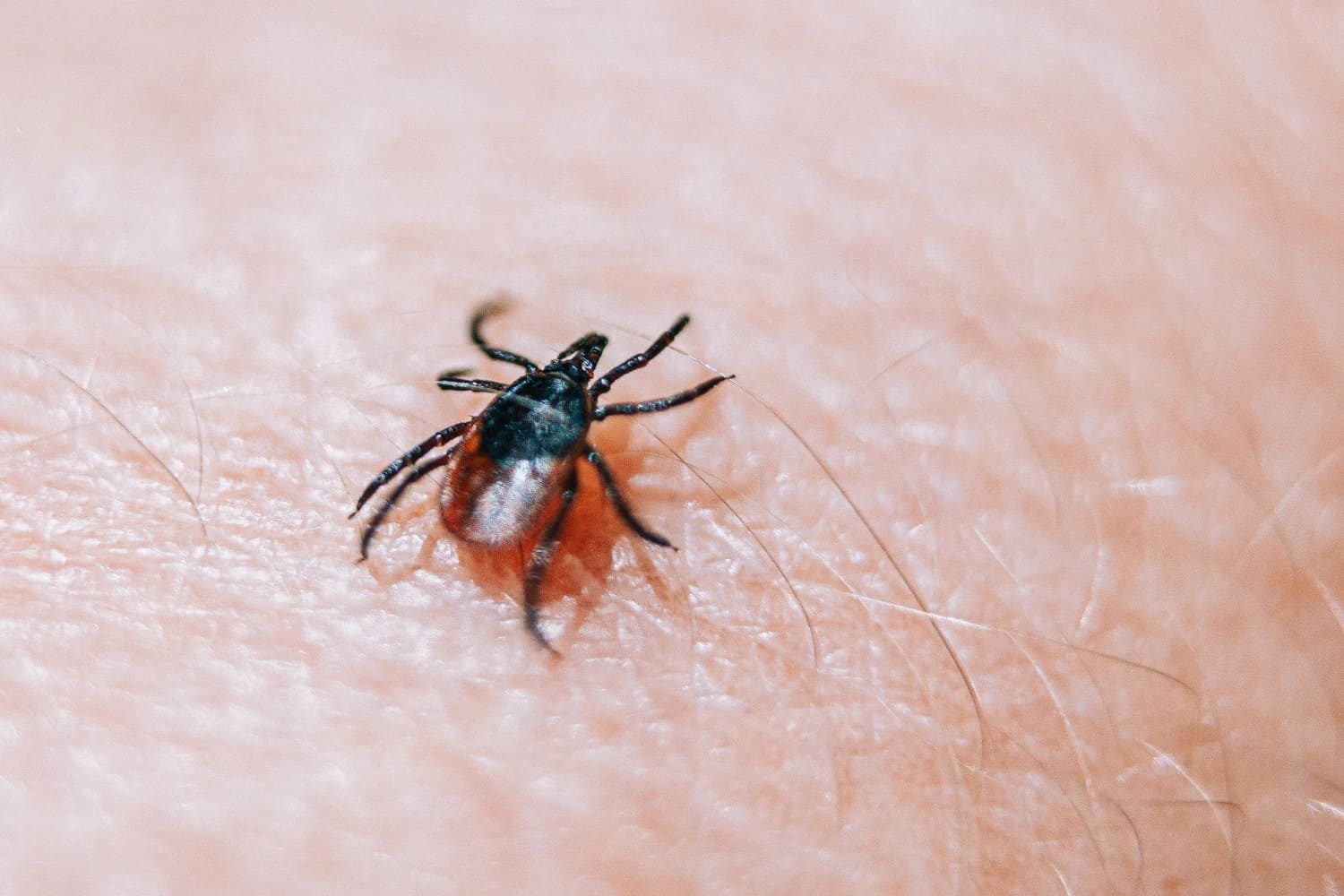
The European Medicines Agency has begun evaluating a vaccine developed by Pfizer and Valneva that uses antibodies to kill bacteria inside ticks before they can enter the human bloodstream. The candidate could offer a new preventive tool against one of Europe’s most widespread tick-borne infections.
A new vaccine designed to prevent Lyme disease has moved closer to potential approval in Europe after demonstrating efficacy of up to 74.8% in a late-stage clinical trial.
Developed by Pfizer and Valneva under the name VLA15, the vaccine uses an unconventional mechanism to prevent infection. Rather than targeting bacteria after they enter the human body, it works inside the digestive system of ticks, neutralising the pathogens before they can be transmitted.
The European Medicines Agency (EMA) validated the vaccine’s marketing authorisation application on 13 August, allowing the scientific evaluation process to begin. According to an agency spokesperson, the assessment leading to a decision by its Committee for Medicinal Products for Human Use typically takes around 12 months.
Speaking at a vaccine seminar in Amsterdam on 28 October, EMA head of Public Health Threats Marco Cavaleri described the mechanism as particularly innovative.
When an infected tick bites a vaccinated person, antibodies generated by the vaccine enter the tick’s gut through the blood it consumes. There, they bind to outer surface proteins known as OspA on Borrelia bacteria, preventing the pathogens from moving towards the tick’s salivary glands and entering the bloodstream.
The bacteria are ultimately neutralised within the tick’s digestive system.
Clinical trial shows efficacy of up to 74.8%
The application submitted to the EMA is supported by results from the phase 3 VALOR clinical trial, which involved more than 9,400 participants aged five and above in Lyme disease-endemic regions of the United States, Canada and Europe.
The vaccine demonstrated efficacy exceeding 70%, reaching up to 74.8% with booster doses in reducing confirmed cases of Lyme disease. The findings were presented at the IDWeek conference in Washington in October and are expected to be published in a peer-reviewed scientific journal.
The vaccine is administered through intramuscular injections and requires multiple doses. The proposed schedule includes an initial injection, a second after two months, a third between five and nine months after the first dose, and a fourth booster one year later.
José Antonio Oteo, director of the Centre for Rickettsioses and Arthropod-Borne Diseases (CRETAV) in Spain, said the results indicated a meaningful level of protection, particularly for people with frequent exposure to ticks through outdoor activities.
He added that the vaccine would primarily benefit higher-risk groups rather than the general population.
Lyme disease poses diagnostic challenges
Lyme disease, also known as borreliosis, is transmitted through bites from infected Ixodes ticks and is considered the main vector-borne infection affecting humans in Europe.
Its actual prevalence remains difficult to establish because of inconsistent reporting, insufficient surveillance and the challenges involved in diagnosing the infection, particularly in its later stages.
The disease typically begins with a skin rash known as erythema migrans, which gradually expands around the bite site. The rash is generally neither painful nor itchy. When identified early, the infection can usually be treated effectively with antibiotics.
However, untreated infections can spread to other parts of the body, potentially causing neurological complications, facial paralysis, fever, headaches and cardiac abnormalities. In some cases, arthritis can develop years after the initial infection.
Diagnosis becomes more complicated once the initial rash disappears and the bacteria spread. Symptoms can resemble those of other conditions, while microbiological tests may become less sensitive.
Rosa Estévez of Spain’s National Centre for Epidemiology said the disease presents significant challenges for diagnosis, treatment and epidemiological monitoring because it progresses through different stages and does not affect all patients in the same way.
The condition has also attracted controversy because its nonspecific symptoms, including fatigue, general discomfort and muscle pain, can lead to misdiagnosis and unnecessary treatment.
Climate change increases the need for prevention
Experts warn that rising global temperatures are contributing to the geographical expansion of ticks and other disease-carrying vectors, increasing the potential spread of infections.
Cavaleri said climate change was facilitating the expansion of ticks as well as mosquitoes transmitting diseases such as chikungunya, dengue and West Nile virus. He stressed the need to accelerate the development of targeted vaccination programmes.
Until a vaccine becomes available, prevention remains largely dependent on avoiding tick bites and identifying attached ticks as quickly as possible.
Oteo recommends wearing clothing that covers the arms and legs when spending time in natural environments and carefully checking the body afterwards.
He noted that Ixodes ticks generally need to remain attached and feed for at least 24 to 48 hours before transmitting Lyme disease, providing an opportunity to remove them before infection occurs. Their small size, however, can make them difficult to detect.
The EMA’s Amsterdam seminar also addressed vaccine hesitancy and the development of new immunisation technologies, including messenger RNA (mRNA) platforms. Originally central to the response to the COVID-19 pandemic, the technology is now being explored in other fields, including personalised cancer vaccines.






Be First to Comment