
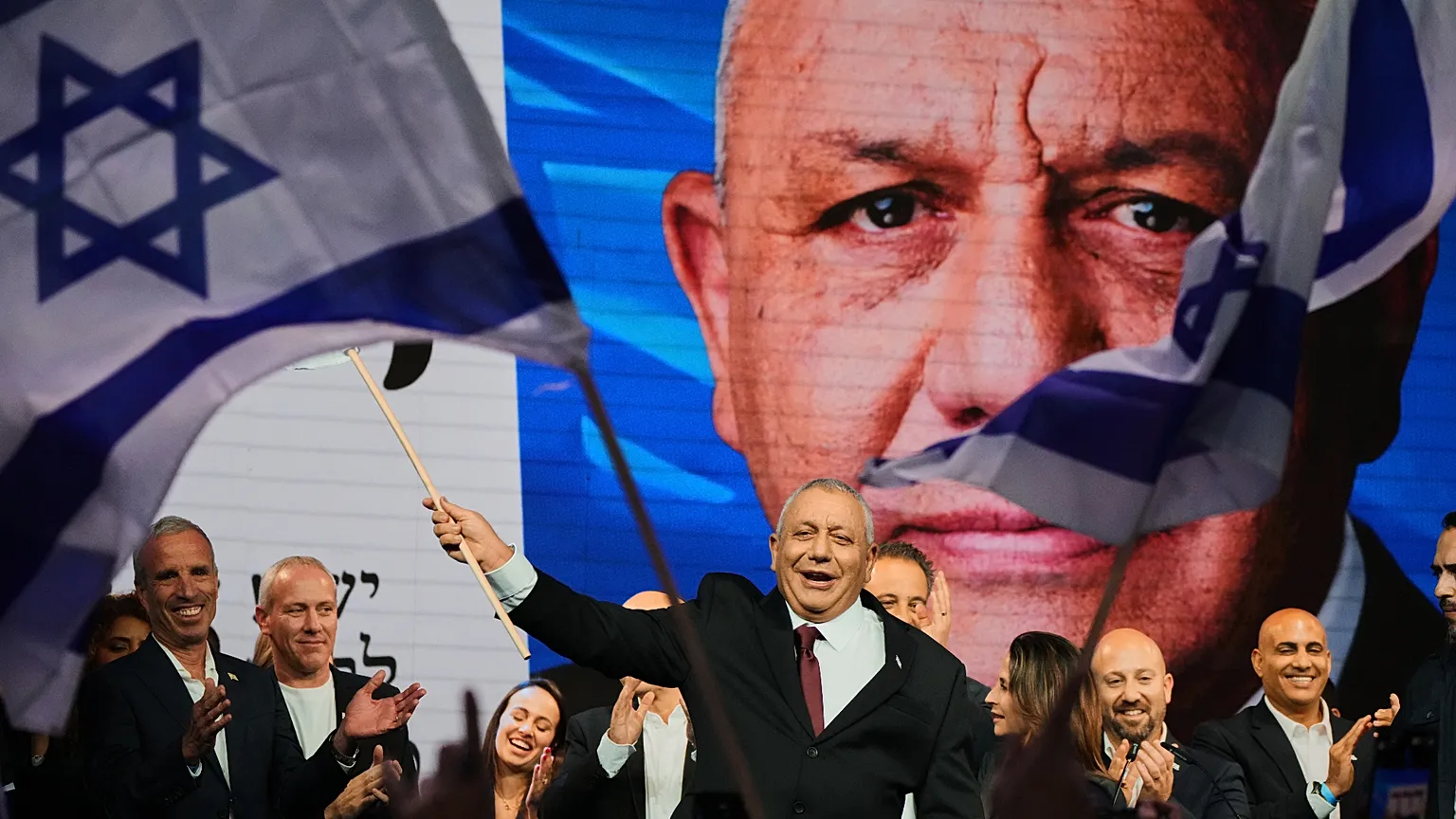
Israeli President Isaac Herzog has tasked former military chief Gadi Eisenkot with forming a new government following the inconclusive 27 October election. With neither major political bloc securing the 61 seats needed for a parliamentary majority, Eisenkot must consider a national unity deal with Likud, support from Arab parties or an agreement with ultra-Orthodox factions.
Herzog appointed Eisenkot after consultations with representatives of the parties elected to the Knesset. The former general received the backing of 67 lawmakers, compared with 46 for outgoing Prime Minister Benjamin Netanyahu.
The election left Netanyahu’s right-wing and religious bloc with 53 seats, while Eisenkot’s Change Bloc secured 48. Arab-led parties won a combined 19 seats, giving them a potentially decisive role in the government formation process.
Eisenkot has called for a “national emergency government”, arguing that Israel needs new leadership to address its domestic crisis and growing international isolation. He has also pledged to prevent another election, but the political differences within his potential coalition partners could make that difficult.
A national unity government with Likud
One option would be to form a broad coalition with Netanyahu’s Likud. The 48 seats held by Eisenkot’s bloc and Likud’s 27 would give the prospective government a comfortable majority of 75.
However, Eisenkot has ruled out serving under Netanyahu and wants to exclude figures associated with the government in power during the 7 October 2023 Hamas-led attacks. He has also opposed the inclusion of far-right ministers Itamar Ben-Gvir and Bezalel Smotrich.
While Herzog and Netanyahu have both raised the possibility of a national unity arrangement, several parties in Eisenkot’s bloc are reluctant to share power with Likud. A deal would therefore require significant concessions, with a rotation agreement between Eisenkot and Netanyahu appearing particularly unlikely.
Arab parties hold the balance
A second route would involve securing support from Arab-led parties, which won a record 19 seats. Their backing could allow Eisenkot to form a minority government without bringing them formally into the cabinet.
Eisenkot has set out four principles for parties seeking to join his government: recognition of Israel as a Jewish and democratic state, support for the country’s Declaration of Independence, universal national service and recognition of Hamas as a terrorist organisation that must be dismantled.
Mansour Abbas’s Ra’am party has accepted several of these conditions and condemned terrorist attacks, but has not explicitly designated Hamas as a terrorist organisation. The Joint List, meanwhile, includes parties with differing positions on Israel’s identity as a Jewish state.
The prospect of relying on Arab parties has already exposed divisions within Eisenkot’s alliance. Avigdor Lieberman’s Yisrael Beiteinu has said it would not join a government dependent on Arab support, arguing that such an arrangement would undermine national security.
The election result has nevertheless strengthened Arab parties’ position in Israeli politics. Their increased representation has been linked to higher voter turnout among Arab citizens and growing opposition to Netanyahu’s policies, including the war in Gaza and the country’s international isolation.
Ultra-Orthodox parties offer another route
Eisenkot could also seek an agreement with Netanyahu’s ultra-Orthodox allies. United Torah Judaism, which holds seven seats, has signalled that it may be willing to leave Netanyahu’s camp. Together with the 48 seats in Eisenkot’s bloc and the six held by Shas, the two religious parties could provide the 61 seats needed for a majority.
But this option presents a major policy challenge. Eisenkot and his allies campaigned on ending long-standing military service exemptions for ultra-Orthodox religious students and introducing universal national service. The religious parties, by contrast, want to preserve those exemptions.
Any compromise could alienate left-wing and centrist members of Eisenkot’s alliance. Lieberman’s apparent willingness to consider cooperation with ultra-Orthodox factions, despite his longstanding opposition to their military exemptions, also highlights the difficult political calculations involved.
A narrow path to a new government
The election marked a setback for Netanyahu, whose coalition fell from 64 seats in 2022 to 53. His Likud party nevertheless remained the largest single party in parliament with 27 seats, leaving him a potential contender if Eisenkot fails.
Netanyahu has repeatedly questioned the election result, claiming that it was “stolen by Arab parties”. Israeli election officials, however, have said there is no evidence of widespread fraud.
Eisenkot has 28 days to form a government, with the possibility of an extension. If he fails, Herzog can give another lawmaker the mandate, potentially returning the initiative to Netanyahu. Should all attempts fail, parliament could be dissolved and fresh elections called.
The central challenge for Eisenkot will be finding a coalition that can reach a parliamentary majority without abandoning the political commitments on which he campaigned.





Be First to Comment