
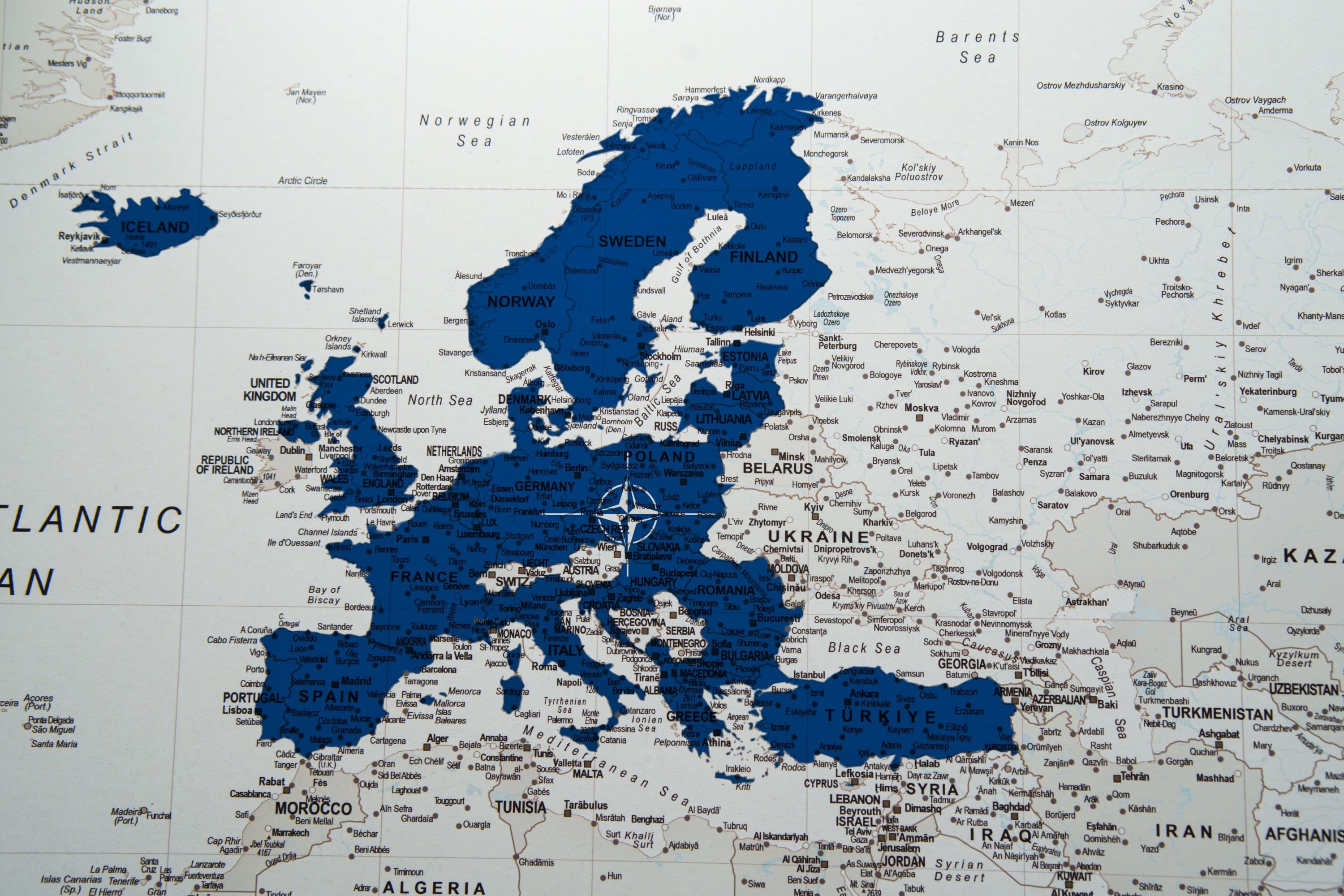
NATO is strengthening its military capabilities to deter potential threats from Russia, while European countries should maintain direct dialogue with Moscow, NATO’s top military commander in Europe, General Alexus Grynkewich, has said. He also reaffirmed the alliance’s commitment to Ukraine, describing its support as unwavering.
In an interview, Grynkewich said a conflict with Russia was neither imminent nor inevitable, but stressed that NATO must be prepared to defend itself. The general, who also serves as commander of US European Command, took part in the November 10 talks between Russia and Ukraine in Abu Dhabi as the senior US military representative, advising members of the American delegation.
He argued that keeping communication channels open with Moscow was essential to preventing misunderstandings and reducing the risk of escalation. Grynkewich also backed calls by US special envoy Jared Kushner for direct dialogue between Russia and European partners.
NATO reinforces its eastern flank
Asked about Russia’s demand that NATO return to its 1997 borders, effectively withdrawing from countries including Poland, Hungary, the Baltic states and Romania, Grynkewich said the alliance remained committed to its defensive mission.
He outlined efforts to strengthen air and missile defence, modernise command-and-control systems and improve the ability to deploy and sustain forces in a high-intensity conflict. NATO is also investing in military capabilities and expanding its defence industrial capacity.
Grynkewich said preparing for war was necessary to prevent one, invoking former US president George Washington’s argument that readiness was the most effective way to preserve peace.
Unwavering support for Ukraine
The NATO commander said the alliance’s support for Ukraine remained firm as diplomatic efforts to end the war continued.
He pointed to commitments made at the NATO summit in Ankara, where allies pledged $70 billion in military equipment and training for Ukraine in 2026, with support expected to remain at least at the same level in 2027.
European allies and Canada are now financing the vast majority of security assistance to Kyiv, including through the Prioritised Ukraine Requirements List (PURL), which enables the purchase of essential US-made equipment such as Patriot air defence systems and interceptors.
Grynkewich also highlighted NATO’s Security Assistance and Training for Ukraine command, based in Germany, which operates under his supervision.
Europe takes greater responsibility for defence
Grynkewich said European countries and Canada were assuming greater responsibility for the alliance’s defence alongside the United States. The objective, he added, was to build a stronger Europe within a stronger and modernised NATO.
He described Article 5, the alliance’s collective defence clause, as an unwavering guarantee reaffirmed by all member states.
On the growing partnership between Russia, China, North Korea and Iran, Grynkewich warned that security in the Euro-Atlantic and Indo-Pacific regions was increasingly interconnected. Russia’s reliance on these partners in its war against Ukraine, he said, highlighted the risk of multiple adversaries acting simultaneously on different fronts.
He argued that Ukraine needed a sustainable and lasting peace to prevent another Russian attack and demonstrate to other countries that the use of force was not a viable way to achieve political objectives.




Be First to Comment