
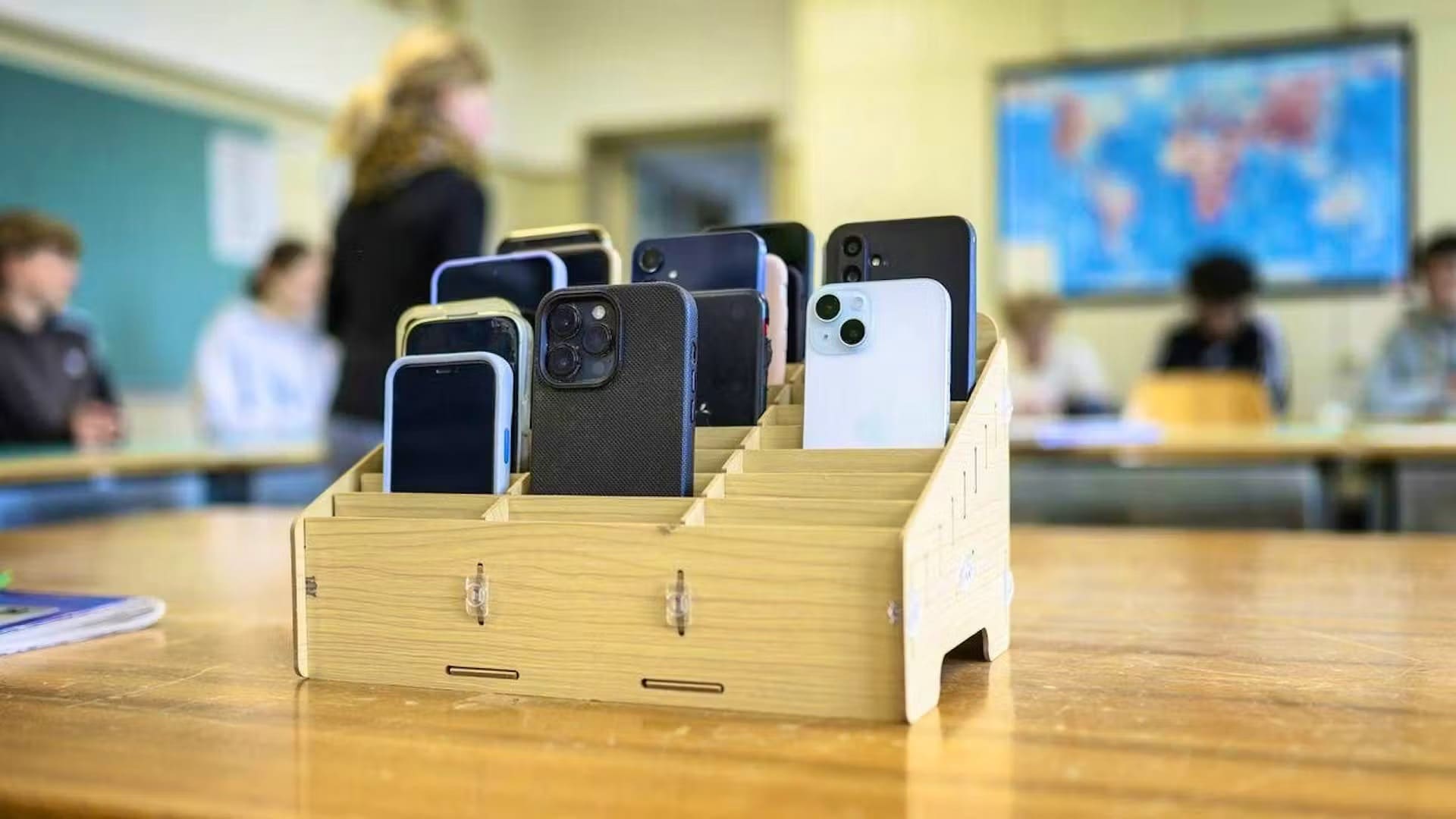
A major national study in the United States has found that strict cellphone bans in schools can improve student achievement, with gains equivalent to one or two additional weeks of instruction over an academic year.
The research, conducted by the Center for Education Policy Research at Harvard Graduate School of Education, is the first large-scale national study to examine the academic impact of school cellphone restrictions.
Researchers found that schools implementing strict bans recorded an improvement of around 0.01 standard deviations in academic performance. Although modest, the increase represents roughly half of the annual decline in student achievement recorded in the US since 2013.
Strict bans make the difference
Thomas Kane, the centre’s faculty director and an education economist, said the findings suggest that restricting access to phones during the school day can help slow the decline in learning outcomes.
The study examined different approaches to cellphone restrictions, including locking devices in Yondr pouches, storing them in designated locations or requiring students to leave phones off campus.
Kane said the most effective policies were those that did not rely on teachers to enforce the rules individually or allow students to keep phones within easy reach in their bags.
The researchers did not find that bans produced significantly larger gains among students with lower starting test scores. However, they found that restrictions appeared to prevent substantial reading declines among a group of students who had been losing ground during the school year.
Out-of-school phone use remains a concern
Kane cautioned that school bans cannot address the wider effects of smartphone and social media use outside the classroom.
Students may remain distracted by online content, messages or social media interactions even when their phones are not physically present at school. Heavy use at night could also affect sleep and, in turn, academic performance.
The study did not have access to individual students’ social media usage data, making it difficult to establish the extent of these effects. Kane said social media companies could provide aggregated and anonymised data to help researchers investigate the relationship while protecting students’ privacy.
Researchers call for wider restrictions and further study
The study estimated that implementing Yondr-style lockable pouches costs around $425 per classroom. Kane said the investment could be worthwhile if the restrictions provide students with the equivalent of one or two additional weeks of learning each year.
He also called on schools to introduce strict cellphone restrictions during the school day and urged states to seek data from social media companies on students’ use outside school.
Further research, he said, is needed to determine whether the main source of harm is late-night use, disrupted sleep or the cumulative impact of social media on attention spans.
Kane warned against introducing policies based solely on public concern, arguing that better evidence is needed to identify which interventions would have the greatest impact on learning.






Be First to Comment