
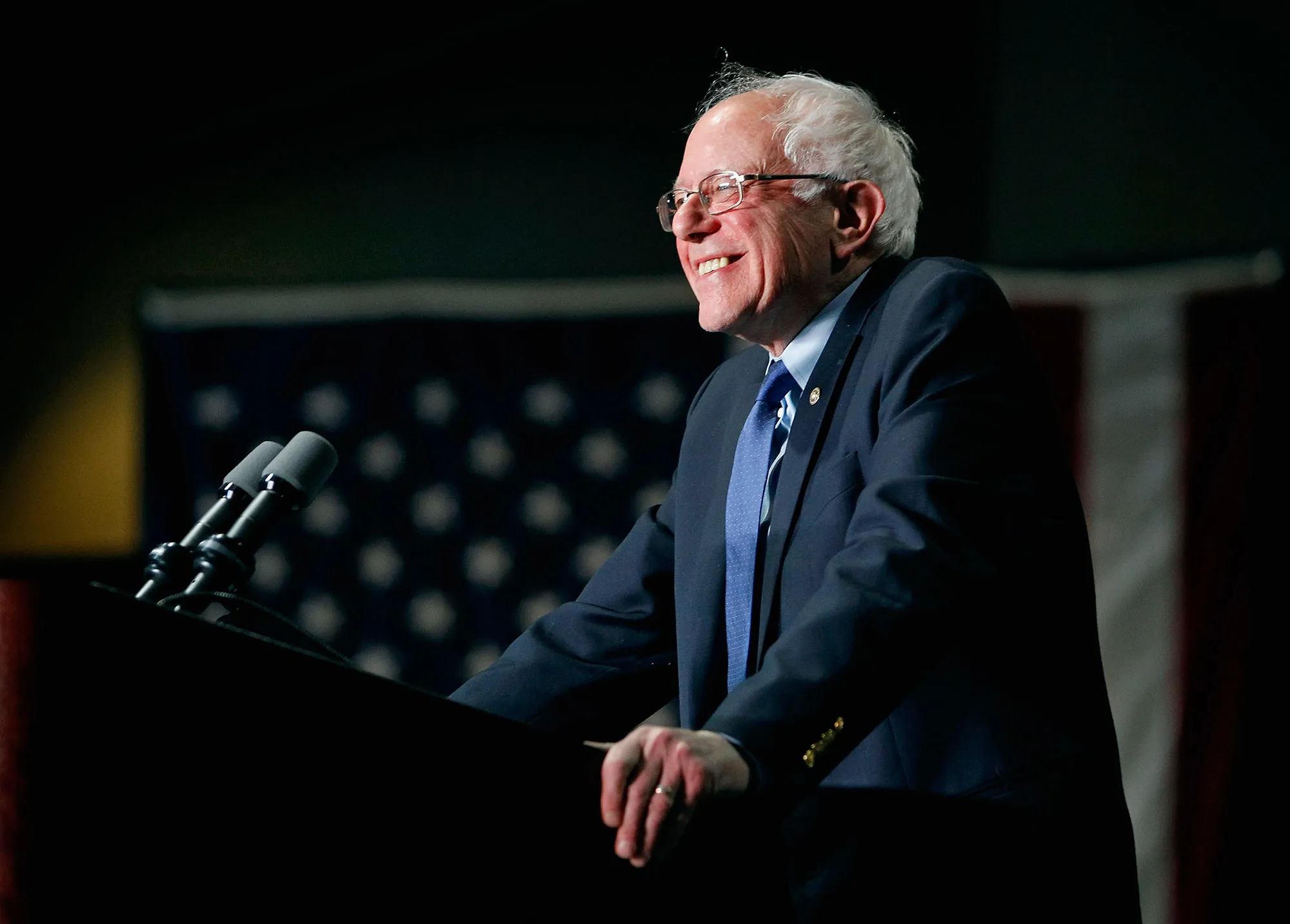
A political message championed by Bernie Sanders for decades is gaining renewed traction within the Democratic Party, as progressive candidates who focused on the cost of living, working-class concerns and the influence of wealthy elites secured victories in the November 3 midterm elections.
Often described as “kitchen table populism”, the approach centres on everyday economic pressures facing American households, from rising grocery and fuel prices to the cost of housing, healthcare and education. Rather than focusing primarily on cultural divisions, it seeks to address the growing gap between ordinary workers and the country’s wealthiest individuals.
Among the candidates who embraced this message were Abdul El-Sayed in Michigan, Randy Villegas in California and Claire Valdez in New York. All three won their respective races after receiving support from Sanders, who campaigned alongside them.
The results were welcomed by the Vermont senator, who has spent more than three decades advocating an economic agenda centred on working-class interests and challenging the political influence of billionaires and corporations.
Sanders’ approach gained national attention during his 2016 presidential campaign, when he challenged Hillary Clinton for the Democratic nomination and won primaries in 22 states. Although he failed to secure the nomination, his campaign helped bring economic inequality and corporate influence to the centre of the party’s political debate.
Speaking to Politico, Sanders said he was not surprised that messages about economic justice, challenging oligarchs and defending workers had resonated across states including Texas, Ohio, Montana and Florida.
Economic concerns reshape Democratic campaigning
Political analysts say the shift reflects a broader evolution within the Democratic Party. Dino Guastella, a researcher at the Worker Class Policy Center (WCPC), described economic populism as increasingly fashionable among Democratic candidates, arguing that the party has moved closer to positions long advocated by Sanders.
However, some observers question how new the approach really is. Columbia University political analyst Lincoln A. Mitchell points to similarities with the economic messages promoted by Jerry Brown in 1992 and Jesse Jackson in 1988, suggesting that Sanders’ political formula has deeper roots in American politics.
The growing appeal of economic populism has also been linked to Donald Trump’s presidency. Analysts argue that his political rise brought renewed attention to the relationship between corporate power, billionaire wealth and the economic difficulties facing ordinary Americans.
According to Erica Etelson, president of the Rural Urban Bridge Initiative, financial hardship has increased considerably over the past decade, creating favourable conditions for candidates who put household economic concerns at the centre of their campaigns.
Research conducted by Guastella and Etelson found that more than 70% of Democratic candidates in 2026 used populist rhetoric. Around 60% criticised economic elites, while 44% targeted political elites.
Morris Katz’s campaign formula
The success of New York mayor Zohran Mamdani has also helped popularise this approach. Political strategist Morris Katz, who led Mamdani’s media strategy, believes candidates must present economic problems in terms that voters can recognise in their everyday lives.
Katz has argued that politicians have long acknowledged public frustration over the economy without taking responsibility for changing the conditions behind it.
His strategy also places emphasis on candidates who appear authentic and have backgrounds outside traditional political circles. Through his agency, Fight Agency, Katz worked on campaigns for Mamdani, Villegas, El-Sayed and Texas candidate Gina Hinojosa.
The approach was not successful in every race, however. Maine Senate hopeful Graham Platner withdrew his candidacy following allegations of inappropriate sexual conduct.
For analysts, the broader appeal of these campaigns lies in their ability to combine criticism of concentrated wealth with a focus on everyday economic pressures, without alienating more moderate voters.
Democrats move beyond identity politics
Another factor behind the shift has been growing criticism within the party of campaigns centred on identity politics and so-called “woke” issues.
Guastella argues that Sanders faced accusations of racism, sexism and xenophobia during his 2016 campaign, with sections of the Democratic establishment rejecting his political approach. In 2020, party leaders backed Joe Biden over Sanders, reinforcing divisions between progressive economic priorities and other strands of the Democratic agenda.
Some of the newer candidates have sought to distance themselves from controversial slogans such as “defund the police” and debates over immigration, instead prioritising wages, living costs and corporate influence.
Even progressive congresswoman Alexandria Ocasio-Cortez has acknowledged that voters are increasingly drawn to messages challenging billionaires and major technology companies rather than campaigns dominated by identity-based disputes.
Guastella argues that these issues were particularly unpopular among working-class voters, despite attracting support from some college-educated and professional groups.
Mitchell believes the Democrats’ future strategy will depend on addressing two central sources of voter frustration: economic conditions and dissatisfaction with the federal government in Washington.
He also argues that scrutiny of corruption should extend beyond the Trump administration to include wealthy corporate interests and their influence over Congress.
The latest electoral results suggest that Sanders’ long-standing emphasis on economic inequality has found a broader audience within the Democratic Party, potentially reshaping how its candidates approach future campaigns.




Be First to Comment