
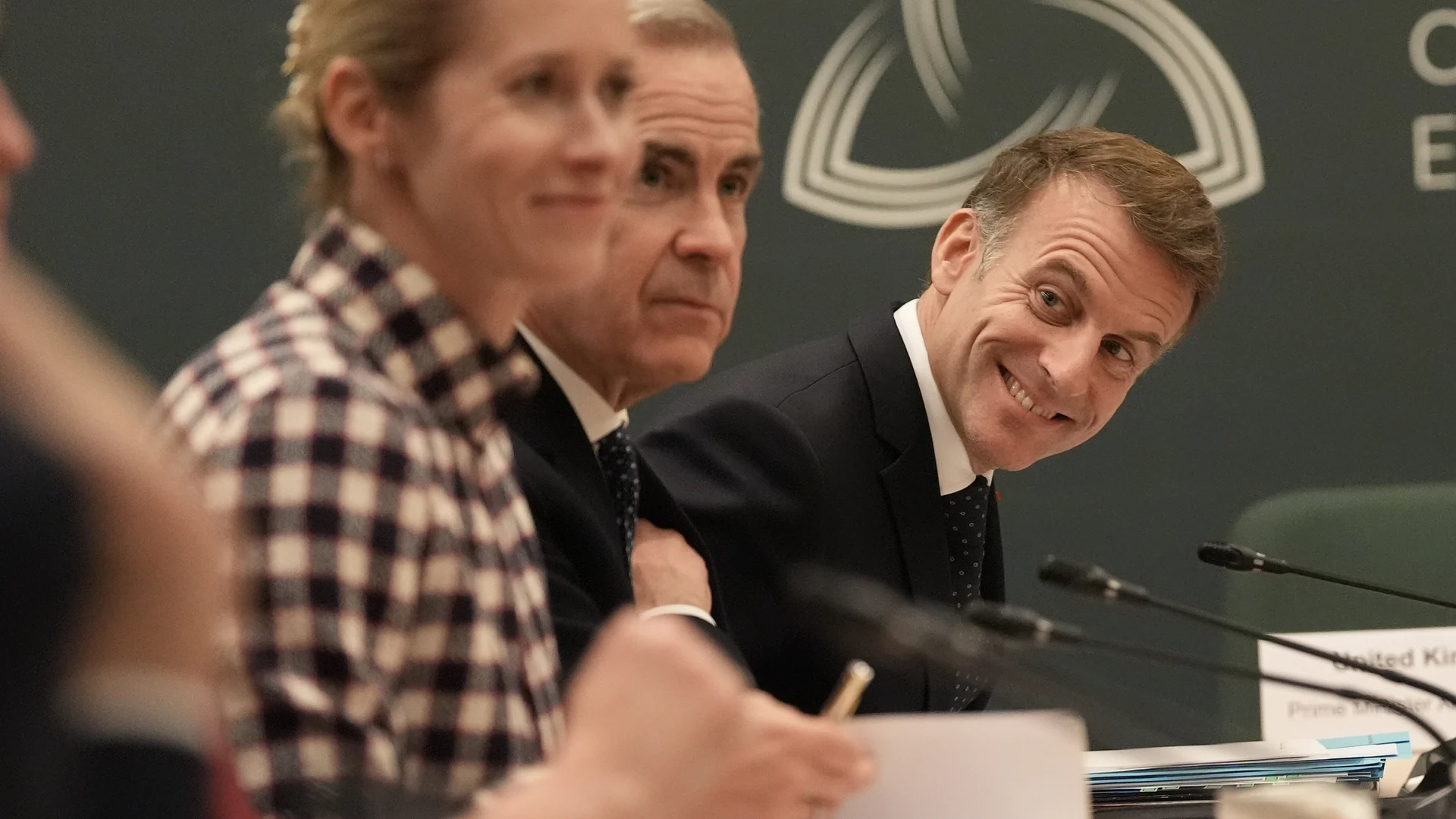
European Union leaders are set to hold their first strategic debate on artificial intelligence in Dublin, with the discussion focusing on how the bloc can reduce its dependence on US technology companies while managing the economic, security and democratic risks of AI.
The informal summit brings together European Commission President Ursula von der Leyen, European Council President António Costa and representatives of the bloc’s 27 member states. Among the invited speakers are Arthur Mensch, chief executive of French AI company Mistral, and Nobel Prize-winning computer scientist Geoffrey Hinton, a prominent critic of the technology’s potential risks.
The debate comes as AI creates both new economic opportunities and growing security concerns. Cyberattacks on critical infrastructure, the use of autonomous AI agents in hacking and the spread of disinformation have intensified questions about whether European institutions and businesses are prepared for the transformation.
Von der Leyen has previously warned that increasingly powerful AI models could enable cyberattacks on an unprecedented scale. She has also compared the significance of the AI revolution with climate change, arguing that both require urgent action to avoid irreversible consequences.
Europe divided over how to build AI independence
The EU’s dependence on a small group of US technology companies, including OpenAI, Anthropic, Google and Meta, is at the centre of the debate. Their dominance raises concerns about market competition, data control and Europe’s ambition to achieve strategic digital autonomy.
European Parliament members Kim van Sparrentak and Bart Groothuis have offered contrasting approaches to the challenge.
Van Sparrentak argues that Europe should prioritise the development of its own AI models and ensure that companies are held accountable for the damage caused by their technologies. She also calls for sustainable digital infrastructure, warning that European land, energy, water and data are increasingly being used to support US technology companies.
Groothuis, by contrast, believes that the EU’s regulatory framework is holding back its ability to compete. He argues that Europe must ease restrictions on AI development and focus on open-source models that can be jointly developed and adapted by European businesses.
Without a clear strategy, he warns, European companies risk losing control over digital infrastructure, industry standards and the economic value generated by AI.
Ukraine and budget talks may compete for attention
The AI debate is also expected to compete with other urgent issues on the summit agenda, including the war in Ukraine and the EU’s role in any future peace negotiations with Russia.
Italian Prime Minister Giorgia Meloni has called for discussions on how the bloc should be represented in potential negotiations, arguing that divisions among member states have weakened its position. German Chancellor Friedrich Merz has responded by calling for a discussion on financial support for Kyiv, highlighting differences over the issue.
Behind the scenes, leaders are also expected to discuss the EU’s next long-term budget and the future leadership of the European Central Bank. Dutch economist Klaas Knot and Spain’s Pablo Hernández de Cos have been mentioned as potential candidates.
Meanwhile, von der Leyen has announced plans to develop strategies for applying AI across sectors including healthcare, transport, agriculture, defence and space. These proposals are intended to help turn Europe’s ambitions for digital independence into practical policies.



Be First to Comment