
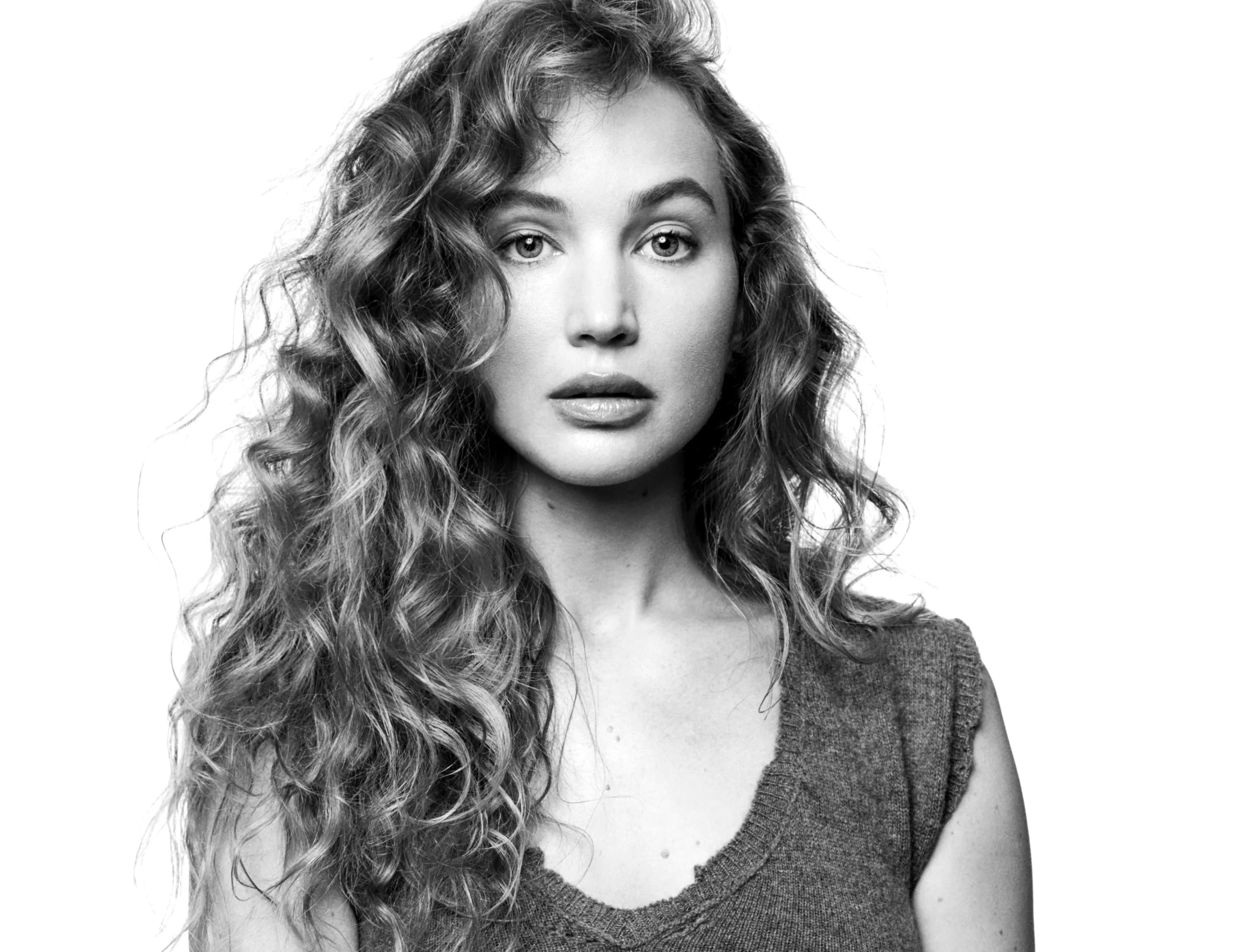
The online backlash over Jennifer Lawrence’s appearance and her comments about cosmetic procedures reveals a culture increasingly obsessed with women’s looks, ageing and the perceived right to scrutinise celebrities.
Later this month, Lawrence is expected to reprise her role as Katniss Everdeen in The Hunger Games: Sunrise on the Reaping, the sixth instalment in the franchise, which is projected to earn between $60m and $70m during its opening Thanksgiving weekend.
But before her return to the big screen, much of the internet has been preoccupied with a different question: what has the actress done to her face?
In an interview with The Cut, promoting her new haircare brand, Mes Beauty, Lawrence spoke about having breast augmentation and suggested she might consider a facelift in the future. “I want to be a sexy mum,” she said.
The interview also reignited speculation about changes to her appearance. Her eyelids, once a distinctive feature, appeared different in the accompanying photographs, prompting accusations that she had undergone blepharoplasty, or eyelid surgery. Online commentators described her as “unrecognisable”.
The reaction recalled the public scrutiny faced by Renée Zellweger in 2014, when her appearance also became the subject of widespread speculation. But in Lawrence’s case, the response has been accompanied by a degree of sadness and sympathy.
Women have long faced scrutiny and judgment over their appearance, but the pressure is amplified for celebrities. Lawrence, in particular, has cultivated an image as an unusually down-to-earth and unfiltered Hollywood star. At 22, she famously laughed after tripping on the steps while collecting her best actress Oscar for Silver Linings Playbook in 2013. She also once said she would not lose weight because she wanted to remain a positive role model for young fans of The Hunger Games.
Her recent comments about “baby Botox” and buccal fat transfers have therefore raised a broader question: is Lawrence becoming another example of the increasingly uniform beauty ideal visible across Hollywood and beyond? And what does the intense speculation surrounding her appearance reveal about society’s own anxieties and internalised standards?
The internet’s right to judge celebrity faces
Sophie Gilbert, a Pulitzer Prize-nominated staff writer at The Atlantic and author of the 2025 book Girl on Girl: How Pop Culture Turned a Generation of Women Against Themselves, believes several forces are behind the reaction, including Lawrence’s public image and the scale of scrutiny enabled by digital platforms.
“Celebrities are our idealised representations of humanity,” Gilbert says. “The public often seems to feel entitled to critique how famous people represent themselves and, by extension, us.”
She argues that, despite advances in women’s rights, beauty standards have become increasingly restrictive.
“Our beauty standards are more regressive and oppressive than ever because so much of modern life is mediated through images,” she says. “What we’re seeing isn’t new exactly, it’s more that the internet has enabled criticism at a massive scale.”
Beauty and culture writer Jessica DeFino, who contributes to The New York Times and The Guardian and publishes the newsletter Flesh World, points to another contradiction: women are criticised both for ageing naturally and for trying to prevent it.
“You’re damned if you do, damned if you don’t,” she says. “In this moment in history, if you’re a woman in Hollywood, if you’re visible at all, your appearance will probably be ripped apart, no matter what.”
From Hollywood star to beauty-industry target
Lawrence was born in Louisville, Kentucky, to a construction worker father and a mother who managed a summer camp. She has described feeling like an outsider as a child, struggling with hyperactivity and anxiety. Her career began at 14, after she was spotted by a talent scout.
She went on to become one of Hollywood’s biggest stars, playing Mystique in the X-Men franchise and Katniss Everdeen in The Hunger Games. The latter role helped establish her as one of the most commercially successful action heroines in cinema history.
Her career has extended well beyond blockbuster franchises. A self-taught actress, Lawrence received an Oscar nomination for Winter’s Bone at the age of 20 before winning the award for Silver Linings Playbook. She has moved between genres while supporting emerging filmmakers and independent productions.
As a producer, she won a Peabody Award for Bread & Roses, Sahra Mani’s 2023 documentary about Afghan women living under Taliban rule.
That more artistic side of Lawrence was on display in a 2025 special arts issue of W Magazine, where she collaborated with photographer Wolfgang Tillmans and contemporary artists Elizabeth Peyton and Philippe Parreno.
Alex Hawgood, chief writer at W, who covered the project, describes her as both polished and deeply committed to her craft.
He draws a comparison with Roland Barthes’s 1957 essay The Face of Garbo, which explored the movie star as a cultural symbol. Hawgood suggests that the recurring fascination with Lawrence’s appearance may itself reflect the impact of her performances.
“We only obsess over the face of an actor who moves us, or whose face we depend on to experience things,” he says.
Cosmetic transparency and the pressure to look young
Not every celebrity’s decision to discuss cosmetic surgery triggers the same level of backlash. American comedian Rosie O’Donnell recently explained her reasons for having a facelift following significant weight loss, attracting relatively little criticism.
DeFino sees Lawrence’s willingness to discuss procedures, as well as the openness of celebrities such as Kim Kardashian, as part of a wider trend encouraged by the beauty industry.
“Cosmetic transparency is very popular, celebrated and championed, within the beauty industry right now,” she says.
The fact that Lawrence is only 36 is also significant, DeFino argues. The pressure to pursue cosmetic interventions is reaching increasingly younger women.
“These standards are coming for younger and younger ages, which is a predictable outcome of capitalism,” she says. “The lesson is that there is no one of any gender or age that the beauty industry does not want to sink its teeth into.”
Lawrence, who divides her time mainly between New York and Los Angeles with her husband, art dealer Cooke Maroney, and their two sons, has faced intense public scrutiny before. In 2014, she was among the celebrities whose private photographs were stolen and leaked online. The images had been intended for her then-partner, actor Nicholas Hoult.
Her forthcoming projects include Martin Scorsese’s gothic horror film What Happens at Night, opposite Leonardo DiCaprio, and Luca Guadagnino’s Burial Rites, about the last woman to be executed in Ireland.
The latest controversy raises questions about the increasingly demanding beauty standards imposed on Hollywood women, but also about the public’s sense of ownership over celebrities who are labelled role models.
Perhaps more revealing is what has attracted less attention. Lawrence has also spoken recently about experiencing postpartum anxiety, a subject that generated considerably fewer headlines than speculation about her face.
She is not necessarily a cautionary tale, but a product of the culture in which she lives and works. The scrutiny directed at her may say less about one actress’s choices than about the expectations society places on women – and its own growing anxiety about beauty, ageing and the passage of time.





Be First to Comment