
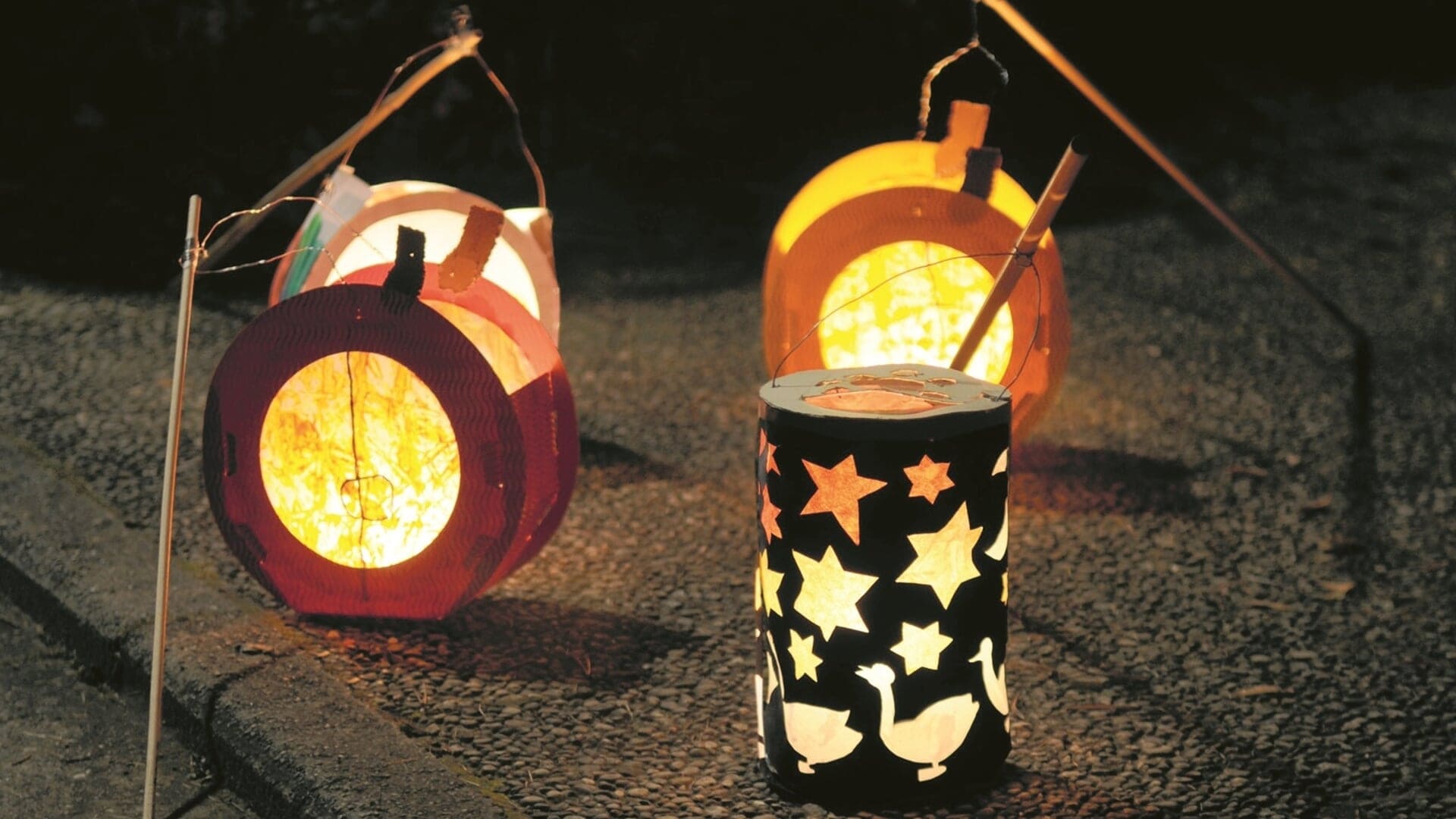
Children across the Netherlands will take part in the annual November 11 tradition, walking door to door after dark with handmade lanterns and singing for sweets and fruit.
Children in towns and villages across the Netherlands are expected to mark Sint-Maarten on Wednesday evening, carrying handmade lanterns through the streets and singing traditional songs in exchange for candy and fruit.
The annual celebration takes place on November 11, the feast day of St Martin of Tours, a fourth-century Roman soldier who later became a bishop in what is now France.
According to legend, Martin once cut his military cloak in half with his sword and gave one part to a freezing beggar outside the city of Amiens. That night, Christ appeared to him in a dream wearing the piece of clothing, inspiring Martin to dedicate his life to helping the poor.
Although Sint-Maarten originated as a Catholic celebration, it has largely evolved into a secular children’s tradition centred on lanterns, singing and sharing.
Irene Stengs, a researcher in ethnology at the Meertens Institute and professor of ritual and popular culture at Vrije Universiteit Amsterdam, told RTL that St Martin was once among Europe’s most popular saints, even more prominent than St Nicholas.
The way the day is celebrated varies across the country. In many communities, children go door to door after dark, while in Venlo and surrounding areas the festivities often include lantern processions ending at a bonfire.
The custom is less common in the provinces of Noord-Brabant and Zeeland. In predominantly Catholic areas, it remained largely a church observance for longer, while other parts of the Netherlands developed the familiar door-to-door tradition.
Utrecht has introduced a parade featuring large illuminated sculptures, while Waldorf schools across the country continue to organise celebrations even in places where the street tradition is uncommon.
Stengs said the original religious significance has largely faded, but the principle of sharing remains. Children may now be more interested in collecting sweets than remembering the saint’s act of charity, yet the tradition continues to bring communities together.
Many of the songs sung during Sint-Maarten date back more than a century, although their lyrics have often been shortened. Children today tend to sing only brief verses rather than performing the traditional songs in full, Stengs told RTL.




Be First to Comment