
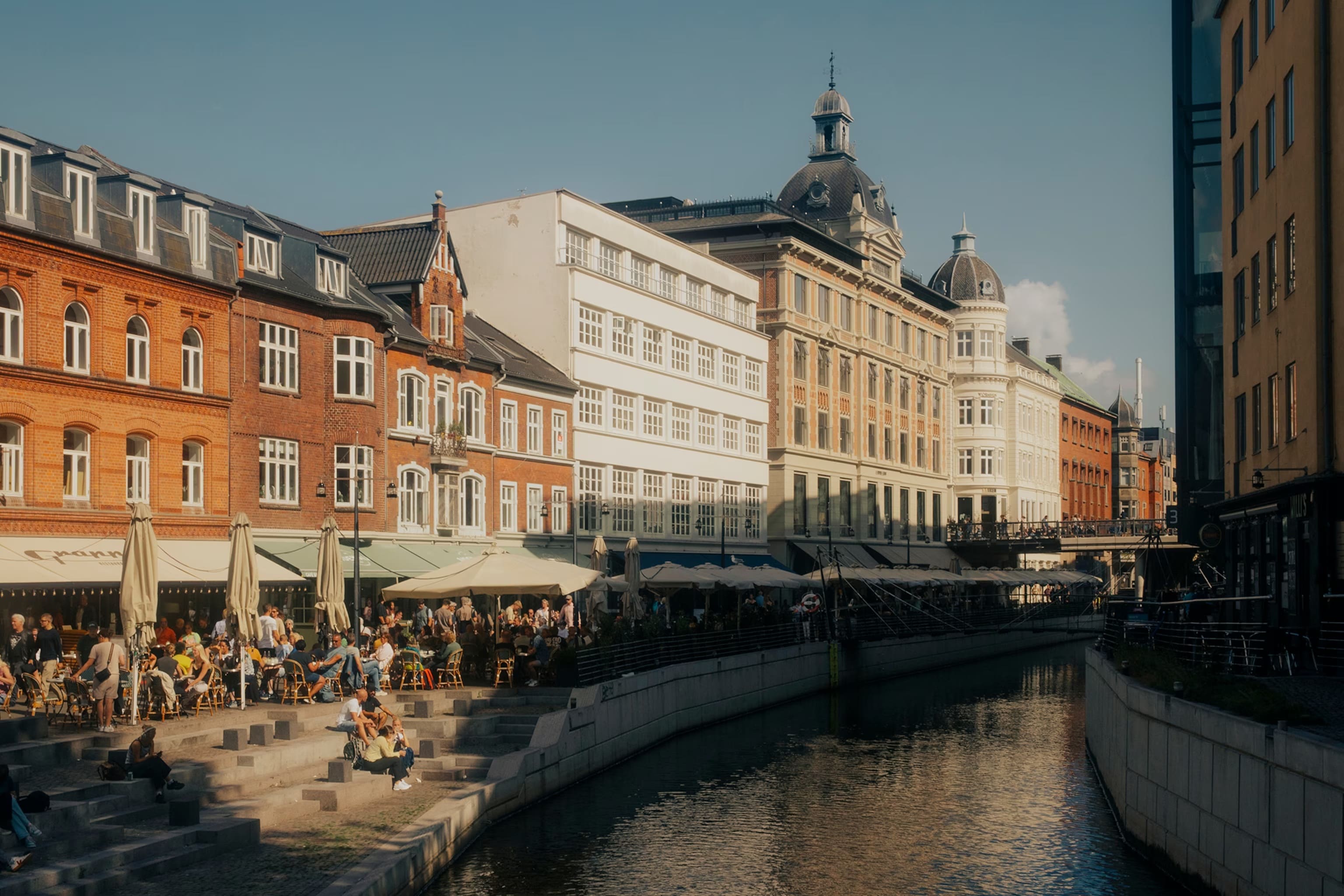
Just a short flight from Paris, Aarhus offers a blend of urban energy, cultural attractions and easy access to nature. From contemporary art museums to beaches and forests, Denmark’s second-largest city is an ideal autumn destination for travellers looking to slow down and embrace the country’s famous hygge lifestyle.
Billund Airport provides a convenient gateway to Aarhus, located on the eastern coast of the Jutland peninsula. Often called the “City of Smiles”, Aarhus combines the atmosphere of a lively city with the intimacy of a smaller town, where museums, green spaces and the waterfront are all within easy reach.
Where creativity meets nature
Aarhus’s creative spirit is particularly evident at Godsbanen, a former industrial site now transformed into a cultural hub filled with artists’ studios, workshops and cafés. In the historic centre, 17 murals illustrate the United Nations Sustainable Development Goals, adding a contemporary dimension to the city’s streets.
For a quieter experience, Riis Skov offers a woodland escape along the bay. Its beech trees turn vivid shades of red and gold in autumn. Marselisborg Deer Park is another popular spot, where visitors can encounter fallow deer and sika deer roaming freely, particularly atmospheric in the early morning mist.
An immersive encounter with light and art
One of Aarhus’s newest cultural attractions is As Seen Below – The Dome, A Skyspace by James Turrell, an immersive installation at the ARoS Aarhus Art Museum.
Visitors enter through a light-filled corridor before reaching a monumental dome with an opening in its ceiling. The changing colours and subtle effects of natural light transform the sky into a living artwork, inviting visitors to pause and experience their surroundings differently.
ARoS is one of Northern Europe’s leading art museums and is also known for Olafur Eliasson’s circular, rainbow-coloured rooftop walkway, which offers panoramic views of the city.
A journey through Danish history
Named European Museum of the Year 2026, Den Gamle By brings four centuries of Danish everyday life back to life. Historic shops, artisan workshops, 19th-century homes and costumed characters recreate the atmosphere of earlier generations.
For a deeper journey into the past, the Moesgaard Museum explores everything from the Viking Age to prehistoric Denmark. Among its most striking exhibits is the Grauballe Man, a remarkably preserved bog body dating back to the 3rd century BC. The museum itself is an architectural attraction, with a distinctive grass-covered roof that blends into the surrounding landscape.
Getting lost in the Latin Quarter
Aarhus’s Latin Quarter is best explored on foot, without a fixed itinerary. Its cobbled streets, crooked half-timbered houses and ivy-covered façades conceal courtyards, small gardens and intimate terraces.
Independent vintage shops, record stores, art galleries, coffee roasters and candlelit bistros give the neighbourhood its distinctive character. Taking time to wander is perhaps the best way to discover the city’s more authentic side.
Aarhus Ø: life by the water
The modern waterfront district of Aarhus Ø, whose name refers to an island in Danish, illustrates the city’s close relationship with the sea. Developed on former industrial harbour areas, the neighbourhood combines contemporary architecture with public spaces overlooking the bay.
Its most recognisable buildings include the Lighthouse tower and the Iceberg residential complex. Visitors can also head to The Aarhus Eye for sweeping views across the waterfront and the surrounding coastline.
A food culture built around simplicity
Food is central to everyday life in Aarhus, from morning coffee and freshly baked sourdough to locally sourced seafood and seasonal produce.
A visit to a neighbourhood bakery is a good place to start the day, followed by coffee from La Cabra, one of the city’s best-known speciality coffee roasters. Local markets and independent food businesses reflect a strong emphasis on seasonal ingredients and short supply chains.
For lunch, shared wooden tables and informal dining spaces are part of the experience. Nicolinehus, on the waterfront, is among the places that capture this relaxed approach to eating.
Aarhus also has a strong fine-dining scene, with acclaimed restaurants such as Gastromé. Yet the city’s gastronomic appeal lies as much in its unpretentious food culture as in its high-end restaurants, making it a destination where good food can be enjoyed without ceremony.






Be First to Comment