
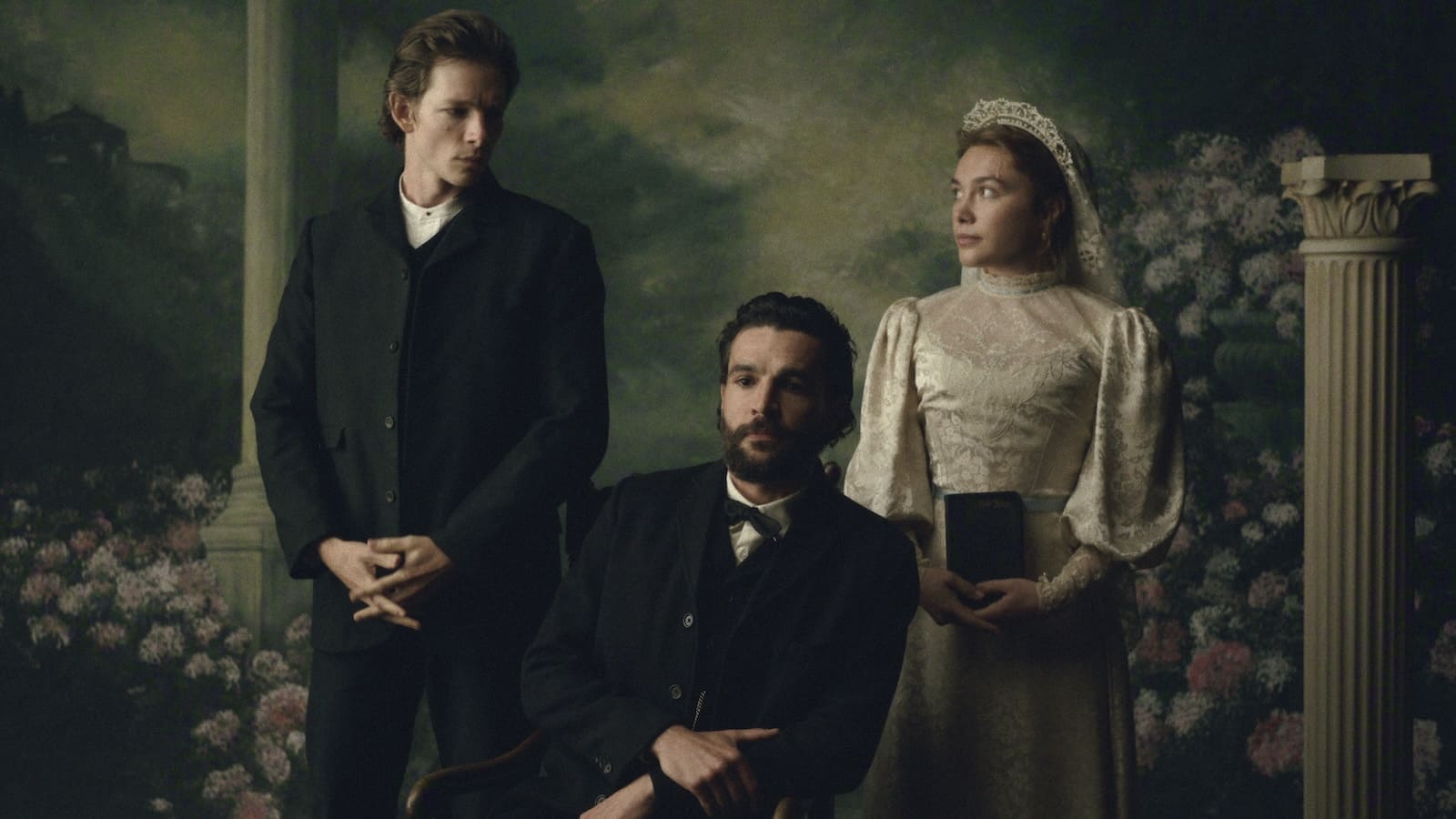
Netflix’s new adaptation of John Steinbeck’s East of Eden, directed by Zoe Kazan, explores three generations of family conflict, examining the origins of human cruelty, inherited guilt and the power of individual choice.
Set in California’s Salinas Valley, the series follows rivalries between fathers and sons, with the relationships between Adam and Charles Trask and later between twins Cal and Aron echoing the biblical story of Cain and Abel. Against the backdrop of an expanding American frontier, the story examines how personal decisions can shape the fate of entire families.
Florence Pugh plays Cathy Ames, one of the story’s most complex characters. Her portrayal combines charm and unpredictability, presenting a woman whose apparent vulnerability can quickly give way to calculated manipulation. The adaptation also explores the traumatic experiences behind Cathy’s behaviour, offering a more human explanation of her cruelty than Steinbeck’s original portrayal of absolute evil.
This approach raises a central question: how much responsibility do individuals bear for their actions, and how much are they shaped by the wounds inherited from previous generations?
The series places particular emphasis on the concept of timshel, a Hebrew term associated with free will and the idea that people retain the ability to choose between good and evil. Hoon Lee, who plays the moral guide within the Trask family, gives particular weight to this theme.
Visually, the production supports its ambitious narrative through sweeping landscapes, carefully designed costumes and cinematography that presents America as both a land of promise and a place threatened by human conflict.
Pugh delivers a compelling performance, while Lee provides much of the series’ philosophical grounding. However, the adaptation’s seven episodes struggle to accommodate the scale of Steinbeck’s novel. Time jumps and a reduced role for the Hamilton family compress parts of the story, while the pacing occasionally suffers.
The series is at its strongest when it relies on silence, expressions and the tensions between its characters rather than rushing through the gaps between generations.
Although it cannot capture every dimension of Steinbeck’s work, East of Eden retains its central message: goodness is never guaranteed, and past suffering does not necessarily determine the choices a person will make.






Be First to Comment