
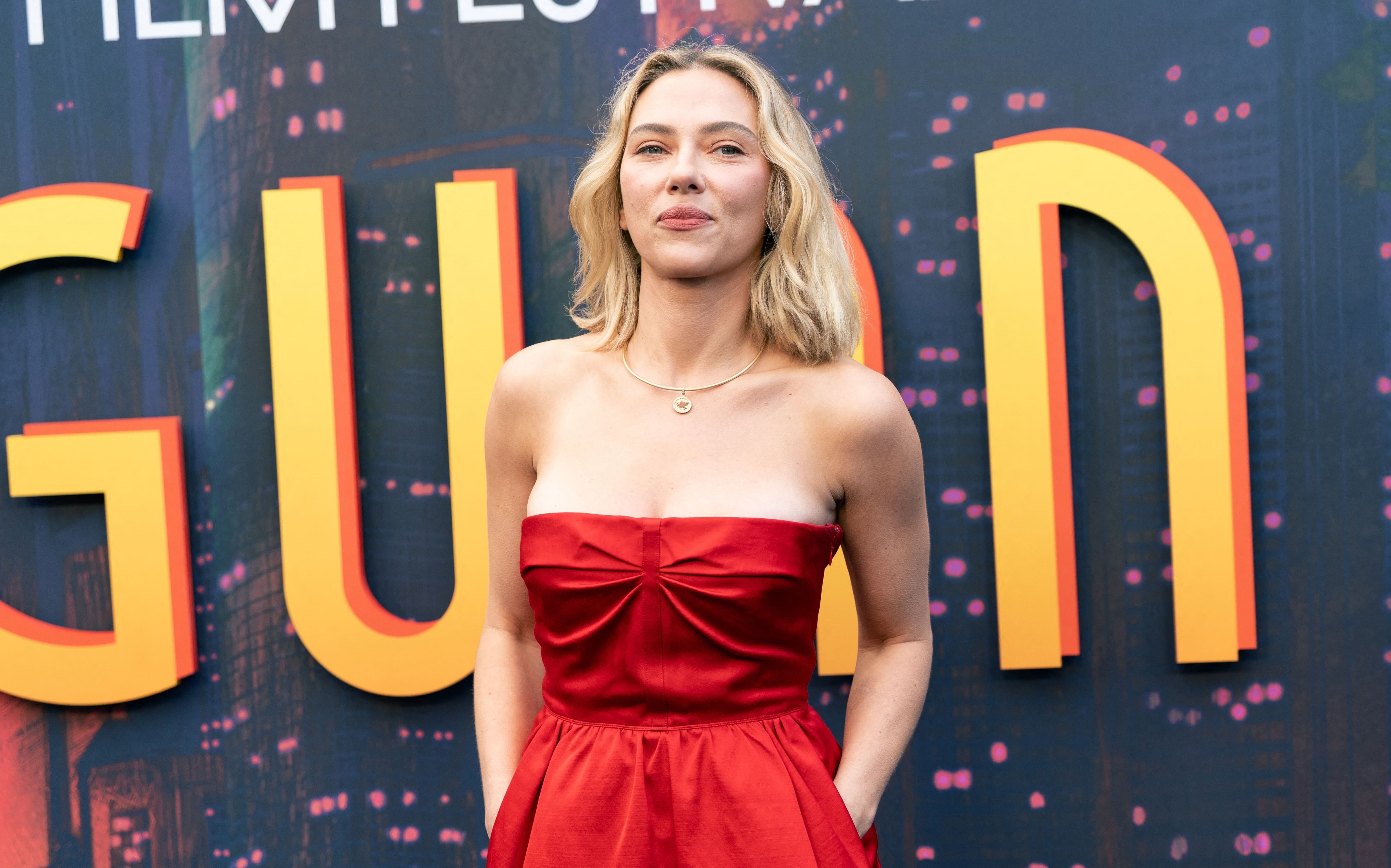
The actor discusses motherhood, her Jewish heritage and the choices shaping her next projects. While continuing to move between blockbuster productions and independent cinema, Johansson says she is reassessing what success means to her.
Scarlett Johansson is approaching a new chapter in her career, with a busy schedule of film projects and growing questions about the direction she wants to take.
The 41-year-old actor is currently preparing to shoot Scapegoat, the latest film from Hereditary director Ari Aster. She has also recently worked on Mike Flanagan’s upcoming The Exorcist: Martyrs and is set to appear opposite Robert Pattinson in Matt Reeves’ The Batman: Part II.
Speaking to the Los Angeles Times from her home in New York, Johansson said balancing her career with motherhood remains a priority. She and her husband, comedian Colin Jost, coordinate their schedules to give their two children, Rose, 12, and Cosmo, 5, as normal a family life as possible.
“I consider myself the CEO of our household,” she said, describing herself as a hands-on parent. Although she would like to return to Broadway, where she won a Tony Award in 2010 for A View From the Bridge, she said the demands of theatre are difficult to reconcile with raising young children.
A family story behind ‘Paper Tiger’
Johansson’s latest film, James Gray’s crime thriller Paper Tiger, sees her take on the role of Hester, a mother living in Queens in 1986. Her family becomes caught up in a dangerous deal connected to the Russian mob, while Hester is also dealing with a serious medical diagnosis that she keeps from her husband and children.
The film also stars Miles Teller and Adam Driver. As the situation around her family becomes increasingly violent, Hester must confront both the criminal threat and her own deteriorating health.
Gray drew heavily on his family history for the story. His mother was diagnosed with glioblastoma, an aggressive form of brain cancer, when he was 18. She tried to shield her husband and sons from the full extent of her illness, a decision Gray believes ultimately affected their relationships.
He described watching Johansson portray elements of that experience as deeply emotional, praising her ability to communicate complex feelings through facial expressions and silence.
Johansson said she approached Hester as a woman whose own ambitions had gradually taken a back seat to her family’s needs. With her eldest son preparing for college, Hester believes those sacrifices are finally creating opportunities for the next generation.
The film also explores the history of Jewish immigrant families and their pursuit of a better life, a subject that Johansson has become increasingly interested in.
Exploring identity and generational trauma
Johansson, whose mother is Jewish and father is Danish, said her interest in identity has deepened as she raises her children while watching her own parents grow older.
She described herself as part of the “sandwich generation”, caught between caring for the next generation and gaining a fuller understanding of her parents’ experiences.
That interest has influenced several of her recent projects. In Jojo Rabbit, she played a German mother secretly sheltering a Jewish girl during the Nazi era, earning an Academy Award nomination. She also made her directorial debut with Eleanor the Great, a film about an elderly woman who begins claiming a deceased friend’s Holocaust survival story as her own.
Johansson said she is increasingly drawn to questions about how people become who they are and how experiences are passed down through families.
Rethinking success in Hollywood
Few actors have moved as easily between major studio productions and independent films as Johansson. Her role as Black Widow in the Marvel Cinematic Universe made her one of Hollywood’s biggest box-office stars, while projects such as Under the Skin, Her and Wes Anderson’s films have allowed her to explore more unconventional characters.
She said her approach to choosing roles has remained largely unchanged since her teenage years: she wants to make films she finds interesting and believes audiences will enjoy.
But Johansson is also increasingly conscious of the commercial realities facing the film industry. With cinemas struggling to attract audiences, she said she considers whether a project has a genuine audience before committing to it.
At times, she has even questioned whether certain studio productions should be made at all, arguing that filmmakers need to think carefully about who their films are intended for.
Johansson has also demonstrated a willingness to challenge powerful industry players. In 2021, she sued Disney over the simultaneous theatrical and streaming release of Black Widow, arguing that it affected her box-office compensation. The dispute was settled out of court. In 2024, she publicly challenged OpenAI over a chatbot voice she said closely resembled her own, despite having declined the company’s offer to use her voice.
Having achieved major commercial and critical success, Johansson says her ambitions are now changing, although she has yet to define exactly what comes next.
“I think I’m sort of in the middle of that,” she said, reflecting on how her understanding of success has evolved.
Her upcoming work includes Aster’s Scapegoat, which also stars Jacob Elordi and Jude Law. Johansson described the screenplay as unusually intense and unlike anything she had read before, although she said the director had kept much of the story under wraps.
Despite her questions about the future, acting remains central to her life. She said the most rewarding moments come when performers connect during a scene and create something spontaneous in front of the camera.
That experience, she explained, is what continues to draw her back to filmmaking.



Be First to Comment